





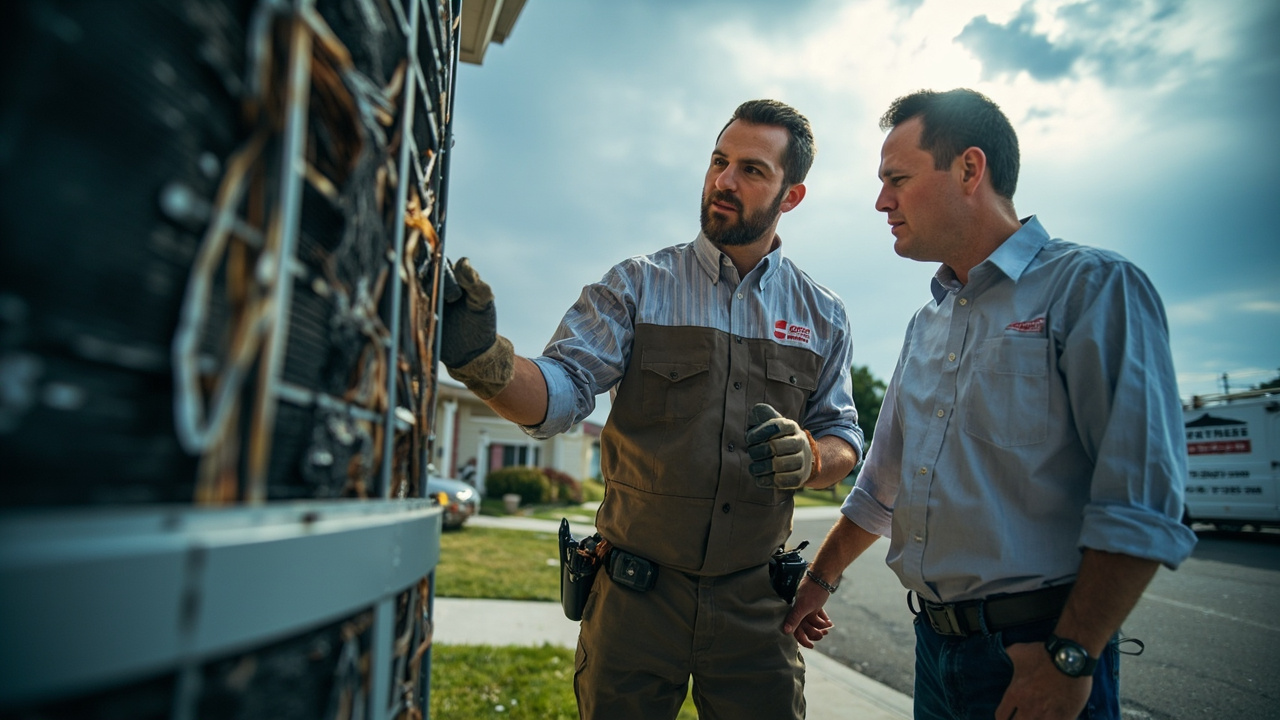
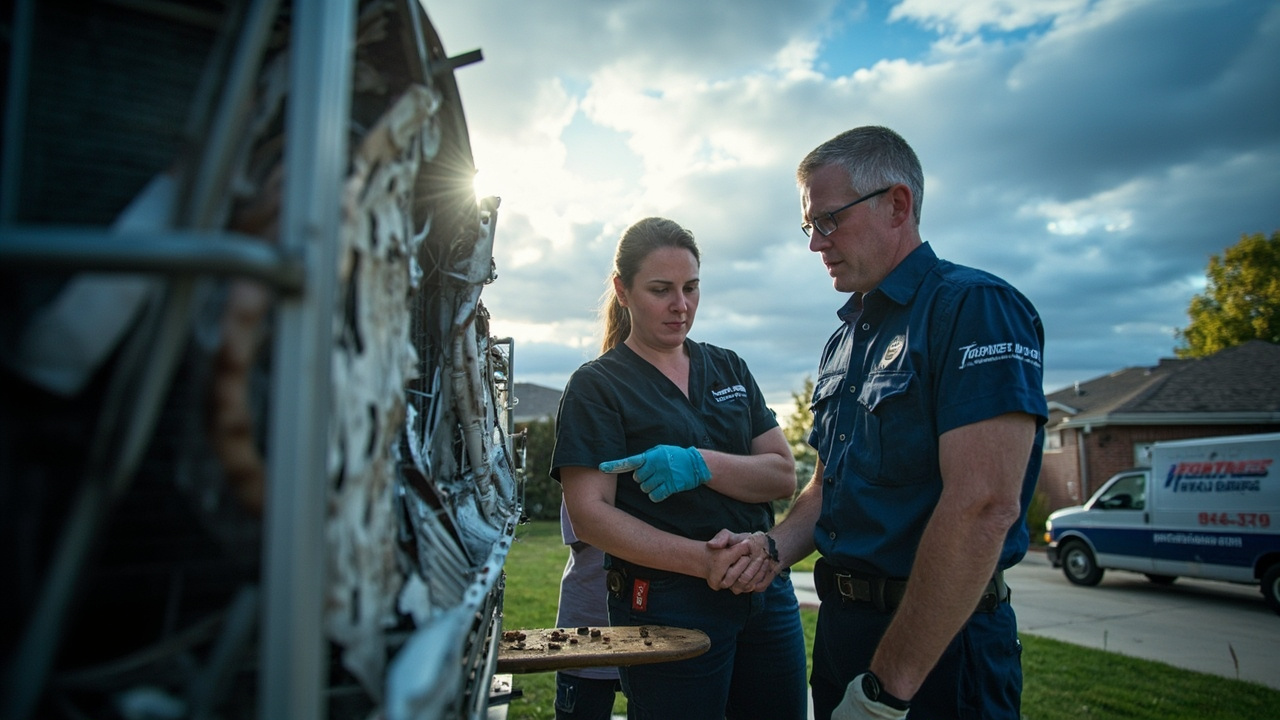
Denver sits directly in Colorado's Hail Alley, where warm air from the plains collides with Rocky Mountain cold fronts to create severe updrafts. May through September produces hailstorms that drop stones exceeding two inches in diameter. These projectiles fall at terminal velocity onto outdoor condenser units, denting aluminum fins and cracking copper refrigerant lines. The Front Range's elevation means hailstones maintain size and velocity longer than storms at lower altitudes. A June hailstorm in Lakewood or Aurora can damage hundreds of HVAC systems in minutes. Emergency HVAC storm repair becomes essential immediately because compromised refrigerant systems leak expensive coolant and damaged electrical components fail without warning during Denver's next temperature extreme.
Denver municipal code requires permitted HVAC work to meet specific altitude adjustments for refrigerant charging and combustion air requirements. Local contractors understand these regulations and the inspection process through Community Planning and Development. Insurance companies processing storm damage claims in the Denver metro area recognize documentation from established local HVAC providers. We maintain relationships with Denver-area adjusters and supply houses that accelerate parts acquisition when storms damage systems across entire neighborhoods simultaneously. Choosing a local provider for HVAC storm restoration services means working with technicians who understand Denver's unique combination of hail exposure, high altitude, and rapid temperature swings that make proper storm damage assessment and repair critically important.