




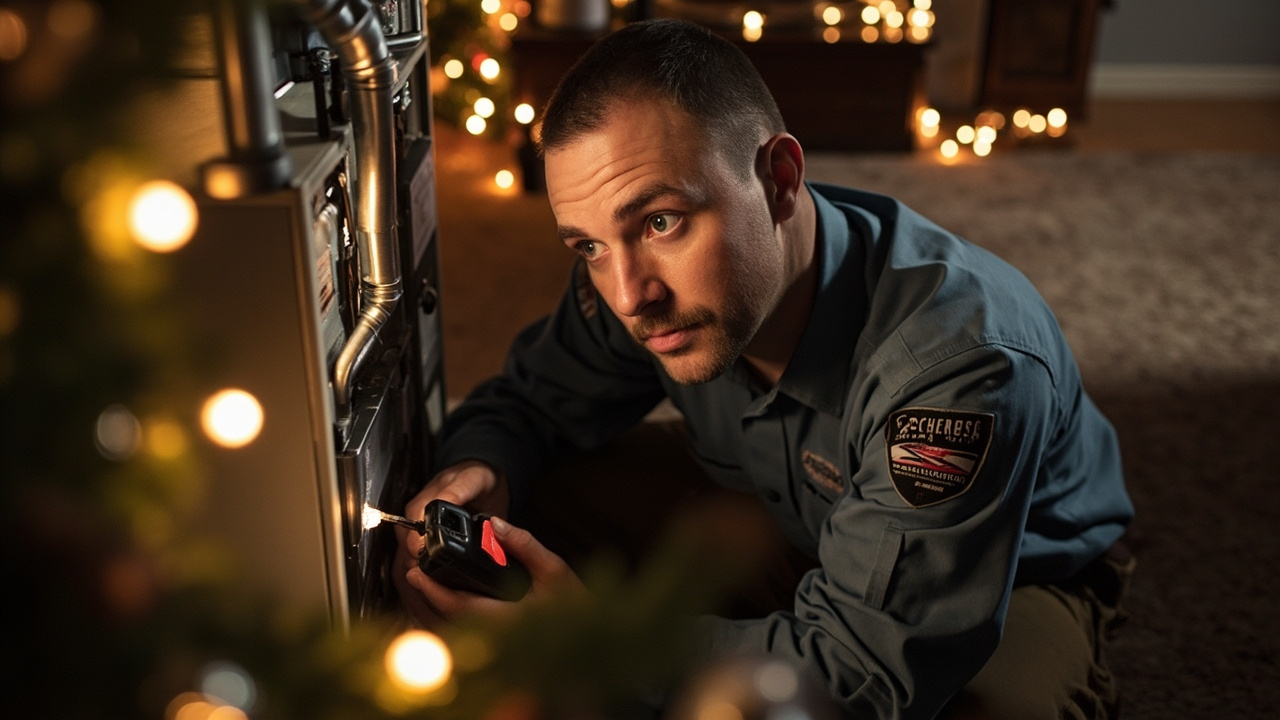

Denver experiences 40 to 60 degree temperature swings within 24 hours during winter holiday periods. December mornings start at 8 degrees and afternoons reach 52 degrees under bright Colorado sun. Your furnace cycles on and off dozens of times daily. Heat exchangers expand when hot and contract when cool. After 15 years of thermal cycling, metal fatigues and cracks. Igniter elements experience similar stress. Hot surface igniters heat to 2500 degrees in three seconds, then cool to ambient temperature in two minutes. Repeated heating and cooling weakens silicon nitride igniters until they fracture. These failures cluster during the coldest holiday weeks when furnaces run most frequently.
Denver's elevation affects furnace operation in ways most technicians do not understand. At 5,280 feet, atmospheric pressure is 12 percent lower than sea level. Lower pressure reduces oxygen availability for combustion. Gas furnaces require precise air-fuel ratios to burn cleanly. Technicians trained at sea level often misadjust Denver furnaces, causing sooting, incomplete combustion, and carbon monoxide production. Fortress HVAC Denver technicians train specifically on high-altitude HVAC requirements outlined in Denver building codes and manufacturer altitude compensation guidelines. When your furnace fails on a holiday, you need someone who understands Denver's unique HVAC environment, not a contractor guessing.