




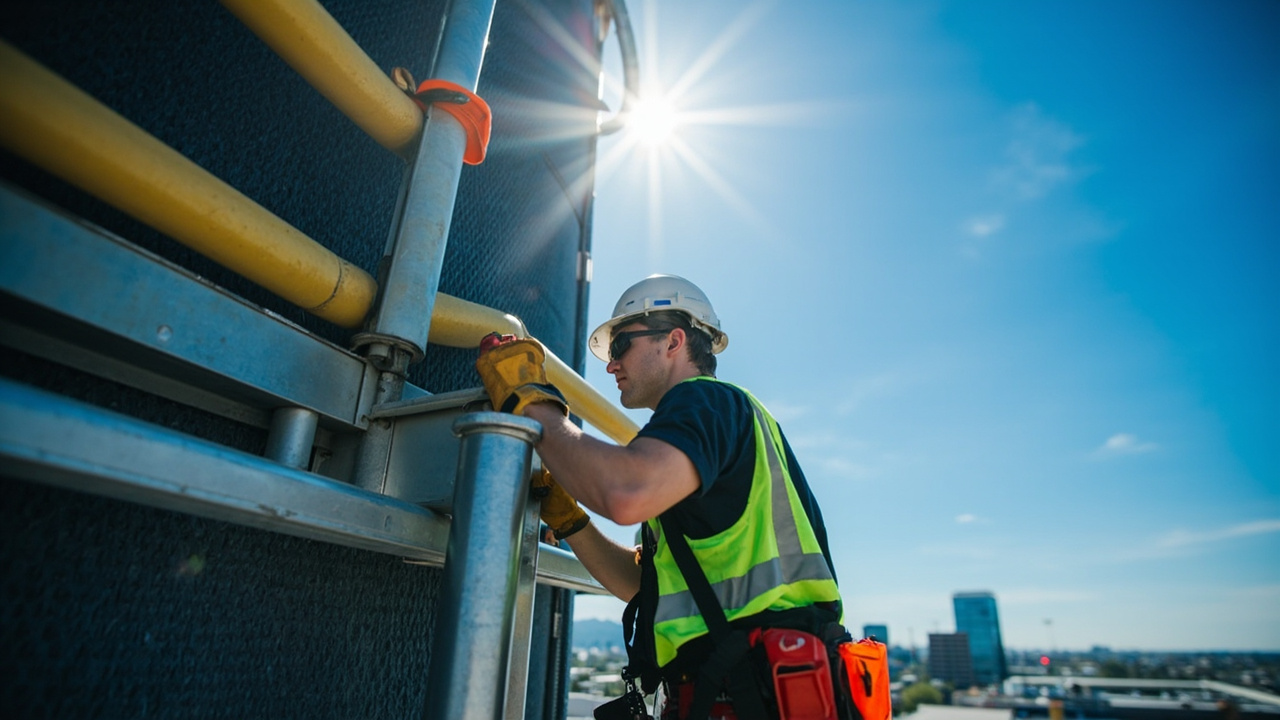


Denver Water delivers supply with 140 to 180 mg/L total hardness, significantly higher than the 60 mg/L national average. This elevated calcium carbonate concentration means your cooling tower faces accelerated scale formation on heat transfer surfaces. As water evaporates in the tower, dissolved minerals become more concentrated. Without proper blowdown management, calcium precipitates onto fill media and basin surfaces, forming rock-hard deposits that restrict water flow and reduce heat transfer efficiency. The problem intensifies at altitude because lower boiling points increase evaporation rates, concentrating minerals faster than at sea level.
Successful cooling tower operation in Denver requires service providers who understand local water chemistry and altitude effects on system performance. We calibrate water treatment programs based on actual Denver Water quality reports, not generic manufacturer recommendations. We adjust maintenance intervals to account for the accelerated mineral buildup common in this region. Our technicians hold cross-connections control certifications required by Denver Water for backflow prevention device installation and testing. When you work with a contractor familiar with Denver's infrastructure and regulations, you avoid the trial-and-error approach that costs facility managers time and money.