



Menu

Commercial AC Repair in Denver – Minimize Downtime and Maintain Business Operations

Industrial-grade commercial air conditioning repair for Denver businesses that need rapid response, minimal operational disruption, and systems engineered to handle high-altitude cooling demands.

Slider Image 1
Slider Image 2
Slider Image 3
Slider Image 4
Slider Image 5
Slider Image 7
Slider Image 8
Slider Image 9
Slider Image 10
Slider Image 11

Denver's Altitude and Dry Climate Create Unique Commercial HVAC Challenges

Commercial cooling systems in Denver operate under conditions that accelerate wear and complicate repairs. At 5,280 feet, the reduced air density forces compressors to work harder to achieve the same cooling output you would get at sea level. This increases mechanical stress on components and shortens equipment lifespan if not properly maintained.

Denver's dry climate and extreme temperature swings compound the problem. Summer days routinely exceed 90 degrees, while nights drop 30 to 40 degrees. This thermal cycling stresses refrigerant lines, creates expansion and contraction in ductwork, and degrades seals faster than in more stable climates. Low humidity also increases static electricity buildup, which can damage control boards and sensors in modern commercial hvac systems.

For businesses operating warehouses, retail spaces, or office buildings across the Denver metro, a failed cooling system does not just create discomfort. It disrupts operations, damages inventory, violates tenant agreements, and drives customers away. Industrial ac repair demands are highest during peak cooling season, exactly when you cannot afford extended downtime.

Your commercial cooling system is a business continuity asset. When compressors fail, refrigerant leaks develop, or control systems malfunction, you need technicians who understand the capacity requirements and airflow dynamics of commercial-grade equipment. Generic residential service providers lack the tools, parts inventory, and technical knowledge to handle multi-ton rooftop units or complex zoned systems common in Denver commercial properties.

Denver's Altitude and Dry Climate Create Unique Commercial HVAC Challenges
Commercial-Grade Diagnostics and Repair Protocols

Commercial-Grade Diagnostics and Repair Protocols

Business ac repair requires a different approach than residential service. Commercial systems use scroll compressors, economizers, variable frequency drives, and building automation system integration that residential technicians rarely encounter. Our diagnostic process starts with a full system evaluation using commercial-grade manifold gauges, refrigerant analyzers, and thermal imaging to identify failure points without guesswork.

We assess superheat and subcooling values to determine whether you have a refrigerant charge issue, airflow restriction, or compressor efficiency loss. Many commercial cooling failures stem from dirty condenser coils, which reduce heat rejection capacity and force the system to run longer cycles. In Denver's dusty conditions, coils accumulate particulate faster than in humid climates where rain provides natural cleaning.

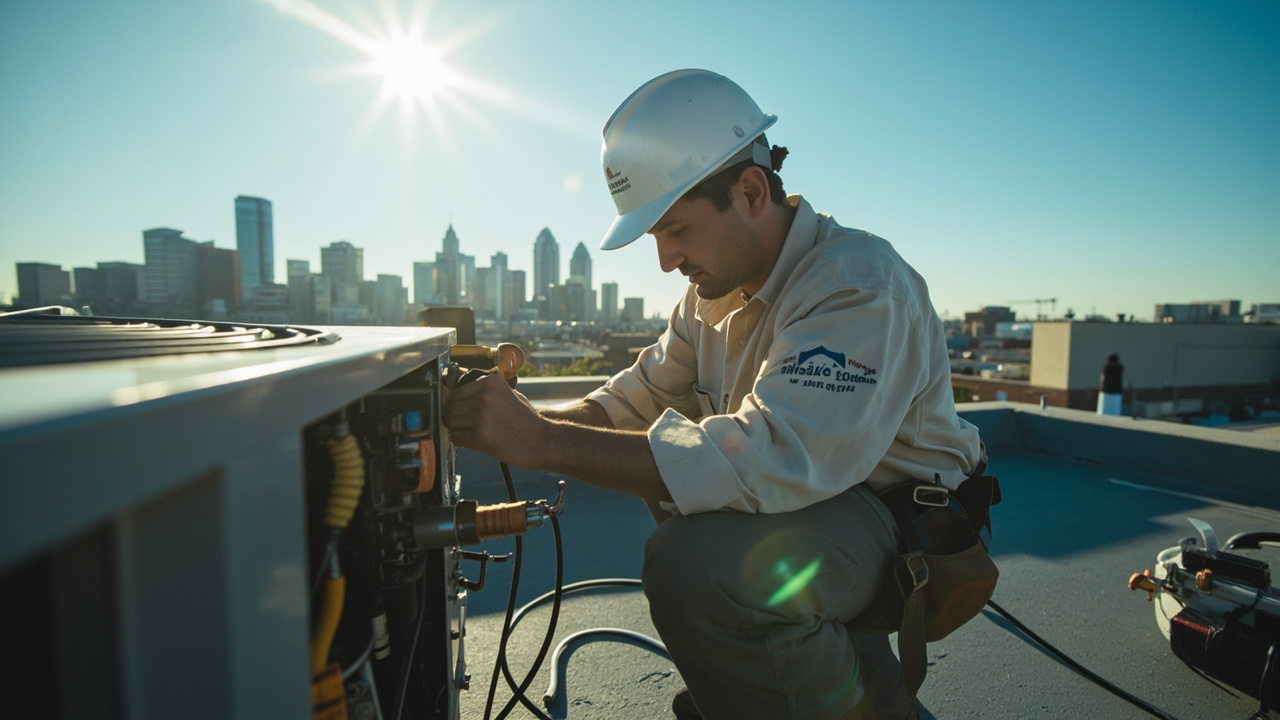
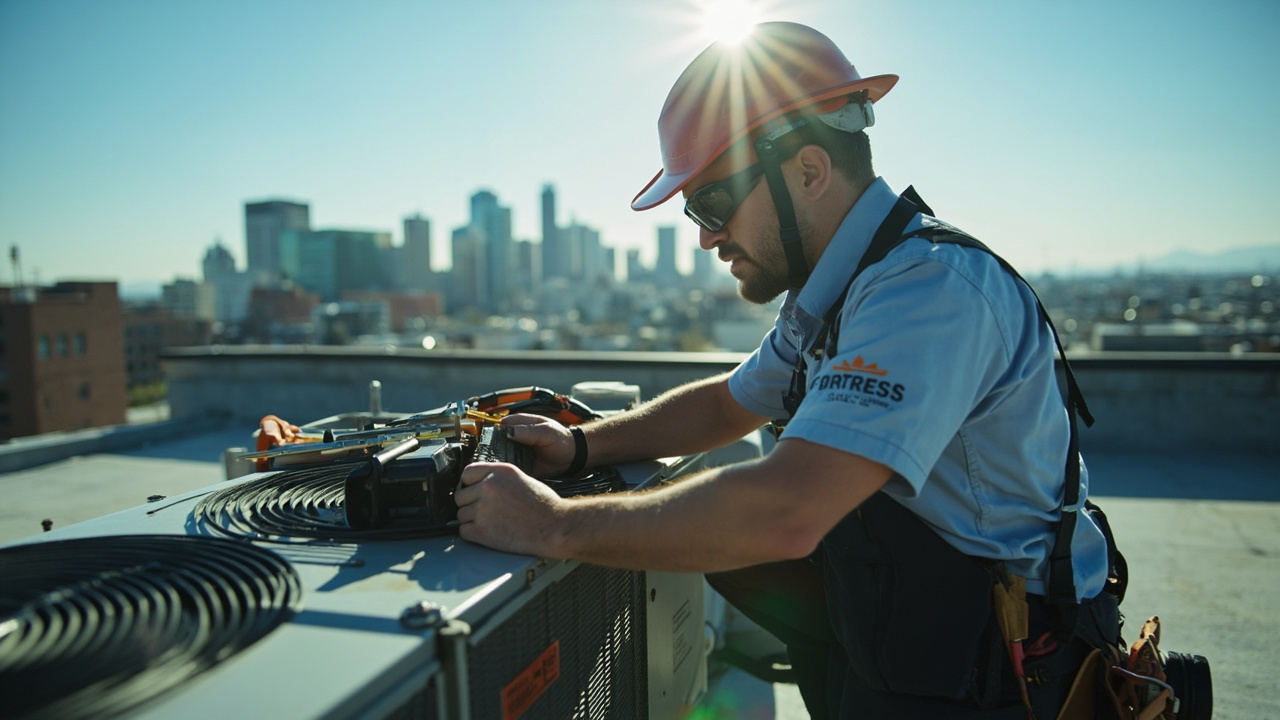
For rooftop units common in Denver commercial buildings, we evaluate curb mounting integrity, flashing condition, and vibration isolation. High-altitude wind loads create unique stress on rooftop equipment. Loose mounting hardware or degraded isolators transfer vibration into the building structure and accelerate mechanical wear.

We carry OEM parts for major commercial brands and maintain relationships with local distributors for same-day procurement of specialized components. When a compressor contactor fails or a blower motor burns out, we do not make you wait three days for parts shipping. Our service vehicles stock contactors, capacitors, relays, and motors for the most common commercial applications.

For multi-zone systems, we verify damper operation, static pressure balance, and control sequence logic. A single stuck damper can cause some zones to overcool while others overheat, wasting energy and creating tenant complaints.

How Commercial AC Repair Works for Denver Businesses

Commercial AC Repair in Denver – Minimize Downtime and Maintain Business Operations
01

Emergency Dispatch and Assessment

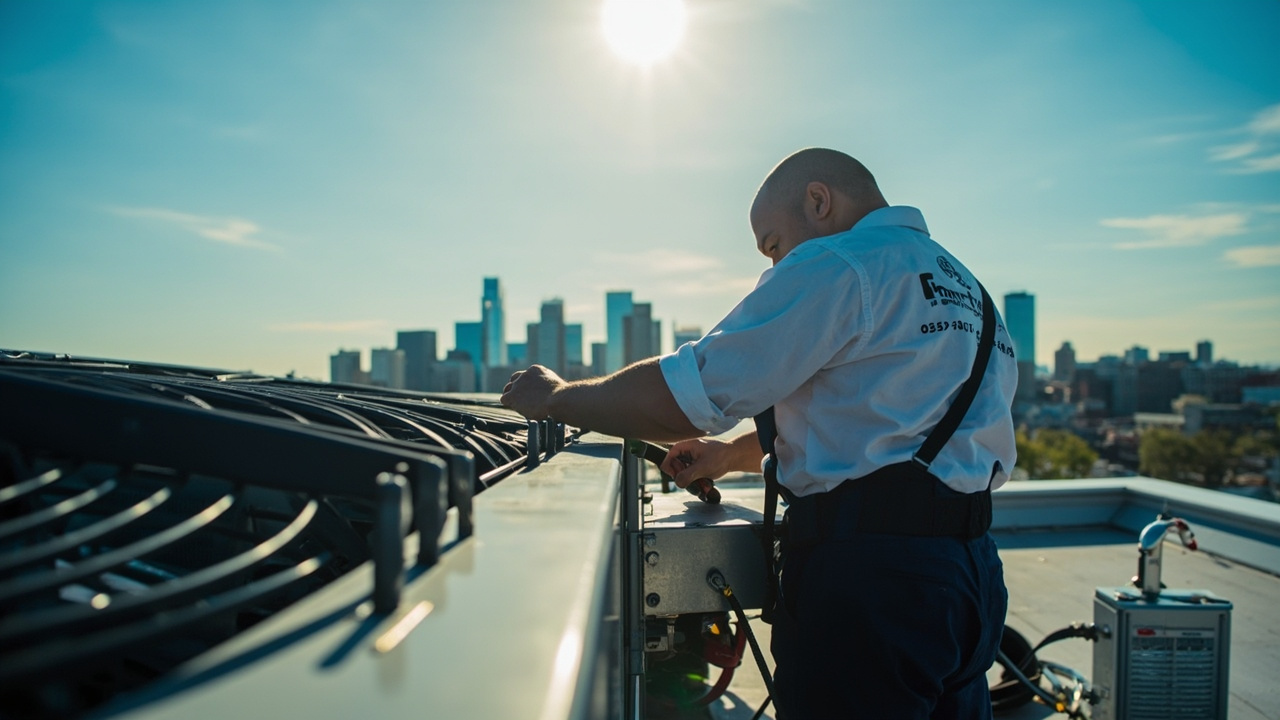
You contact us with your cooling issue and we dispatch a commercial-certified technician with the diagnostic equipment needed for your system type. We arrive with manifold gauges, refrigerant recovery equipment, electrical testing tools, and thermal imaging cameras. Our initial assessment identifies whether you have a mechanical failure, electrical fault, refrigerant issue, or control system problem. We provide a clear diagnosis and repair scope before starting work.
02

Component Repair or Replacement

We execute the repair using commercial-grade components and following manufacturer specifications for your equipment. This may involve replacing a failed compressor, repairing refrigerant leaks and recharging the system, replacing control boards or sensors, cleaning condenser coils, or rebuilding blower assemblies. For refrigerant work, we follow EPA Section 608 protocols for recovery and charging. We test system performance under load to verify repair effectiveness before leaving your site.
03

Performance Verification and Documentation

We measure system performance metrics including supply air temperature, refrigerant pressures, amperage draw, and airflow to confirm your system operates within manufacturer specifications. You receive documentation of the repair, including parts replaced, refrigerant added, and performance measurements. For buildings with facility management requirements, we provide detailed service reports that satisfy documentation requirements for property managers or corporate facilities departments.

Why Denver Businesses Choose Fortress HVAC for Commercial Cooling Repair

Commercial air conditioning repair in Denver requires familiarity with high-altitude system performance characteristics that most technicians never encounter. We understand how reduced air density affects compressor efficiency and how Denver's extreme diurnal temperature swings stress refrigerant systems. This knowledge translates to faster diagnosis and more effective repairs.

Denver's commercial building stock includes everything from historic structures in LoDo with retrofitted HVAC systems to modern office towers with sophisticated building automation. We work across this spectrum, from single-package rooftop units on small retail buildings to split systems in multi-tenant properties. Our technicians carry the certifications and experience to handle commercial-grade equipment from major manufacturers.

We maintain parts inventory specifically for commercial applications. When a three-phase compressor contactor fails or a commercial-grade blower motor burns out, we have the replacement in stock or can source it locally within hours. This eliminates the multi-day delays that occur when residential-focused companies need to order specialized commercial components.

For businesses in the Denver Tech Center, Cherry Creek, or along the I-25 corridor, we provide response times that minimize business disruption. We understand that every hour of downtime represents lost revenue, reduced productivity, and potential lease violations. Our dispatch prioritizes commercial clients during business hours to address cooling failures before they escalate into larger problems.

We also understand Denver's commercial building codes and the mechanical permitting requirements for certain types of refrigerant work. When repairs require permits or inspections, we handle that process to keep your building compliant with city regulations.

What to Expect from Commercial AC Repair Service

Rapid Commercial Response Times

Commercial cooling failures demand faster response than residential service. We prioritize business clients during operating hours because we understand the operational and financial impact of down systems. For most Denver metro locations, we provide same-day or next-business-day service depending on call time and technician availability. Emergency calls during peak cooling season receive priority dispatch. We communicate realistic arrival windows and update you if conditions change.

Comprehensive System Diagnostics

Commercial systems require thorough evaluation beyond simple visual inspection. We measure refrigerant pressures, superheat, and subcooling to assess charge accuracy. We test electrical components including contactors, capacitors, and control boards. We evaluate airflow using manometers and check static pressure across filters and coils. For systems with economizers or building automation integration, we verify control sequences and damper operation. You receive a clear explanation of what failed, why it failed, and what repair or replacement is needed.

Commercial-Grade Repair Quality

We use OEM or equivalent commercial-grade components, not residential substitutes. Compressor contactors are rated for the inductive loads of commercial equipment. Capacitors match the microfarad and voltage requirements of your specific motors. Refrigerant work follows EPA protocols with proper recovery and accurate charging by weight or subcooling method. We pressure-test refrigerant repairs and pull vacuum to manufacturer specifications before recharging. The repair is built to handle the demands of commercial duty cycles.

Service Documentation and Maintenance Planning

You receive detailed documentation of all work performed, including parts replaced, refrigerant type and quantity added, and system performance measurements. For property managers or facilities departments, we provide reports that satisfy internal documentation requirements. We identify maintenance items that need attention to prevent future failures, such as dirty coils, aging contactors, or worn belts. Many commercial clients transition to scheduled maintenance agreements after experiencing emergency repairs, which reduces future downtime and extends equipment life.

Frequently Asked Questions

You Have Questions,
We Have Answers

What is the $5000 AC rule? +

The $5000 rule is an IRS guideline allowing businesses to expense equipment repairs immediately if costs stay under $5000. If your commercial AC repair exceeds this threshold, you may need to capitalize and depreciate it over multiple years. This impacts cash flow planning for Denver commercial property owners. The rule applies per unit or system, not per invoice, so repairing multiple rooftop units in one service call requires careful accounting. Consult your tax advisor to determine if your HVAC expenditure qualifies as a deductible repair or capital improvement, especially when replacing major components like compressors.

What are common commercial HVAC problems? +

Denver's high-altitude climate and temperature swings stress commercial HVAC systems. Common problems include refrigerant leaks from thermal expansion and contraction, compressor failures due to overwork during hot summers, clogged condensate drains from dust accumulation, and dirty evaporator coils reducing efficiency. Rooftop units face UV degradation and weather exposure. Thermostat calibration issues frequently arise in multi-zone buildings. Electrical contactors fail from repeated cycling. Belts and bearings wear faster in 24/7 operations like data centers or medical facilities. Inadequate airflow from blocked filters causes freeze-ups. Regular preventive maintenance reduces downtime and extends equipment life.

What are the costs of commercial HVAC repair? +

Commercial HVAC repair costs in Denver vary by system size, accessibility, and damage severity. Minor fixes like capacitor replacement or thermostat calibration run a few hundred dollars. Refrigerant leak repairs range from moderate to substantial depending on location and system charge. Compressor replacement represents a major expense, often justifying replacement discussions for aging units. Rooftop unit repairs cost more due to access requirements and crane rentals. Emergency after-hours service carries premium rates but prevents revenue loss. Budget for diagnostic fees, labor rates higher than residential, and commercial-grade parts. Preventive maintenance contracts reduce unexpected costs and qualify for tax deductions.

What is the average life of a commercial air conditioner? +

Commercial air conditioners in Denver last 15 to 20 years with proper maintenance. Lifespan depends on usage intensity, maintenance frequency, installation quality, and environmental exposure. Rooftop units endure harsher conditions from UV exposure, hail, and freeze-thaw cycles, potentially shortening life. Systems running continuously in restaurants or server rooms wear faster than office buildings with scheduled operations. Denver's dry climate reduces corrosion but increases dust infiltration. Units exceeding 15 years face declining efficiency and rising repair frequency. Plan capital replacement budgets accordingly. Energy efficiency improvements in newer models often justify earlier replacement despite remaining functional capacity.

What is the 3 minute rule for AC? +

The 3-minute rule requires waiting at least three minutes between compressor shutdown and restart. This delay allows refrigerant pressure to equalize throughout the system. Starting a compressor against high pressure differential causes mechanical stress, electrical overload, and premature failure. Commercial systems use time-delay relays or lockout controls to enforce this protection. Rapid cycling damages compressors and spikes energy consumption. In Denver office buildings, this matters during grid fluctuations or after power restoration. Maintenance techs verify proper delay settings during inspections. Ignoring this rule voids warranties and accelerates replacement timelines. Educate facility staff to avoid manual override during troubleshooting.

Can I write off my new AC unit on my taxes? +

You can write off commercial AC units on your taxes through Section 179 deduction or bonus depreciation. Section 179 lets businesses expense up to the full cost immediately rather than depreciating over years. HVAC qualifies as tangible business property. Bonus depreciation allows additional first-year deductions for new equipment. Energy-efficient systems may qualify for tax credits under IRS Section 179D. Consult your CPA to maximize deductions specific to your Denver commercial property. Repairs under $5000 typically expense immediately. Replacement systems require depreciation schedules unless you elect accelerated methods. Proper documentation and invoice categorization ensure compliance and cash flow benefits.

What is the 2 foot rule for HVAC? +

The 2-foot rule requires maintaining two feet of clearance around HVAC equipment for airflow, service access, and code compliance. Denver commercial buildings must follow this for rooftop units, mechanical rooms, and outdoor condensers. Blocked clearance reduces efficiency, causes overheating, and violates fire codes. Maintenance techs need space to access panels, change filters, and perform diagnostics. Stored materials near equipment create liability issues. Property managers must enforce clearance during roof work or storage decisions. Insufficient airflow forces systems to work harder, increasing energy costs and shortening equipment life. Code inspectors flag violations during occupancy permits or tenant improvements.

What is the most common part to fail on an AC unit? +

Capacitors fail most frequently in commercial AC units. These components store electrical charge to start motors and maintain compressor operation. Denver's temperature extremes stress capacitors, causing bulging, leaking, or complete failure. Symptoms include compressors that hum but do not start, intermittent cooling, or hard starts. Replacement is straightforward and affordable compared to other repairs. Contactors rank second, wearing from repeated electrical cycling in high-use environments. Thermostats malfunction third due to calibration drift or wiring issues. Regular inspections catch capacitor degradation before failure causes downtime. Stock critical spares for 24/7 operations to minimize business interruption.

What are the 3 R's of HVAC? +

The 3 R's of HVAC are Refrigerant Recovery, Recycling, and Reclamation. EPA regulations require technicians to capture refrigerant before servicing or disposing of equipment rather than venting it to the atmosphere. Recovery extracts refrigerant from systems. Recycling cleans it for reuse in the same system. Reclamation processes it to new-product specifications for resale. Denver commercial property owners face liability for improper refrigerant handling. Certified technicians use approved equipment to comply with Clean Air Act requirements. Violations carry substantial fines. Proper refrigerant management reduces environmental impact and ensures regulatory compliance during repairs or equipment replacement.

What is the most expensive repair on an AC unit? +

Compressor replacement is the most expensive commercial AC repair, often costing as much as a new system for large-tonnage units. Compressors are the heart of refrigeration cycles, moving refrigerant under pressure. Failure stems from refrigerant contamination, electrical issues, or mechanical wear. Denver's altitude affects compressor performance curves. Replacement requires refrigerant recovery, brazing, vacuum procedures, and recharging. Labor-intensive access on rooftop units increases costs. When compressors fail on units over 12 years old, replacement economics favor new equipment with warranty coverage and efficiency gains. Heat exchanger leaks rank second in expense, often justifying full system replacement.

Denver's High Altitude Increases Commercial HVAC Repair Complexity

The reduced atmospheric pressure at 5,280 feet changes how refrigerant systems operate compared to sea-level performance. Compressors work harder to compress the thinner air, increasing wear on valves, pistons, and bearings. Refrigerant evaporates at lower temperatures, which affects superheat calculations and charge accuracy. Many technicians who learned their trade at lower elevations misdiagnose Denver systems because standard pressure-temperature charts do not account for altitude correction. This leads to improper charging, which reduces efficiency and shortens compressor life. Commercial systems amplify these issues because of their larger refrigerant charges and higher tonnage ratings.

Denver's commercial building environment creates additional service complications. Wind loads on rooftop units along the Front Range stress mounting hardware and accelerate vibration-related failures. Rapid temperature swings between day and night cycles cause thermal expansion issues in refrigerant lines and ductwork joints. The city's mechanical code requires specific permitting for refrigerant work involving charges above certain thresholds, which many out-of-area contractors overlook. Working with a local commercial hvac repair provider means getting technicians who understand these altitude-specific factors and regulatory requirements without trial-and-error diagnosis.

HVAC Services in The Denver Area

Fortress HVAC is proud to serve the Denver area and surrounding communities. We invite you to view our location on the map, which highlights our service area. While we often come directly to you for services, knowing our central base can help you understand our reach. Feel free to contact us with any questions about our service coverage or to schedule an appointment directly.

Address:
Fortress HVAC Denver, 6035 E 38th Ave, Denver, CO, 80207

Additional Services We Offer

Our news updates

Latest Articles & News from The Blogs

Why Your Gas Fireplace Should Not Be Your Only Heat Source in Golden\n\nGolden homeowners often rely on gas fireplaces for…

Why Your Gas Fireplace Should Not Be Your Only Heat Source in Golden

Why Your Gas Fireplace Should Not Be Your Only Heat Source in Golden\n\nGolden homeowners often rely on gas fireplaces for…

Why Your Furnace Venting Needs Special Attention in High Altitude Morrison

Why Your Furnace Venting Needs Special Attention in High Altitude Morrison Living at 5,800 feet in Morrison means your furnace…

How to Integrate Your HVAC with Matter and Apple Home in Central Park

How to Integrate Your HVAC with Matter and Apple Home in Central Park Central Park residents who want their HVAC…

Contact Us

Every hour of downtime affects your bottom line. Call (720) 502-9511 now for commercial AC repair service in Denver. We dispatch commercial-certified technicians with the tools and parts inventory to handle industrial cooling systems.

;