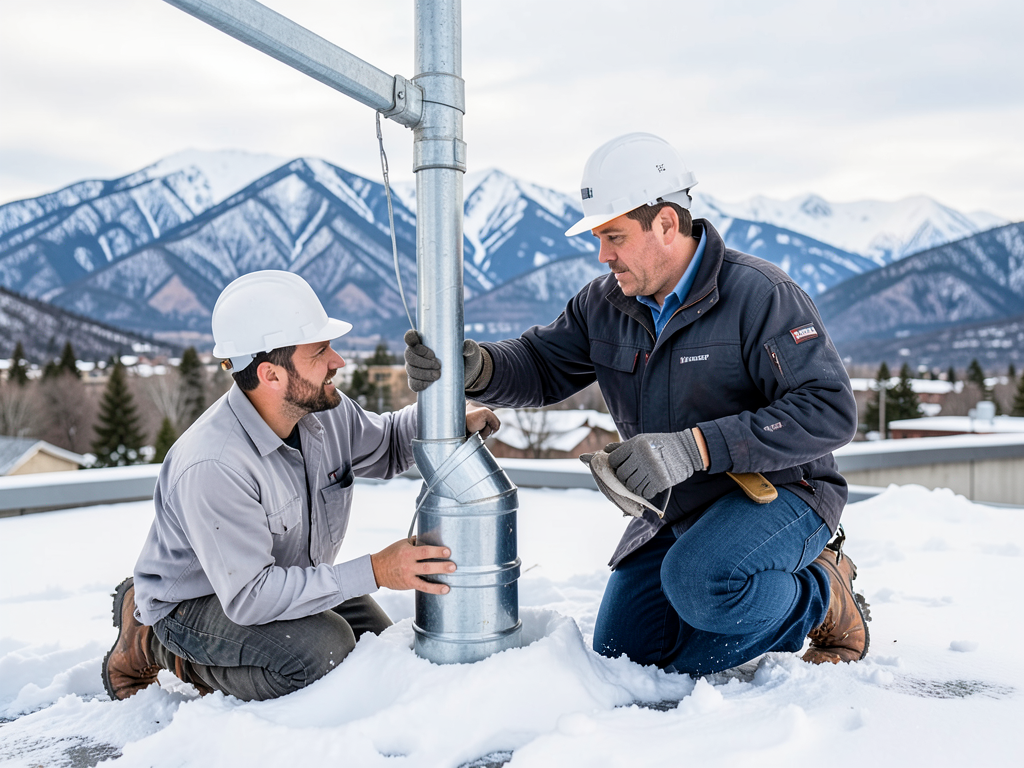







Denver's 5,280-foot elevation reduces air density by 17 percent, which directly impacts compressor performance and refrigerant charge calculations. A rooftop package unit designed for sea level will lose 10 to 15 percent cooling capacity at altitude if not properly compensated. The thinner air also means less oxygen for combustion in gas-fired heating sections, requiring high-altitude burner orifices and adjusted gas pressures. Add in Denver's extreme diurnal temperature swings, where rooftop temperatures can fluctuate 50 degrees between 3 AM and 3 PM, and you create thermal expansion stress on refrigerant lines, ductwork connections, and roof curb flashings. Installers who ignore these physics principles deliver systems that short-cycle, waste energy, and fail prematurely. Fortress HVAC Denver engineers every commercial rooftop HVAC installation with altitude-specific load calculations, properly derated equipment, and mounting systems designed for the Front Range's unique environmental loads.
Denver requires mechanical permits for all commercial RTU installs over five tons, and the inspection process verifies compliance with the 2021 International Mechanical Code as amended by the city. Inspectors check refrigerant line sizing, electrical disconnect placement, gas line pressure testing, and condensate drain routing. Contractors unfamiliar with Denver's specific code amendments waste your time with failed inspections and project delays. Our crews have installed hundreds of rooftop units across the metro area, from Centennial office parks to downtown Denver high-rises. We maintain direct relationships with city inspectors and schedule inspections to avoid the two-week backlog common during summer construction season. When you hire Fortress HVAC Denver, you get a team that knows the local regulatory environment and delivers compliant installations the first time.