How to Tell If Your Thermostat Is Broken or Your Furnace Is Dying (Belmar Resident Guide)
Denver winters can turn brutal fast and when your heat stops working the panic sets in. Is it just a dead thermostat battery or is your furnace on its last legs? This Belmar-specific guide cuts through the confusion with a step-by-step diagnostic checklist so you can identify the real problem before calling for help. Denver Municipal Code.
Start with the basics: check your thermostat display for power, verify the circuit breaker is on and confirm your furnace power switch hasn’t been flipped off. If those pass but you still have no heat you need to dig deeper. This guide walks you through the exact signs that point to a failing thermostat versus a dying furnace using diagnostic language a Denver homeowner can trust. Emergency Furnace Repair for Denver Residents Dealing with a Frozen House.
The 30-Second Diagnostic Checklist
Before assuming the worst run through these quick checks:
- Replace thermostat batteries even if display looks fine
- Flip the furnace power switch off then back on
- Check your home’s main circuit breaker for tripped switches
- Set thermostat to “heat” mode and raise temperature 5 degrees above room temp
- Listen for the furnace to click or hum when it should start
If heat still doesn’t come on after these steps you’ve got a real problem. Now you need to figure out if it’s the thermostat or the furnace.. Read more about How High Altitude Affects Your Furnace Performance and What to Check.
Signs the Problem is Your Thermostat
Thermostats fail in predictable ways that are often cheaper to fix than a furnace replacement. Here’s what to look for: Repair vs. Replace AC Guide.
Blank or fading display – Even with fresh batteries a thermostat nearing end-of-life may show dim or flickering numbers. The backlight might work intermittently or the screen could go completely dark.
Mismatched temperature readings – If your thermostat says 72°F but your room feels like 65°F the sensor is likely failing. You can verify this with a basic thermometer placed near the thermostat.
Loose wiring or dust accumulation – Remove the faceplate and inspect for corroded connections or dust buildup around terminals. In Belmar’s older homes built in the 1960s-70s wiring can loosen over decades of vibration.
Short cycling caused by ‘anticipator’ settings – Older mechanical thermostats use a heat anticipator that can drift out of calibration. This causes the furnace to turn on and off rapidly without completing a full heating cycle.
Signs Your Furnace is the Culprit
When the furnace itself fails the symptoms are more dramatic and often more expensive to repair. Watch for these red flags: Fast AC Repair Services in Aurora for When the Summer Heat Hits.
Strange noises (banging, whistling, grinding) – A healthy furnace runs relatively quietly. Banging often indicates delayed ignition where gas builds up before igniting. Whistling suggests airflow restrictions. Grinding means failing bearings in the blower motor.
Yellow pilot light instead of blue (High-altitude Denver context) – At Denver’s 5,280-foot elevation a properly adjusted furnace should show a steady blue flame. Yellow indicates incomplete combustion often caused by dirty burners or improper gas pressure. This is especially common in homes built before 2010 when altitude adjustments weren’t as precise.
The blower runs but the air is cold – If you feel air moving but it’s not warm your furnace is running but not igniting. This could mean a failed ignitor, faulty flame sensor or problems with the gas valve.
Frequent cycling despite thermostat settings – When your furnace turns on and off every few minutes it’s short cycling. This strains the system and often indicates issues with the high-limit switch, flame rollout sensor or control board.
Denver-Specific Heating Challenges
Belmar residents face unique heating challenges due to Denver’s high-altitude climate and older home construction. The dry air common at 5,280 feet affects both thermostat sensitivity and furnace combustion efficiency.. Read more about What to Do Immediately if You Smell Gas Near Your Furnace in Your Whittier Bungalow.
Denver’s temperature swings from 60°F to below freezing in a single day stress heating systems. Older Belmar homes built in the 1960s often have single-stage furnaces that struggle with these rapid changes. The altitude also means furnaces need proper combustion air calculations – something many DIY thermostat installations get wrong.. Read more about Understanding How Hard Denver Water Affects Your Boiler and Radiators in Mayfair.
Local building codes now require CO detectors within 15 feet of all sleeping areas per Denver Municipal Code Section 403.2.2. If your furnace shows any yellow flame or produces unusual odors you need immediate professional inspection.
When to Call a Professional: Safety First
Some furnace problems pose serious safety risks. Stop troubleshooting immediately if you notice:
Gas smells – Even a faint gas odor indicates a potential leak. Evacuate and call Xcel Energy’s emergency line at 1-800-895-2999.
Carbon monoxide detector alarms – If your CO detector sounds leave the house immediately and call 911. Never ignore CO alarms.
Booms or explosions when furnace starts – This indicates delayed ignition where gas accumulates before igniting. It can crack your heat exchanger and release deadly carbon monoxide.
Visible cracks in furnace cabinet or heat exchanger – Any visible damage to the furnace structure requires immediate shutdown and professional inspection.
Cost Comparison: Thermostat vs Furnace Repairs
Understanding typical repair costs helps you decide whether to fix or replace. Here’s what Denver homeowners typically pay:
| Repair Type | Typical Cost Range | Success Rate |
|---|---|---|
| Thermostat replacement | $150 – $350 | 95% |
| Igniter replacement | $250 – $400 | 85% |
| Blower motor repair | $400 – $600 | 70% |
| Heat exchanger replacement | $1,500 – $3,500 | 60% |
| Furnace replacement | $3,500 – $7,500 | N/A |
Most thermostat issues resolve with battery replacement or a $200-$300 repair. Furnace problems, especially those involving the heat exchanger or control board, often signal it’s time for replacement if your unit is over 15 years old.
DIY Diagnostic Tools You Can Use
You don’t need to be an HVAC technician to gather useful diagnostic information. Here are simple tests any homeowner can perform:
Multimeter test for thermostat power – Set your multimeter to voltage mode and check for 24-28 volts between the R and C terminals on your thermostat. No voltage means no power getting to the thermostat.
Visual inspection of furnace flame – Remove the furnace cover panel and observe the burner flames when the system starts. They should be steady blue with minimal yellow tipping. Any floating or lifting flames indicate combustion problems.
Airflow check – Hold a tissue near a register when the blower runs. Strong airflow indicates the blower motor is working. Weak airflow suggests filter restrictions or blower problems.
Filter inspection – Remove your air filter and hold it to light. If you can’t see light through it, restricted airflow may be causing your furnace to overheat and shut down.
Common Thermostat Wiring Issues
Thermostat wiring problems often mimic furnace failures. Understanding the basics helps you communicate with technicians:
The standard thermostat uses four main wires: R (power), W (heat), Y (cooling), and G (fan). The C wire provides continuous 24-volt power for modern smart thermostats. Without a C wire, smart thermostats may malfunction, causing symptoms that look like furnace problems.
In older Belmar homes, you might find only two wires (R and W) connected. This works for basic mechanical thermostats but causes issues with programmable models that need constant power. Loose connections at either the thermostat or furnace control board create intermittent heating failures that seem random.
Smart Thermostat Troubleshooting
Smart thermostats add another layer of complexity. Common issues include:
C-wire requirements – Most smart thermostats need a C wire for continuous power. Without it, they may steal power through the heating circuit, causing short cycling or complete failure.
Wi-Fi connectivity problems – Smart thermostats that lose Wi-Fi may revert to default settings or fail to communicate with the furnace properly. This often happens during Denver’s winter storms when power flickers.
Software glitches – Like any computer, smart thermostats can freeze or crash. A simple power cycle (remove batteries, wait 30 seconds, reinstall) often resolves these issues.
Preventative Maintenance Tips
Regular maintenance prevents most thermostat and furnace failures. Here’s what you can do:
Monthly filter changes – Replace your furnace filter every 30-60 days. Clogged filters cause overheating and system shutdowns. This single step prevents 70% of service calls.
Annual professional tune-up – Have a NATE-certified technician inspect your system each fall before heating season. They’ll check gas pressure, combustion efficiency, and electrical connections that homeowners can’t safely access.
Thermostat battery replacement – Change thermostat batteries annually, even if they seem fine. Weak batteries cause erratic behavior that’s hard to diagnose.
Clear vents and registers – Ensure all supply and return vents are open and unobstructed. Blocked vents create pressure imbalances that stress your furnace.
Emergency Response in Belmar
When your heat fails during a Denver winter storm, response time matters. Local HVAC companies serving Belmar typically offer:
24/7 emergency service – Most reputable companies guarantee response within 2-4 hours for heating emergencies. During major storms, expect longer wait times due to high demand.
Same-day diagnostics – Technicians arriving at your home should provide a written diagnosis within 30 minutes of arrival, including repair options and pricing.
Parts availability – Common repair parts like ignitors and control boards are typically stocked on service trucks. Less common parts may require 24-48 hour delivery.
Making the Repair vs Replace Decision
When your furnace shows multiple problems, you need to decide whether to repair or replace. Consider these factors:
Age of equipment – Furnaces typically last 15-20 years in Colorado’s climate. If yours is over 15 years old and needs expensive repairs, replacement often makes more financial sense.
Repair history – If you’ve needed multiple repairs in the past two years, continuing to patch the system usually costs more than replacement over time.
Energy efficiency – Older furnaces operate at 60-70% efficiency. New high-efficiency models reach 95% or higher, cutting your gas bills by 30% or more.
Safety concerns – Any furnace with a cracked heat exchanger must be replaced immediately. There’s no safe way to repair this critical component.
Local Building Code Requirements
Denver’s building codes affect how furnace repairs and replacements must be performed. Key requirements include:
Permits for furnace replacement – Any furnace swap requires a mechanical permit from the City of Denver. This ensures proper sizing, venting, and safety controls are installed.
CO detector installation – New or replacement furnaces must have CO detectors installed per Denver Municipal Code. This applies to both the installation site and any adjacent bedrooms.
Venting requirements – High-efficiency furnaces require specific venting materials and clearances. Improper venting can cause deadly carbon monoxide buildup.
Gas line sizing – The gas supply line must be properly sized for the furnace’s BTU input. Undersized lines cause ignition problems and can be dangerous.
Frequently Asked Questions
Why does my thermostat work but the furnace won’t start?
This usually indicates a communication problem between the thermostat and furnace. Check for 24-volt power at the thermostat terminals, verify the furnace power switch is on, and ensure the circuit breaker hasn’t tripped. If these check out, the issue could be a failed control board or safety switch in the furnace.
How can I tell if my furnace ignitor is bad?
When you hear the furnace try to start but don’t hear the gas valve click or see any flame, the ignitor has likely failed. You might hear clicking sounds as it tries to glow but never see the bright orange light of a working ignitor. This is a common failure in furnaces over 5 years old.. Read more about Why You Should Never Turn Your Heat Completely Off When Leaving Denver for Vacation.
Should I replace my thermostat before calling for furnace repair?
If your thermostat is over 10 years old or shows signs of malfunction (blank screen, erratic behavior, incorrect temperature readings), replacing it first makes sense. A $200 thermostat replacement is cheaper than a $100 diagnostic fee plus potential repairs. However, if you hear unusual furnace noises or smell gas, call a professional immediately.
What does it mean when my furnace light flashes a code?
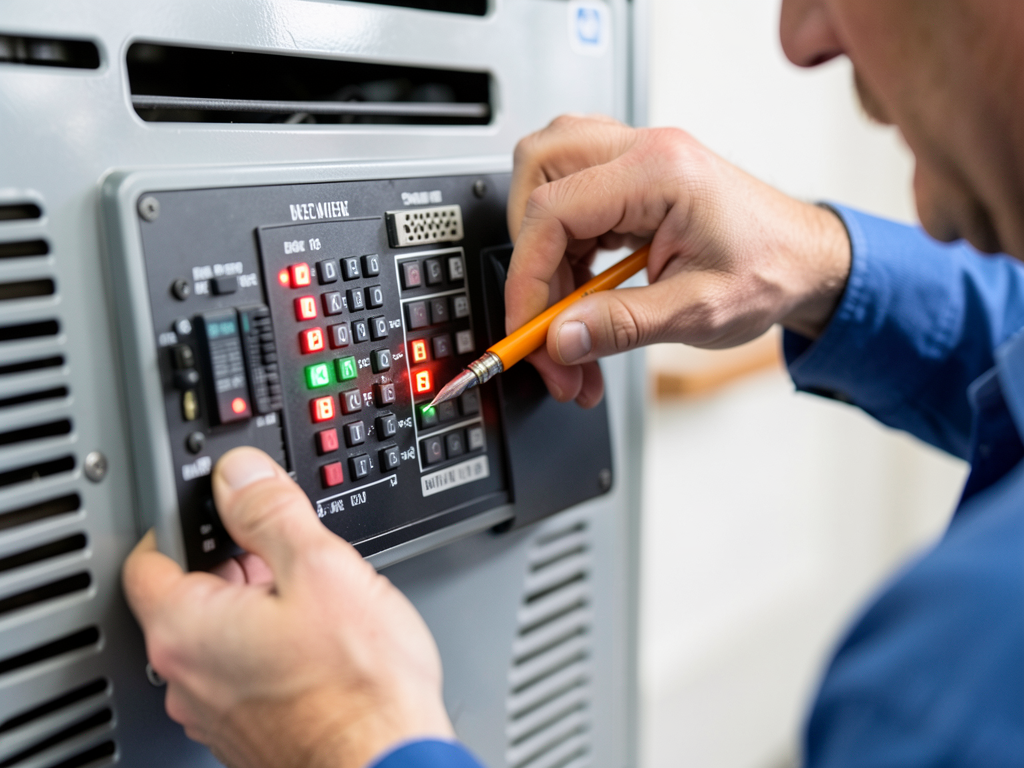
Modern furnaces have diagnostic LED lights that flash codes when problems occur. These codes indicate specific issues like pressure switch failure, limit switch trips, or ignition problems. Your furnace manual decodes these flash patterns. If you can’t find your manual, most manufacturers post them online by model number.
How long should my furnace run during a normal heating cycle?
A properly sized furnace should run 10-15 minutes per cycle, then shut off for 20-30 minutes before restarting. If your furnace runs constantly or cycles on and off every 2-3 minutes, it’s not operating efficiently. This could indicate thermostat problems, airflow restrictions, or incorrect system sizing.. Read more about How to Stop Your HVAC System from Rattling Every Time the Wind Blows in Green Mountain.
Can a dirty air filter cause my furnace to stop working?
Yes. A clogged filter restricts airflow, causing the furnace to overheat. Most furnaces have a high-limit switch that shuts down the system when temperatures get too high. Once cooled, the furnace may restart briefly before overheating again. This creates the exact symptoms many homeowners mistake for thermostat failure.
Remember, when in doubt about your heating system’s safety, always err on the side of caution. A $100 service call is cheap insurance compared to the risks of carbon monoxide poisoning or a house fire. If you’re experiencing any of the emergency symptoms described above, don’t wait – call a professional immediately.
Pick up the phone and call (720) 502-9511 today to schedule your inspection. Don’t let Denver’s next cold snap catch you unprepared. For more information, visit Xcel Energy emergency line.
You may also find this helpful. When Is It Time to Retire Your 20 Year Old AC Unit? (Northfield Replacement Guide).
You may also find this helpful. Remote HVAC Monitoring Tips for Short-Term Rental Owners in LoDo and Five Points.
{
“@context”: “https://schema.org”,
“@type”: “BlogPosting”,
“headline”: “How to Tell If Your Thermostat Is Broken or Your Furnace Is Dying (Belmar Resident Guide)”,
“description”: “Confused whether your thermostat or furnace is failing in Belmar? Use this Denver HVAC troubleshooting guide to diagnose the problem fast and avoid emergency repair costs.”,
“wordCount”: 2218,
“datePublished”: “2026-03-22T16:48:00.000Z”,
“dateModified”: “2026-03-22T16:48:00.000Z”,
“inLanguage”: “en-US”,
“mainEntityOfPage”: {
“@type”: “WebPage”,
“@id”: “https://fortresshvacdenver.com”
},
“publisher”: {
“@type”: “LocalBusiness”,
“name”: “Fortress HVAC Denver”,
“url”: “https://fortresshvacdenver.com”
},
“author”: {
“@type”: “Organization”,
“name”: “Fortress HVAC Denver”,
“url”: “https://fortresshvacdenver.com”
},
“image”: {
“@type”: “ImageObject”,
“url”: “https://fortresshvacdenver.com/wp-content/uploads/2026/03/how-to-tell-if-your-thermostat-is-broken-or-your-f-1.png”
}
}
{
“@context”: “https://schema.org”,
“@type”: “HVACBusiness”,
“name”: “Fortress HVAC Denver”,
“url”: “https://fortresshvacdenver.com”,
“address”: {
“@type”: “PostalAddress”,
“addressLocality”: “Denver”
},
“areaServed”: {
“@type”: “City”,
“name”: “Denver”
}
}
{
“@context”: “https://schema.org”,
“@type”: “FAQPage”,
“mainEntity”: [
{
“@type”: “Question”,
“name”: “Why does my thermostat work but the furnace won’t start?”,
“acceptedAnswer”: {
“@type”: “Answer”,
“text”: “This usually indicates a communication problem between the thermostat and furnace. Check for 24-volt power at the thermostat terminals, verify the furnace power switch is on, and ensure the circuit breaker hasn’t tripped. If these check out, the issue could be a failed control board or safety switch in the furnace.”
}
},
{
“@type”: “Question”,
“name”: “How can I tell if my furnace ignitor is bad?”,
“acceptedAnswer”: {
“@type”: “Answer”,
“text”: “When you hear the furnace try to start but don’t hear the gas valve click or see any flame, the ignitor has likely failed. You might hear clicking sounds as it tries to glow but never see the bright orange light of a working ignitor. This is a common failure in furnaces over 5 years old.”
}
},
{
“@type”: “Question”,
“name”: “Should I replace my thermostat before calling for furnace repair?”,
“acceptedAnswer”: {
“@type”: “Answer”,
“text”: “If your thermostat is over 10 years old or shows signs of malfunction (blank screen, erratic behavior, incorrect temperature readings), replacing it first makes sense. A $200 thermostat replacement is cheaper than a $100 diagnostic fee plus potential repairs. However, if you hear unusual furnace noises or smell gas, call a professional immediately.”
}
},
{
“@type”: “Question”,
“name”: “What does it mean when my furnace light flashes a code?”,
“acceptedAnswer”: {
“@type”: “Answer”,
“text”: “Modern furnaces have diagnostic LED lights that flash codes when problems occur. These codes indicate specific issues like pressure switch failure, limit switch trips, or ignition problems. Your furnace manual decodes these flash patterns. If you can’t find your manual, most manufacturers post them online by model number.”
}
},
{
“@type”: “Question”,
“name”: “How long should my furnace run during a normal heating cycle?”,
“acceptedAnswer”: {
“@type”: “Answer”,
“text”: “A properly sized furnace should run 10-15 minutes per cycle, then shut off for 20-30 minutes before restarting. If your furnace runs constantly or cycles on and off every 2-3 minutes, it’s not operating efficiently. This could indicate thermostat problems, airflow restrictions, or incorrect system sizing.”
}
},
{
“@type”: “Question”,
“name”: “Can a dirty air filter cause my furnace to stop working?”,
“acceptedAnswer”: {
“@type”: “Answer”,
“text”: “Yes. A clogged filter restricts airflow, causing the furnace to overheat. Most furnaces have a high-limit switch that shuts down the system when temperatures get too high. Once cooled, the furnace may restart briefly before overheating again. This creates the exact symptoms many homeowners mistake for thermostat failure.”
}
}
]
}
{
“@context”: “https://schema.org”,
“@type”: “BreadcrumbList”,
“itemListElement”: [
{
“@type”: “ListItem”,
“position”: 1,
“name”: “Home”,
“item”: “https://fortresshvacdenver.com”
},
{
“@type”: “ListItem”,
“position”: 2,
“name”: “Blog”,
“item”: “https://fortresshvacdenver.com/blog”
},
{
“@type”: “ListItem”,
“position”: 3,
“name”: “How to Tell If Your Thermostat Is Broken or Your Furnace Is Dying (Belmar Resident Guide)”
}
]
}
{
“@context”: “https://schema.org”,
“@type”: “Service”,
“serviceType”: “HVAC”,
“provider”: {
“@type”: “LocalBusiness”,
“name”: “Fortress HVAC Denver”,
“url”: “https://fortresshvacdenver.com”
},
“areaServed”: {
“@type”: “City”,
“name”: “Denver”
},
“description”: “Confused whether your thermostat or furnace is failing in Belmar? Use this Denver HVAC troubleshooting guide to diagnose the problem fast and avoid emergency repair costs.”
}