





Menu

Frozen AC Coil Repair in Denver – 24/7 Emergency Response Under 90 Minutes

When your evaporator coil freezes over, you need immediate AC freeze up repair to prevent compressor failure and water damage. Fortress HVAC Denver dispatches certified technicians around the clock to restore your cooling fast.

Slider Image 1
Slider Image 2
Slider Image 3
Slider Image 4
Slider Image 5
Slider Image 7
Slider Image 8
Slider Image 9
Slider Image 10
Slider Image 11

Why AC Coils Freeze in Denver's High-Altitude Climate

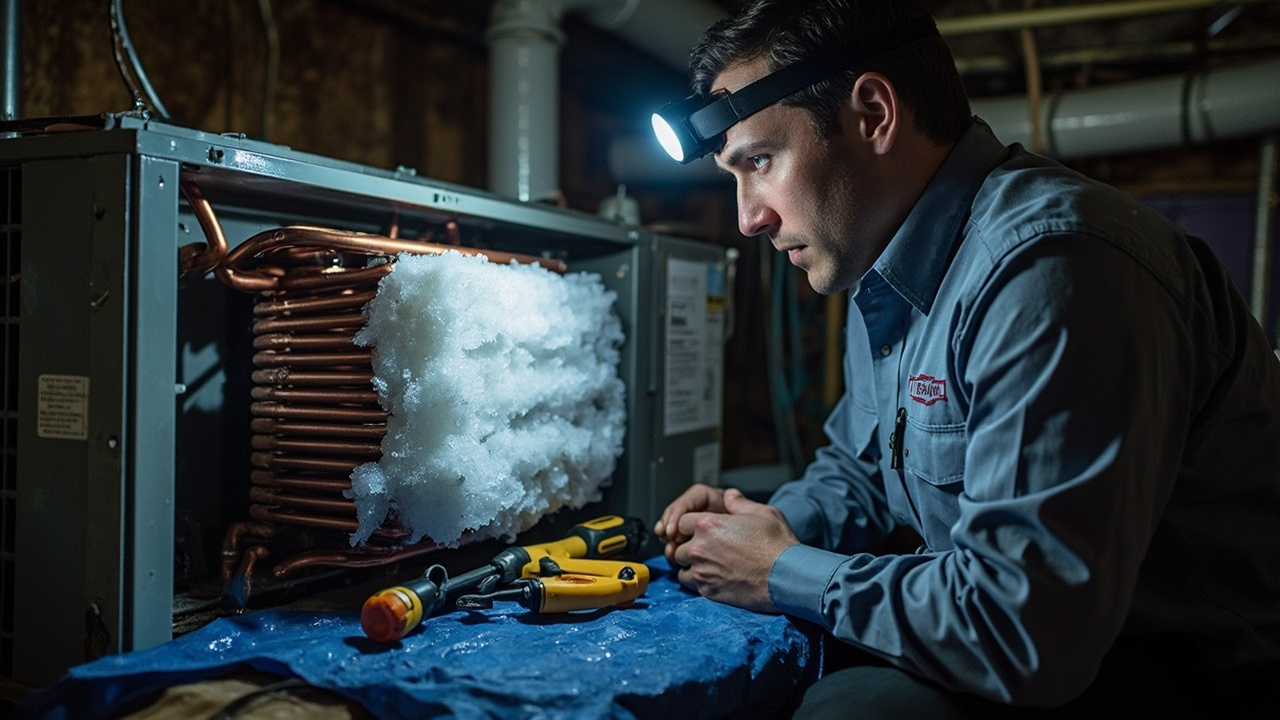
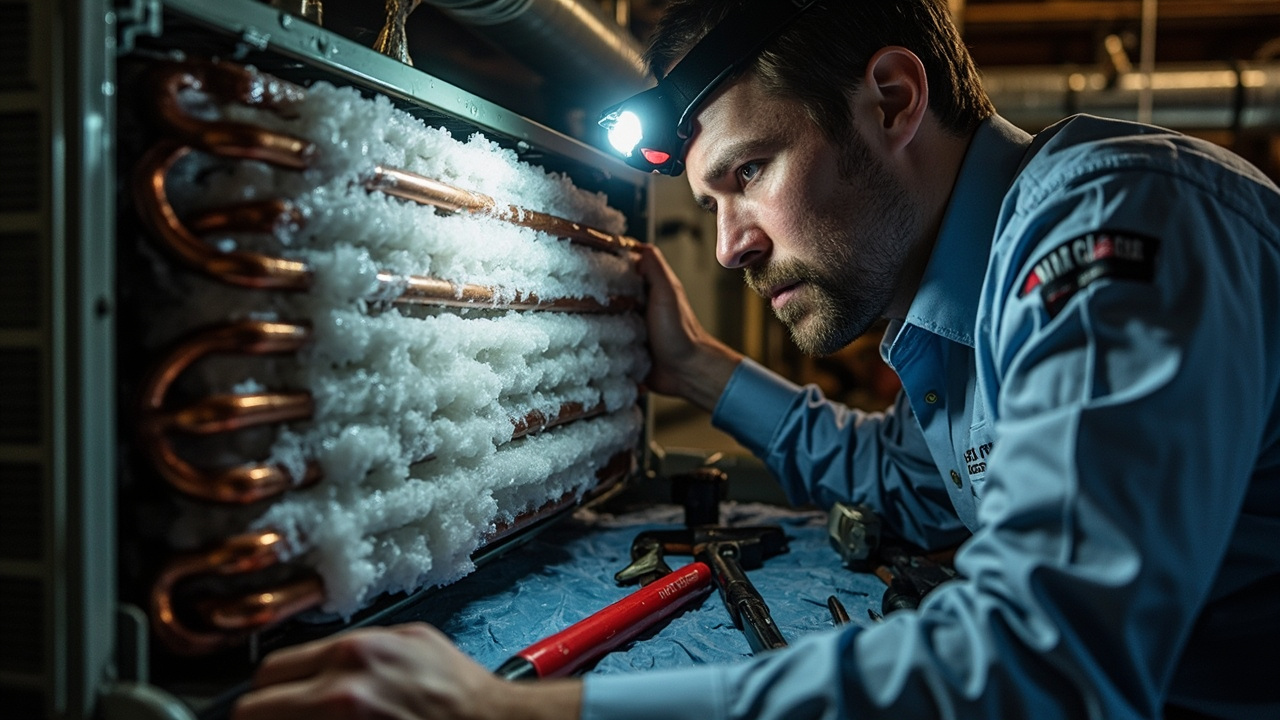
You walk past your air conditioner and notice ice forming on the copper lines. The vents blow warm air. Water pools on the floor. Your AC evaporator coil is frozen, and it is not fixing itself.

Denver's elevation at 5,280 feet creates unique pressure differentials that stress refrigerant flow. When combined with our intense summer heat and sudden temperature drops after thunderstorms, your system works harder than units at sea level. Restricted airflow from clogged filters, dirty coils, or blower motor failure causes refrigerant pressure to drop. The coil temperature plummets below 32 degrees. Moisture in the air freezes on contact.

A frozen evaporator coil is not just uncomfortable. It forces your compressor to run continuously against a solid block of ice. This burns out the compressor, turns a fix frozen air conditioner coils situation into a full system replacement, and floods your home when the ice melts.

Low refrigerant from a leak amplifies the problem. Refrigerant absorbs heat during expansion. When levels drop, the remaining refrigerant gets too cold. The coil ices over within hours. You need emergency AC freeze up repair before the damage spreads.

Denver's dry air also creates static pressure issues in ductwork. Undersized return ducts choke airflow over the coil. The temperature differential increases. Ice forms faster here than in humid climates. Iced up air conditioner service requires diagnosis of the root cause, not just thawing the coil. Shut off your system now. Call for repair frozen HVAC evaporator before your compressor fails.

Why AC Coils Freeze in Denver's High-Altitude Climate
How We Fix Frozen Evaporator Coils the Right Way

How We Fix Frozen Evaporator Coils the Right Way

We do not just thaw your coil and leave. That guarantees the freeze will happen again. Our technicians perform a full-system diagnostic to identify why the coil froze in the first place.

We start with refrigerant pressure testing using manifold gauges. We measure suction line temperature and compare it to manufacturer specifications for Denver's altitude. Low subcooling indicates a refrigerant leak. We locate the leak with electronic detectors, repair it, evacuate moisture from the lines, and recharge to the correct pressure adjusted for elevation.

Next, we measure static pressure across the coil using a manometer. High static pressure means restricted airflow. We inspect the blower motor capacitor, check fan speed settings, and verify CFM output. A failing blower motor cannot move enough air over the coil. We replace it if the amperage draw exceeds nameplate ratings.

We pull the evaporator coil and clean it with coil cleaner and a soft brush. Years of dust and biological growth coat the aluminum fins. This insulates the coil and blocks heat transfer. We also check for bent fins that reduce surface area contact with air.

Ductwork inspection follows. Undersized return ducts or crushed flex duct starve the system of air. We calculate required duct sizing based on your tonnage and compare it to what is installed. We recommend duct modifications if the variance exceeds 20 percent.

We test the expansion valve or metering device. A stuck valve restricts refrigerant flow and causes localized freezing. We verify superheat and subcooling across the valve. If readings fall outside range, we replace the valve. This is repair frozen HVAC evaporator done correctly.

What Happens During Your Emergency AC Coil Repair

Frozen AC Coil Repair in Denver – 24/7 Emergency Response Under 90 Minutes
01

Immediate System Shutdown

Our technician arrives and immediately powers down your system at the breaker and thermostat. Running a frozen coil damages the compressor. We document the ice formation with photos, check for water damage around the air handler, and place absorbent pads under the unit. We then begin controlled thawing using ambient air, never torches or heat guns that warp the coil.
02

Diagnostic Testing Protocol

Once the ice melts, we connect gauges and measure refrigerant pressures, suction line temperature, and superheat. We test the blower motor with an ammeter and check capacitor microfarads. We inspect the filter, coil cleanliness, and ductwork for restrictions. We use a manometer to measure static pressure. This identifies whether the freeze stems from airflow restriction, refrigerant loss, or mechanical failure.
03

Repair and System Restart

We execute the necessary repairs, whether that means fixing a refrigerant leak, replacing a blower motor, cleaning the coil, or adjusting the metering device. We restart the system and monitor temperatures for 20 minutes to confirm proper operation. We verify the coil stays above freezing, airflow is adequate, and pressures stabilize. You get a written report detailing what failed and what we fixed.

Why Denver Homeowners Choose Us for AC Freeze Up Repair

You need someone who understands how Denver's altitude affects refrigerant behavior. We do not use sea-level charge charts. We adjust refrigerant levels based on your elevation, outdoor temperature, and system design. This prevents overcharging, which causes high head pressure and premature compressor failure.

Our technicians carry altitude-compensated manifold gauges and pressure-temperature charts specific to 5,000 feet and above. We know that refrigerant boiling points change with atmospheric pressure. A charge that works in Houston will freeze your coil in Denver. We get it right the first time.

We also understand Denver's soil conditions and how they affect outdoor unit placement. Clay soil expands and contracts with moisture. This shifts the concrete pad and stresses the refrigerant lines. Microfractures develop at the flare fittings. Refrigerant leaks slowly. Your coil freezes. We inspect the outdoor unit pad, check for levelness, and examine all line set connections for stress cracks.

Denver's building codes require specific clearances around outdoor units. We verify your unit meets setback requirements and has adequate airflow. Units crammed against fences or buried in landscaping run hot. The condenser cannot reject heat. System efficiency drops. The evaporator coil compensates by running colder. Ice forms.

We have worked in every Denver neighborhood, from Washington Park bungalows to Stapleton new builds. We know which HVAC brands perform well at altitude and which ones struggle. We know which local suppliers stock parts fast. When your AC freezes at 9 p.m. on a Saturday, we have the parts on the truck or can get them within two hours. No multi-day waits for refrigerant or motors.

What to Expect During Emergency Frozen Coil Service

Response Time and Availability

We dispatch a technician within 90 minutes of your call, 24 hours a day. No answering services. You speak directly to our dispatch team. We provide a text message with your technician's name, photo, and estimated arrival time. Most frozen coil repairs take two to four hours, depending on the root cause. If we need a specialty part, we provide temporary cooling solutions while we source it. We do not leave you without air conditioning overnight.

Diagnostic Process and Transparency

Before we touch a tool, we explain what we are testing and why. You see the gauge readings. We show you the dirty coil, the failed capacitor, or the refrigerant leak. We provide a written estimate before starting repairs. No surprise charges. If your system needs multiple repairs, we prioritize them by urgency and let you decide what gets fixed now versus later. We explain how each issue contributed to the freeze and what happens if you skip a repair.

Quality of Repair Work

We use OEM parts or equivalent-quality components rated for high-altitude operation. Refrigerant lines are brazed with nitrogen purge to prevent oxidation inside the tubing. We pull a 500-micron vacuum before recharging to remove all moisture and air. Blower motors are balanced and tested under load. Coils are cleaned with biodegradable cleaners safe for aluminum fins. We do not cut corners. We do not use leak sealant or other temporary fixes. You get a permanent repair that stops the freeze cycle.

Follow-Up and Preventive Maintenance

After the repair, we schedule a follow-up check within two weeks to verify the system is operating correctly. We offer a preventive maintenance plan that includes biannual inspections, coil cleaning, filter replacement, and refrigerant level checks. Denver's temperature swings stress HVAC systems harder than stable climates. Regular maintenance catches small issues before they cause another freeze. We also provide a detailed service report you can share with your home warranty company or use for property records.

Frequently Asked Questions

You Have Questions,
We Have Answers

How do you fix a frozen AC coil? +

Turn off your system immediately to prevent compressor damage. First, switch off your thermostat and the breaker. Let the ice melt naturally, which takes 1-3 hours in Denver's dry climate. Check and replace your air filter if it's clogged. Inspect registers to ensure none are closed. Once thawed, turn the system back on. If it refreezes within 24 hours, you have a refrigerant leak, blocked airflow, or a failing blower motor. Call a technician right away. Running a frozen coil destroys your compressor, turning a $300 repair into a $2,000+ replacement.

How long does it take for AC coils to unfreeze? +

Expect 1-3 hours for complete thawing in Denver's low humidity climate. Turn off your system at the thermostat and breaker immediately. The thin ice layer melts faster here than in humid regions. Place towels under the indoor unit to catch dripping water. Never chip ice off manually or use heat guns. You'll damage the delicate aluminum fins. If you're in an emergency and need cooling restored faster, a technician can safely accelerate the process. Once thawed, the underlying problem still exists. If you restart without fixing the root cause, it refreezes within hours.

How much does it cost to fix a frozen evaporator coil? +

Repair costs range based on the root cause, not the frozen coil itself. A clogged filter fix costs nothing if you do it yourself. Refrigerant leak detection and repair typically runs several hundred dollars depending on leak location and refrigerant type. Blower motor replacement costs more. Coil replacement reaches the higher end if the coil is damaged beyond repair. Denver's altitude affects refrigerant pressures, so proper charging requires an experienced technician. Get a diagnostic first. Many frozen coil calls are simple airflow fixes. Prices vary by system age, refrigerant type, and accessibility.

What would cause a coil to freeze up? +

Three main culprits freeze coils in Denver homes. Blocked airflow is number one. Dirty filters, closed registers, or duct obstructions starve the coil of warm air. The refrigerant gets too cold and freezes condensation. Second is low refrigerant from leaks. Low pressure drops temperatures below freezing. Third is mechanical failure like a weak blower motor or bad capacitor reducing airflow. Denver's temperature swings stress systems. Running AC when outdoor temps drop below 60 degrees also causes freezing. Thermostat malfunctions that prevent proper cycling contribute too. Each cause requires different fixes.

What is the 3 minute rule for AC? +

The 3 minute rule prevents compressor damage during restart cycles. After your AC shuts off, wait at least 3 minutes before restarting. This allows refrigerant pressures to equalize between the high and low sides of the system. Starting too quickly forces the compressor to work against unbalanced pressure, burning out the motor prematurely. This rule applies every time your system cycles off, whether from a frozen coil emergency or normal operation. In Denver's dry climate with frequent temperature swings, your system cycles more often. Respect this rule to extend compressor life and avoid expensive replacements.

How do you defrost AC coils fast? +

Turn off your system at the thermostat and circuit breaker immediately. Switch the thermostat fan setting to ON, not AUTO. This runs the blower without the compressor, circulating warm indoor air across the coil to speed melting. Place towels under the unit to catch water. In Denver's low humidity, this method thaws coils in 60-90 minutes versus 2-3 hours passive melting. Never use external heat sources like hair dryers or space heaters. You'll warp fins and crack refrigerant lines. Once thawed, identify why it froze before restarting cooling mode or you'll refreeze instantly.

Will my AC work again after it unfreezes? +

Maybe. If you caught it early and the freeze resulted from a simple issue like a dirty filter or closed vents, your AC will work fine after thawing and fixing the airflow problem. If the coil froze because of a refrigerant leak or you ran it frozen for hours, you likely damaged the compressor. A damaged compressor may start but will fail within days or weeks. Test it carefully after thawing. If it refreezes within 24 hours or makes grinding noises, shut it down immediately. Denver's altitude makes refrigerant issues more complex. Get a professional pressure test before assuming it's fixed.

What is the $5000 AC rule? +

The $5,000 rule is a replacement guideline, not an AC-specific term. Multiply the repair cost by your system's age in years. If that number exceeds $5,000, replacement makes more financial sense than repair. Example: a $500 repair on a 12-year-old system equals $6,000, suggesting replacement. A frozen coil repair on a 3-year-old system passes easily. This rule accounts for Denver's harsh climate extremes that age systems faster. Older systems use R-22 refrigerant, which costs more to recharge. New systems offer better efficiency for Denver's temperature swings and lower utility bills.

How long should I leave my AC off if it's frozen? +

Leave your AC off for 1-3 hours minimum to allow complete thawing. Turn off the thermostat and the breaker to prevent automatic cycling. In Denver's dry climate, ice melts faster than humid regions. Check after 90 minutes by feeling the refrigerant lines. The larger copper line should feel room temperature, not cold or icy. Before restarting, replace your air filter and open all closed registers. If you restart too early with ice remaining, you risk compressor flooding and permanent damage. Once thawed, if the root cause isn't fixed, it refreezes within hours. Address the underlying problem first.

Is it worth replacing an AC coil? +

It depends on your system's age and overall condition. If your AC is under 8 years old and the coil failed due to a manufacturing defect or isolated damage, replacement makes sense. You'll get 10-15 more years from the system. If your system is over 12 years old, replace the entire unit. New systems offer better efficiency for Denver's climate and use modern refrigerant. Replacing just the coil on an old system means the compressor or other parts fail next. Factor in Denver's temperature extremes that stress aging components. Get multiple opinions before deciding.

How Denver's Altitude and Dry Air Accelerate AC Coil Freezing

Denver sits at 5,280 feet, where atmospheric pressure is 17 percent lower than sea level. This changes how refrigerant behaves inside your air conditioner. Lower pressure reduces the boiling point of refrigerant, making it easier for the evaporator coil to drop below freezing if airflow is even slightly restricted. Our dry air also means less moisture in the air handler, so when ice does form, it builds up faster and clings harder to the coil fins. A dirty filter that might cause minor efficiency loss in Houston will freeze your coil solid in Denver within hours.

Denver enforces strict energy codes through the city's building department, requiring HVAC systems to meet specific SEER ratings and proper refrigerant handling procedures. Fortress HVAC Denver stays current with these codes and works directly with local inspectors on new installations and major repairs. When you hire us for iced up air conditioner service, you get technicians who understand Denver's regulatory environment and install repairs that pass inspection the first time. We also belong to local trade organizations and have relationships with parts suppliers across the metro area, which means faster turnaround on emergency repairs.

HVAC Services in The Denver Area

Fortress HVAC is proud to serve the Denver area and surrounding communities. We invite you to view our location on the map, which highlights our service area. While we often come directly to you for services, knowing our central base can help you understand our reach. Feel free to contact us with any questions about our service coverage or to schedule an appointment directly.

Address:
Fortress HVAC Denver, 6035 E 38th Ave, Denver, CO, 80207

Additional Services We Offer

Our news updates

Latest Articles & News from The Blogs

Why Your Gas Fireplace Should Not Be Your Only Heat Source in Golden\n\nGolden homeowners often rely on gas fireplaces for…

Why Your Gas Fireplace Should Not Be Your Only Heat Source in Golden

Why Your Gas Fireplace Should Not Be Your Only Heat Source in Golden\n\nGolden homeowners often rely on gas fireplaces for…

Why Your Furnace Venting Needs Special Attention in High Altitude Morrison

Why Your Furnace Venting Needs Special Attention in High Altitude Morrison Living at 5,800 feet in Morrison means your furnace…

How to Integrate Your HVAC with Matter and Apple Home in Central Park

How to Integrate Your HVAC with Matter and Apple Home in Central Park Central Park residents who want their HVAC…

Contact Us

Turn off your system now and call Fortress HVAC Denver at (720) 502-9511. We dispatch a certified technician within 90 minutes, diagnose the root cause, and restore your cooling fast. Do not wait until the ice melts and floods your home.

;