




Menu

Storm Damage HVAC Repair in Denver – Emergency Response Within 2 Hours of Your Call

When hail, wind, or debris damages your heating and cooling system, our certified technicians arrive fast to restore comfort and prevent secondary damage to your Storm Damage HVAC Repair equipment.

Slider Image 1
Slider Image 2
Slider Image 3
Slider Image 4
Slider Image 5
Slider Image 7
Slider Image 8
Slider Image 9
Slider Image 10
Slider Image 11

Denver's Severe Weather Creates Immediate HVAC Threats

Colorado's Front Range weather patterns dump hailstones the size of softballs onto outdoor condensing units. Wind gusts exceeding 80 mph tear through rooftop HVAC installations in the Denver metro area. Lightning strikes overload electrical components in split systems across Aurora and Lakewood.

You walk outside after a storm and see dented condenser coils, displaced refrigerant lines, or shattered fan blades. Your system makes grinding noises or refuses to start. Indoor temperatures climb while you wonder if the compressor survived the impact.

Storm damaged AC unit repair cannot wait. Compromised refrigerant lines leak expensive coolant into your yard. Bent condenser fins restrict airflow and force your compressor to work harder, accelerating failure. Water intrusion from hail-damaged cabinets corrodes electrical connections and control boards.

Denver's 300 days of sunshine mean rapid temperature swings after storms. A damaged system in June leaves your family sweltering in 95-degree heat. Winter storm damage to furnace venting or gas lines creates carbon monoxide risks when temperatures drop to single digits.

Emergency HVAC storm repair requires immediate assessment. Hail damage often affects multiple components simultaneously. The condenser unit, disconnect box, and even ductwork penetrations through your roof suffer concurrent impacts. Waiting 48 hours allows moisture infiltration that transforms a simple coil replacement into a full system retrofit.

HVAC storm restoration services in Denver address both visible and hidden damage. Your outdoor unit may look operational while refrigerant slowly escapes through microscopic punctures. Control boards may function intermittently after electrical surges, failing completely days after the initial event.

Heating and cooling storm damage repair protects your investment. Most homeowners insurance policies cover sudden weather events, but documentation must happen quickly. Delayed repairs complicate claims and leave you responsible for damage that worsens over time.

Denver's Severe Weather Creates Immediate HVAC Threats
Our Storm Damage Assessment Protocol

Our Storm Damage Assessment Protocol

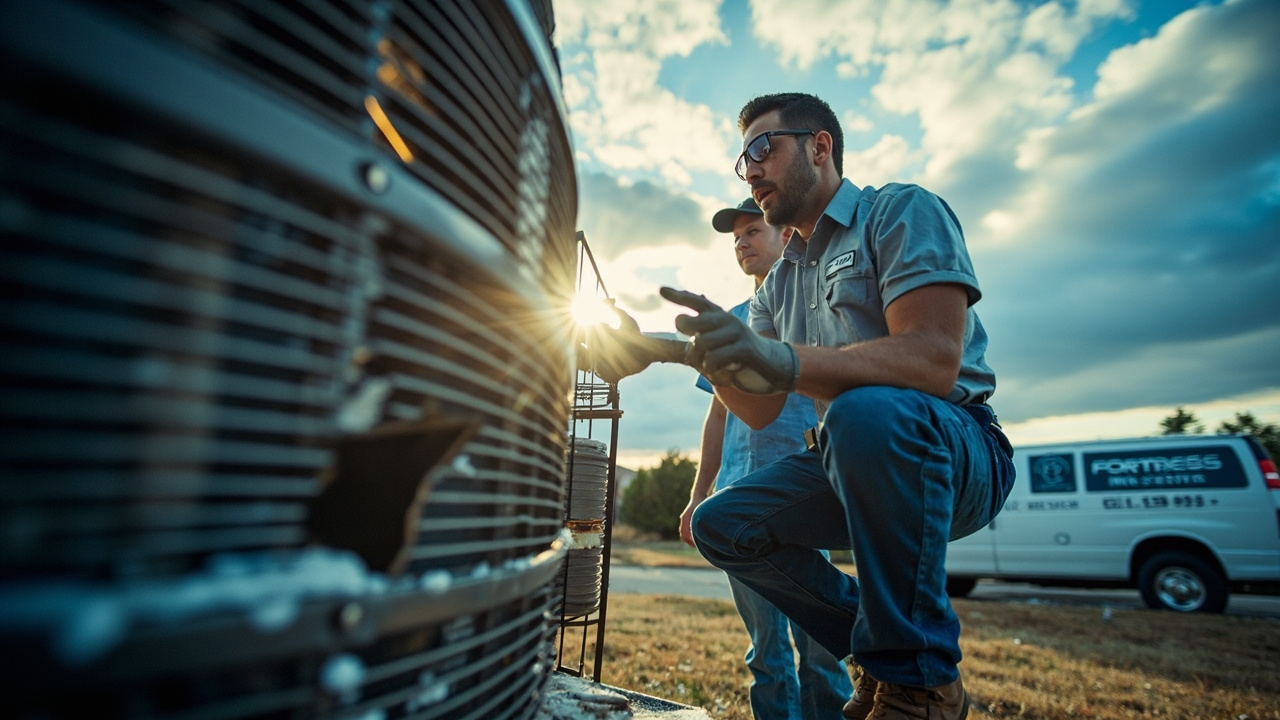
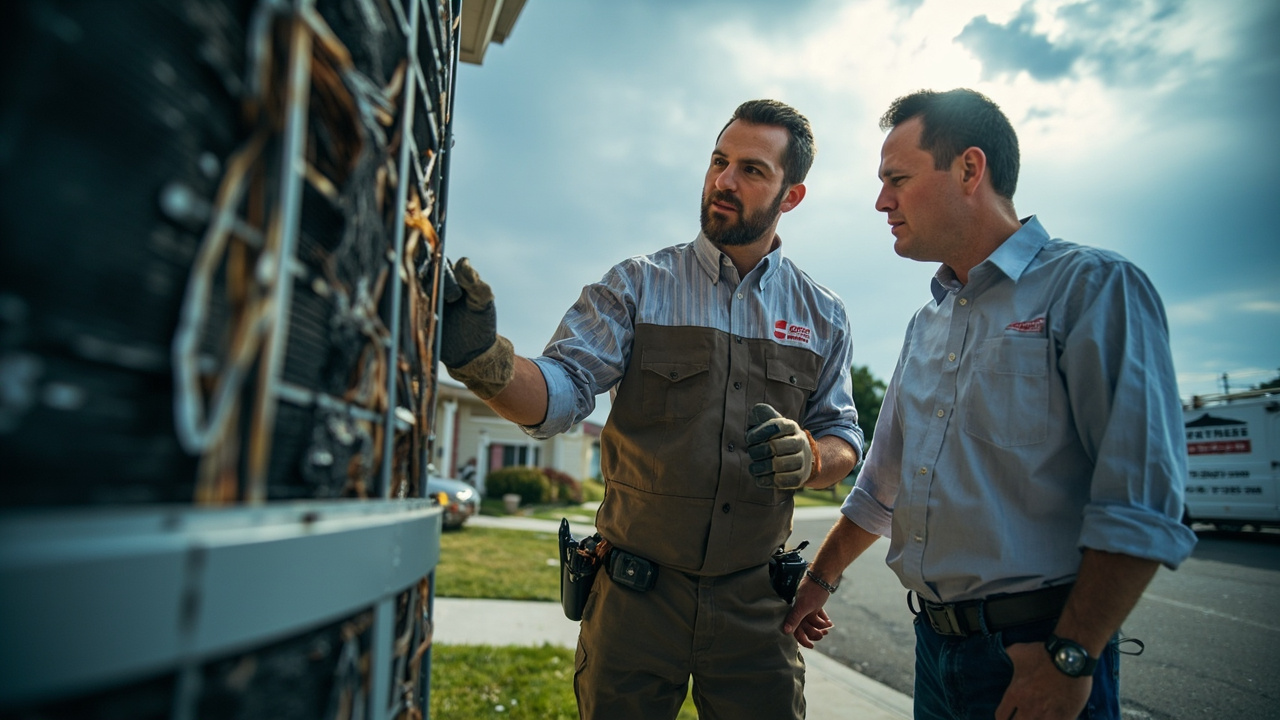
Fix storm damaged HVAC system work begins with systematic damage documentation. We photograph impact points on condenser cabinets, measure refrigerant pressures to detect leaks, and test all electrical components for surge damage. This creates the evidence your insurance adjuster needs.

Our technicians check condenser coil fin density using a straightening tool and flashlight. Hail compresses aluminum fins, reducing heat transfer capacity by up to 40 percent even when the unit appears functional. We measure airflow with a manometer to quantify efficiency loss.

Refrigerant line inspection goes beyond visual checks. We use electronic leak detectors and nitrogen pressure testing to find pinhole leaks that release R-410A slowly. A system that loses 15 percent of its charge runs continuously without cooling effectively, wasting energy while you wait for obvious failure.

Electrical testing includes megohm resistance checks on compressor windings and capacitor microfarad readings. Lightning-induced surges degrade insulation without immediately destroying components. A compressor with compromised windings may run for weeks before catastrophic failure, leaving you without cooling during the next heat wave.

We inspect the service disconnect, contactor, and control board for carbon tracking and burnt connections. Wind-blown debris often damages wiring conduits, exposing conductors to moisture. Denver's intense UV radiation at 5,280 feet elevation degrades wire insulation faster than at sea level.

Ductwork inspection matters for rooftop units common in Denver commercial buildings. Hail punctures flexible duct connections, and displaced curb adapters allow conditioned air to escape into attic spaces. We use thermal imaging to detect temperature differentials that indicate separation points.

Our repair approach prioritizes safety and system longevity. Straightening condenser fins without proper spacing tools reduces airflow permanently. We replace damaged sections rather than risk restricted performance. Refrigerant recovery and evacuation procedures prevent contamination that destroys compressors months after repair.

You receive a detailed repair estimate with component-level breakdown for insurance purposes and a timeline that acknowledges Denver's summer HVAC service demand.

How Emergency Storm Repairs Happen

Storm Damage HVAC Repair in Denver – Emergency Response Within 2 Hours of Your Call
01

Immediate Damage Containment

We arrive within two hours to disconnect power and assess safety hazards. If refrigerant lines are severed, we contain the leak and ventilate the area. Exposed electrical components get weatherproofed to prevent short circuits during additional rainfall. You receive photos and a preliminary damage list before we leave the site.
02

Complete System Evaluation

Our certified technicians return with diagnostic equipment to test every component. We measure refrigerant charge, check compressor amperage draw, test capacitor values, and inspect all electrical connections. Ductwork gets pressure tested to find hidden punctures. You get a comprehensive report with repair versus replacement recommendations based on age, efficiency, and damage extent.
03

Restoration and Testing

We complete repairs using OEM parts and verify performance through full operational testing. Refrigerant systems get evacuated to 500 microns and recharged to manufacturer specifications. Airflow measurements confirm proper CFM delivery across all zones. You receive documentation showing pre-repair and post-repair performance data, plus warranty information for replaced components.

Why Denver Homeowners Choose Fortress HVAC Denver After Storm Events

Storm damage assessment requires familiarity with Denver's specific weather patterns and construction methods. We understand how hail behaves at high altitude, where larger stones maintain velocity longer than at sea level. This knowledge shapes our inspection approach for rooftop units common in Denver's commercial corridors along Colfax Avenue and in the Denver Tech Center.

Our technicians recognize the HVAC configurations typical to Denver neighborhoods. Post-war ranch homes in Lakewood often have ground-level units vulnerable to debris impact. Multi-story buildings in Capitol Hill use split systems with condenser units on flat roofs exposed to wind and hail. We adjust our assessment based on installation type and exposure level.

Insurance companies working Denver claims know our documentation standards. We provide itemized damage reports with photographs, measurements, and manufacturer specifications that adjusters accept without extended negotiations. This speeds your claim processing and gets your system operational faster.

Fortress HVAC Denver maintains relationships with equipment suppliers across the Front Range. When storm events damage hundreds of systems simultaneously, parts availability becomes critical. Our established accounts mean you get replacement condensers, compressors, and control boards while other contractors wait on backorders.

We understand Denver's permitting requirements for HVAC replacements. Systems damaged beyond repair need permits through the city's Community Planning and Development department. Our familiarity with the process prevents delays that leave you without climate control during permit processing.

Emergency HVAC storm repair in Denver peaks during May and June hail season, then again during September wind events. We maintain adequate staffing and equipment inventory to handle demand surges. You get scheduled quickly rather than joining a three-week waiting list.

Our technicians carry proper altitude calibration tables for refrigerant charging. Denver's elevation requires adjusted superheat and subcooling targets that differ from sea-level specifications. Incorrect charging after storm repairs reduces efficiency and shortens compressor life.

You work with a local company that understands Denver's climate challenges and responds accordingly.

What Storm Damage Service Includes

Rapid Emergency Response

We dispatch technicians within two hours of your call during storm events. Our trucks carry tarps, disconnect tools, and safety equipment to secure your system immediately. Emergency service continues after business hours and on weekends when storms typically strike Denver. You get a callback within 15 minutes and technician arrival before additional weather worsens existing damage.

Comprehensive Damage Assessment

Our evaluation covers every component that storm forces affect. We test electrical systems with multimeters, check refrigerant integrity with electronic leak detectors, and measure airflow with calibrated instruments. You receive a written report with photographs documenting impact points, bent fins, displaced components, and electrical damage. This assessment typically takes 60 to 90 minutes depending on system complexity and damage extent.

Insurance-Ready Documentation

Your repair estimate includes component part numbers, labor hours, and material costs formatted for insurance submission. We provide before and after photographs showing damage progression and repair quality. Detailed notes explain which damage occurred during the storm event versus pre-existing wear. This documentation streamlines your claim and prevents disputes over coverage. We communicate directly with adjusters when requested.

Post-Repair System Verification

After completing storm damage repairs, we test your system through complete heating and cooling cycles. Refrigerant charge gets verified against manufacturer specifications adjusted for Denver's altitude. Airflow measurements confirm proper CFM delivery. Electrical components get tested under load to verify stable operation. You receive performance data showing temperature splits, amp draws, and pressures that confirm your system operates correctly. Replaced components include manufacturer warranties.

Frequently Asked Questions

You Have Questions,
We Have Answers

What is the $5000 rule for HVAC? +

The $5000 rule helps you decide between repair or replacement. If your system is older and the repair cost multiplied by its age exceeds $5000, replace it. For example, a $500 repair on a 12-year-old unit equals $6000, so replacement makes sense. After Denver hailstorms or high winds damage your HVAC, this rule becomes critical. Older units with compressor or coil damage often fail this test. Get a professional assessment fast to determine if your storm-damaged system qualifies for insurance replacement rather than costly repairs that might fail again.

Does insurance cover HVAC damage? +

Yes, homeowners insurance typically covers HVAC damage from covered perils like hail, windstorm, or falling debris. Denver's intense summer hailstorms frequently damage outdoor condensers and compressors. Your policy usually covers sudden, accidental damage but not wear and tear or neglect. Document everything immediately. Take photos of hail dents, displaced components, or debris impact. Call your insurer within 24 hours and get a licensed HVAC technician to assess damage before filing your claim. Proper documentation strengthens your case and speeds up the claims process, getting your system restored faster.

What is the 3 minute rule for AC? +

The 3-minute rule protects your compressor from damage. After your AC shuts off, wait at least 3 minutes before restarting it. This allows refrigerant pressures to equalize throughout the system. Restarting too soon forces the compressor to work against high pressure, which causes premature failure. After Denver storm events that cause power outages or emergency shutdowns, this rule becomes essential. If your system repeatedly short-cycles after storm damage, shut it down completely and call for emergency service. Ignoring this rule can turn minor storm damage into a major compressor replacement.

How much does it cost to fix an HVAC system? +

HVAC repair costs vary widely based on damage severity and components affected. Minor fixes like thermostat replacement or capacitor issues run lower, while compressor or coil replacement costs significantly more. Storm damage in Denver often involves multiple components. Hail can dent coils and damage fan blades simultaneously. Emergency service calls during peak summer storm season may include urgent response fees. Get multiple written estimates that detail specific damage and required parts. Insurance may cover storm-related repairs, so document everything before authorizing work. Always verify the technician is licensed and experienced with storm damage assessments.

What is the average lifespan of an HVAC? +

HVAC systems typically last 15 to 20 years with proper maintenance. Denver's climate challenges, including intense UV exposure at elevation, temperature extremes, and hail events, can reduce lifespan. Air conditioners face harder workloads during hot summers, while furnaces endure cold winters. Units older than 12 years with storm damage may not justify expensive repairs. Regular maintenance extends life, but catastrophic storm damage often means replacement makes better financial sense. If your system is approaching 15 years and suffered hail or wind damage, replacement with a modern, efficient unit often delivers better value than patching an aging system.

Is HVAC system cost tax deductible? +

HVAC costs are generally not tax deductible for residential properties. You cannot deduct repair or replacement costs as personal expenses. Energy-efficient upgrades may qualify for federal tax credits if they meet specific efficiency standards. Check current IRS guidelines for qualifying equipment and credit amounts. For rental properties or home offices, you may deduct a proportional amount as a business expense. Storm damage repairs covered by insurance produce no tax benefit since insurance reimbursement offsets costs. Consult a tax professional about your specific situation, especially if you own commercial property or run a business from home in the Denver metro area.

Why Hail Season Makes Storm Damage HVAC Repair Critical in Denver

Denver sits directly in Colorado's Hail Alley, where warm air from the plains collides with Rocky Mountain cold fronts to create severe updrafts. May through September produces hailstorms that drop stones exceeding two inches in diameter. These projectiles fall at terminal velocity onto outdoor condenser units, denting aluminum fins and cracking copper refrigerant lines. The Front Range's elevation means hailstones maintain size and velocity longer than storms at lower altitudes. A June hailstorm in Lakewood or Aurora can damage hundreds of HVAC systems in minutes. Emergency HVAC storm repair becomes essential immediately because compromised refrigerant systems leak expensive coolant and damaged electrical components fail without warning during Denver's next temperature extreme.

Denver municipal code requires permitted HVAC work to meet specific altitude adjustments for refrigerant charging and combustion air requirements. Local contractors understand these regulations and the inspection process through Community Planning and Development. Insurance companies processing storm damage claims in the Denver metro area recognize documentation from established local HVAC providers. We maintain relationships with Denver-area adjusters and supply houses that accelerate parts acquisition when storms damage systems across entire neighborhoods simultaneously. Choosing a local provider for HVAC storm restoration services means working with technicians who understand Denver's unique combination of hail exposure, high altitude, and rapid temperature swings that make proper storm damage assessment and repair critically important.

HVAC Services in The Denver Area

Fortress HVAC is proud to serve the Denver area and surrounding communities. We invite you to view our location on the map, which highlights our service area. While we often come directly to you for services, knowing our central base can help you understand our reach. Feel free to contact us with any questions about our service coverage or to schedule an appointment directly.

Address:
Fortress HVAC Denver, 6035 E 38th Ave, Denver, CO, 80207

Additional Services We Offer

Our news updates

Latest Articles & News from The Blogs

Why Your Gas Fireplace Should Not Be Your Only Heat Source in Golden\n\nGolden homeowners often rely on gas fireplaces for…

Why Your Gas Fireplace Should Not Be Your Only Heat Source in Golden

Why Your Gas Fireplace Should Not Be Your Only Heat Source in Golden\n\nGolden homeowners often rely on gas fireplaces for…

Why Your Furnace Venting Needs Special Attention in High Altitude Morrison

Why Your Furnace Venting Needs Special Attention in High Altitude Morrison Living at 5,800 feet in Morrison means your furnace…

How to Integrate Your HVAC with Matter and Apple Home in Central Park

How to Integrate Your HVAC with Matter and Apple Home in Central Park Central Park residents who want their HVAC…

Contact Us

Your damaged HVAC system needs immediate attention. Call (720) 502-9511 now for emergency dispatch. Our technicians arrive within two hours to assess damage, secure your equipment, and begin insurance documentation. Do not wait for complete system failure.

;