




Menu

Emergency Ductwork Repair in Denver – Fast Response Teams Dispatched Within 60 Minutes

When your ductwork fails at 2 AM or your business loses climate control mid-shift, Fortress HVAC Denver responds immediately with fully stocked trucks and certified technicians ready to restore airflow and stop energy loss before it compounds.

Slider Image 1
Slider Image 2
Slider Image 3
Slider Image 4
Slider Image 5
Slider Image 7
Slider Image 8
Slider Image 9
Slider Image 10
Slider Image 11

When Ductwork Fails in Denver, Every Minute Costs You Money

You just heard a loud pop from your ceiling. Now half your building has no air. Or you walked into your basement and found a section of ductwork hanging loose, pouring conditioned air into dead space. In Denver's climate, where we swing from 95-degree summer afternoons to sub-zero winter nights, a compromised duct system does not just kill comfort. It burns money.

Denver's elevation and dry air create unique stresses on HVAC systems. Ducts expand and contract more aggressively here than at sea level. Joints loosen. Seams crack. Rodents chew through flex duct in crawlspaces. When ductwork fails, your furnace or AC runs constantly, trying to compensate for lost airflow. Your energy bill spikes 30 to 50 percent within days.

Immediate ductwork service matters because the damage spreads. A small tear becomes a full separation. A loose connection dumps conditioned air into your attic, where summer heat or winter cold makes your system work triple time. You need urgent air duct repair before the problem cascades into compressor failure or frozen coils.

This is not a next-week problem. This is a same day air duct fixing situation. You need a team that understands Denver's building codes, knows how to navigate tight crawlspaces in older Denver bungalows, and can source the right materials fast. You need 24/7 hvac duct repair from technicians who have seen every failure mode in every Denver neighborhood from Capitol Hill to Green Valley Ranch.

When Ductwork Fails in Denver, Every Minute Costs You Money
How We Execute Emergency AC Duct Repair Under Pressure

How We Execute Emergency AC Duct Repair Under Pressure

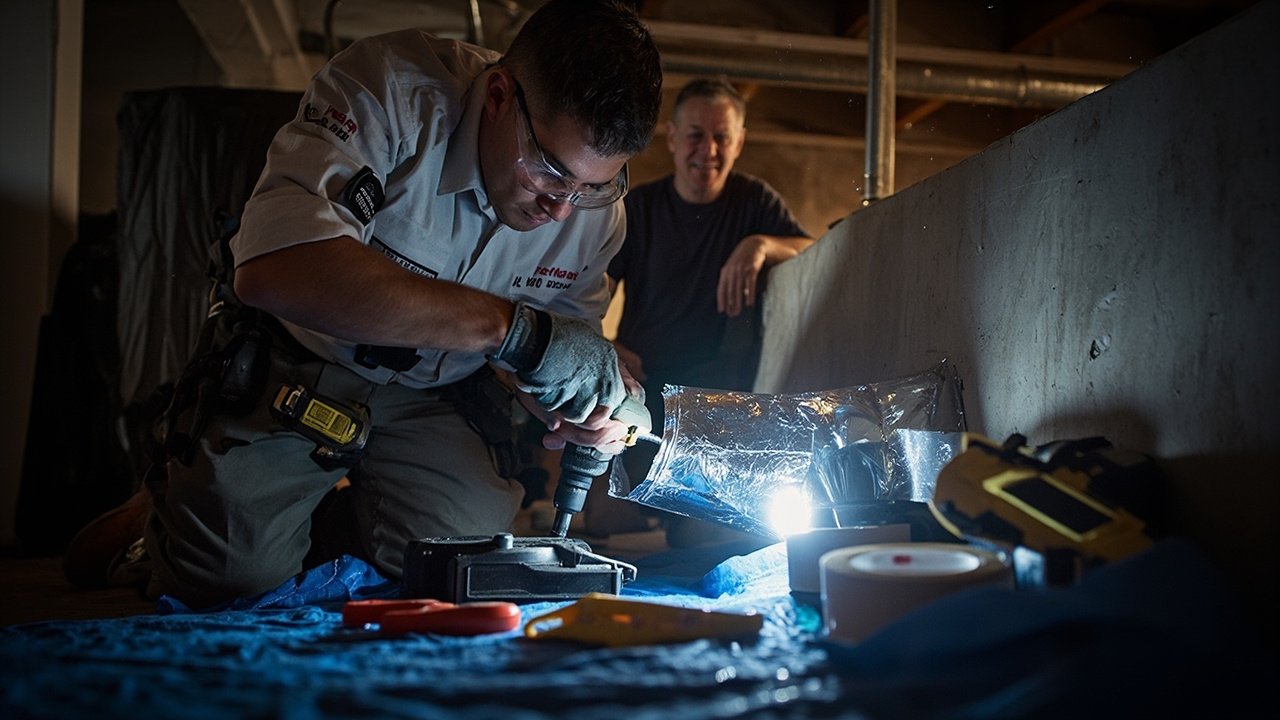
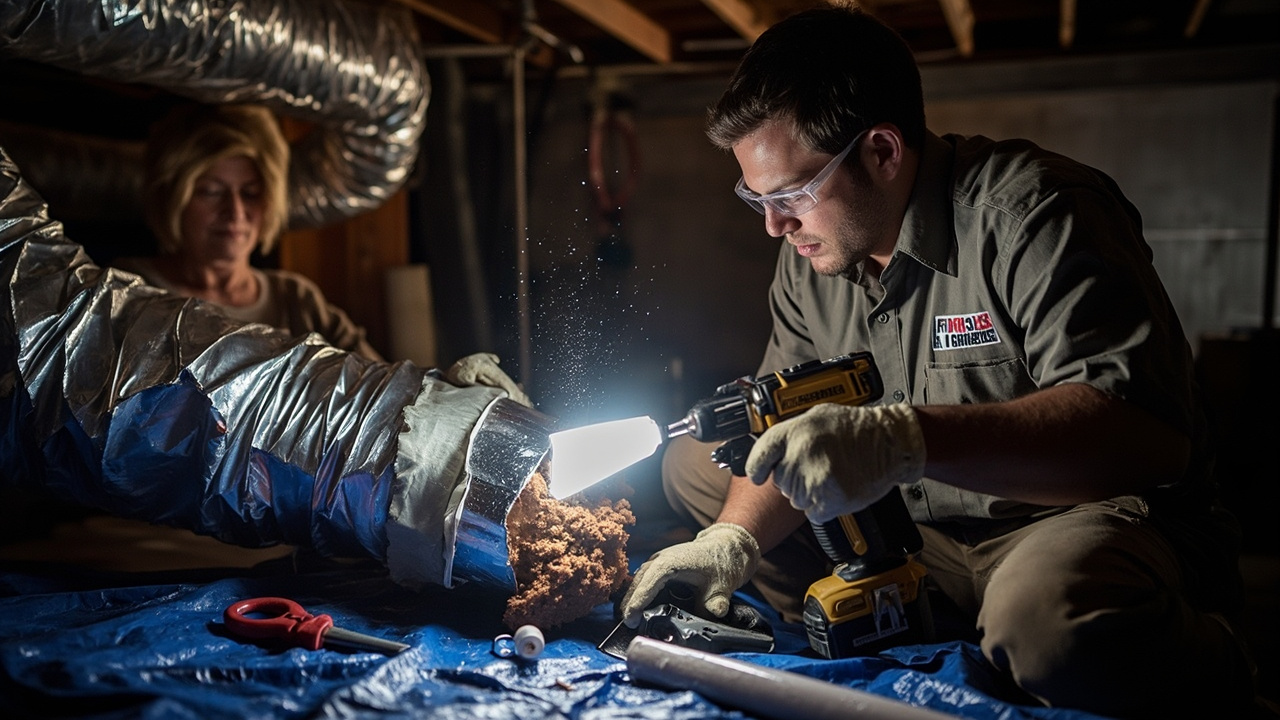
When you call for emergency ductwork repair, we dispatch a lead technician and a support tech within the hour. Both trucks carry sheet metal, mastic sealant, foil tape, flex duct, rigid duct sections, and hangers. We do not show up to diagnose and then leave to get parts. We arrive ready to fix.

Our process starts with a pressure test using a duct blaster. We measure actual leakage in cubic feet per minute. This tells us whether you have a single catastrophic failure or multiple small leaks compounding system loss. We use thermal imaging to find hidden separations behind drywall or insulation. You cannot fix what you cannot see.

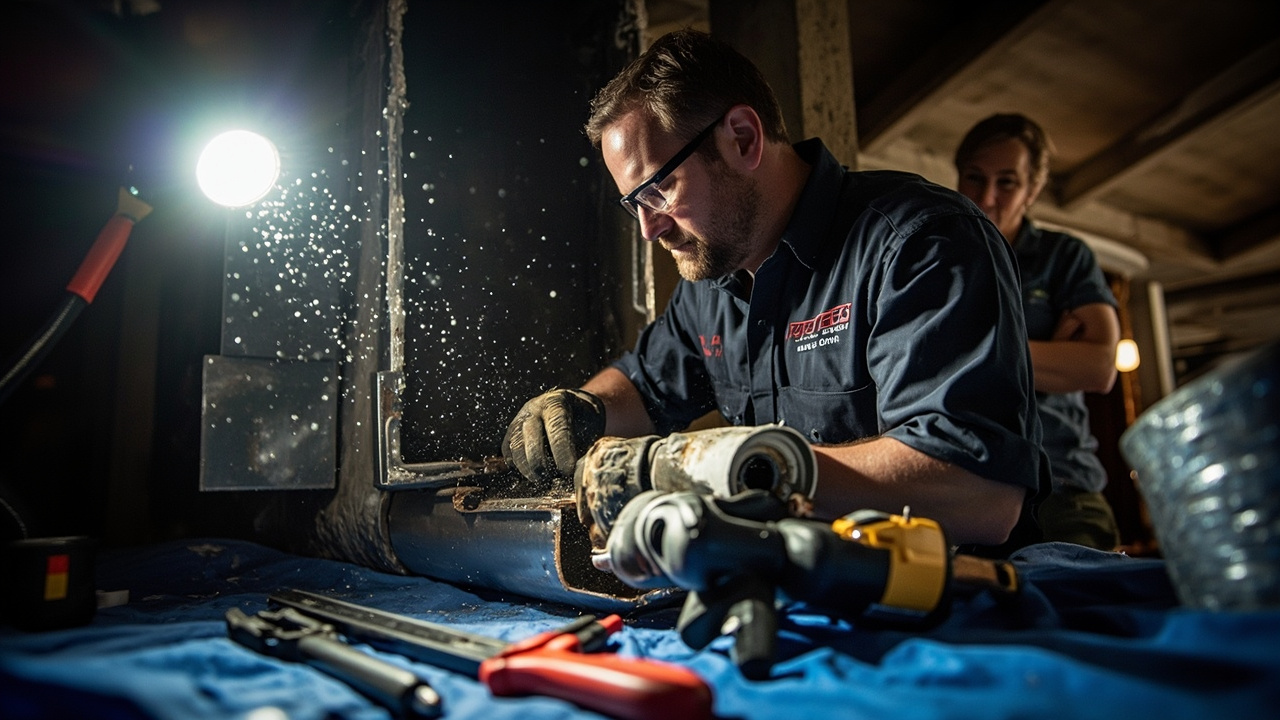
For torn or separated flex duct, we cut out the damaged section and install a new run with proper support every four feet. Flex duct fails when it sags. We eliminate sag. For rigid ductwork with failed joints, we disassemble the connection, clean both surfaces, apply mastic sealant to the male end, reconnect, and secure with sheet metal screws and foil tape. Mastic creates an airtight bond that flex tape cannot match.

If a main trunk line has collapsed due to poor installation or water damage, we fabricate a replacement section on site using our sheet metal brake. We match gauge thickness to your existing system and ensure proper airflow velocity. Undersized ducts create backpressure. Oversized ducts lose velocity. We calculate the correct size based on your system tonnage and the length of the run.

Every repair gets a post-work pressure test. We document the improvement in leakage rate. You see the data before we leave.

What Happens When You Call for Urgent Air Duct Repair

Emergency Ductwork Repair in Denver – Fast Response Teams Dispatched Within 60 Minutes
01

Immediate Dispatch and Arrival

You call (720) 502-9511 and speak with a dispatcher who logs your issue and location. Within 15 minutes, a lead technician calls you directly to confirm access, gather system details, and provide an estimated arrival time. Our trucks stage in central Denver locations to minimize response time. You get a text when the truck is 10 minutes out.
02

System Assessment and Repair

The technician inspects the visible damage, runs diagnostics on the air handler to check static pressure, and uses a duct blaster to quantify total system leakage. After identifying all failure points, the tech explains the repair plan and starts work. Most emergency repairs finish in two to four hours. Complex trunk line replacements may take longer, but we restore partial airflow within the first hour to stabilize your environment.
03

Testing and Documentation

After completing the repair, we rerun the pressure test and measure airflow at each register. You receive a written report showing before and after leakage rates, photos of the completed work, and recommendations for any deferred maintenance. We guarantee our repairs for 12 months. If a joint we sealed fails, we return and fix it at no charge.

Why Denver Businesses and Homeowners Trust Fortress HVAC for Emergency Duct Repairs

Denver sits at 5,280 feet. Air pressure is lower here. HVAC systems work harder to move the same volume of air compared to sea level. Ductwork that would hold together in Houston fails faster here because the pressure differential across joints is higher. You need a team that understands altitude physics, not just generic HVAC theory.

We know Denver's building stock. Homes in Washington Park have different ductwork than new builds in Stapleton. Older homes use undersized ducts installed when furnaces were smaller. Commercial properties in the Denver Tech Center often have VAV boxes and zone dampers that complicate repairs. We have worked in every type of structure across every Denver zip code.

Our technicians carry Colorado HVAC licenses and stay current on Denver building codes. When we repair or replace ductwork, the work meets code. This matters if you are selling your home or if an insurance adjuster inspects the repair after a claim. We document everything with photos and pressure test results.

We also understand Denver's seasonal urgency. A ductwork failure in January when it is 10 degrees outside is life-threatening. A failure in July when it is 95 degrees and your server room loses cooling is business-critical. We do not bump emergency calls for routine maintenance. When you need immediate ductwork service, you get it.

You also get transparent pricing. We quote the repair before we start. No surprise charges. No trip fees disguised as diagnostic fees. You pay for labor, materials, and expertise. That is it.

What You Can Expect During an Emergency Ductwork Repair in Denver

Response Time and Availability

We answer calls 24 hours a day, 365 days a year. When you call (720) 502-9511, you reach a live dispatcher, not a voicemail. During business hours, we dispatch within 30 minutes. After hours and on weekends, dispatch happens within 60 minutes. For commercial clients with service agreements, we prioritize your calls and often arrive in under 45 minutes. Our trucks carry enough materials to handle 90 percent of repairs without leaving for parts.

Diagnostic Process and Transparency

The technician walks you through the diagnostic process. You see the pressure test results. You see the thermal images if we use them. We explain what failed, why it failed, and what we need to do to fix it permanently. You approve the quote before we start. If we find additional issues during the repair, we stop and get your approval before proceeding. No work happens without your consent. You stay informed at every step.

Quality of Completed Work

Every joint gets mastic sealant and mechanical fasteners. We do not rely on tape alone. Flex duct runs get proper support to prevent sagging. Rigid ductwork gets sealed at every seam. We insulate exposed ductwork in unconditioned spaces to prevent condensation and energy loss. The repair meets or exceeds the quality of the original installation. You get a system that moves air efficiently and quietly. We clean up all debris and leave your space in the same condition we found it.

Ongoing Support and Follow-Up

We guarantee all emergency repairs for 12 months. If a joint we sealed fails or a section we installed comes loose, we return and fix it at no additional charge. We also offer a follow-up inspection 30 days after the repair to verify everything is holding and performing correctly. If you want to schedule a full system tune-up or discuss a long-term maintenance plan, we provide that consultation at no charge during the follow-up visit.

Frequently Asked Questions

You Have Questions,
We Have Answers

What qualifies as an HVAC emergency? +

An HVAC emergency in Denver means your system failure creates immediate danger or extreme discomfort. This includes total heating loss during a blizzard, complete AC failure during a 95-degree heat wave, visible flames or smoke, strong gas odors, carbon monoxide detector alarms, or major water leaks causing structural damage. Ductwork emergencies include sudden collapses blocking airflow, vermin infestations spreading through your home, or visible holes releasing conditioned air into your attic. Denver's extreme temperature swings make heating and cooling failures urgent. If your family's safety is at risk or your system has completely failed, call for 24/7 emergency service immediately.

What's the average cost to replace ductwork? +

Ductwork replacement costs vary widely based on home size, duct material, and accessibility. Denver homes with finished basements or multiple stories increase labor complexity. The square footage of your home, number of vents, and whether you choose flexible duct, sheet metal, or rigid insulated duct all impact price. Older Denver homes built before 1980 often need full replacements due to asbestos concerns or deteriorated insulation. Emergency ductwork repairs cost less than full replacements but address immediate failures. Get three written estimates from licensed contractors. Many Denver HVAC companies offer financing. Avoid choosing solely on price. Poor installation wastes energy and creates future problems.

What is the 2 foot rule for ductwork? +

The 2 foot rule means ductwork must remain straight for at least 2 feet after leaving the air handler or furnace before making any bends or turns. This allows airflow to stabilize and prevents turbulence that reduces system efficiency. In Denver's older homes with tight mechanical rooms, contractors sometimes violate this rule to fit equipment. Improper duct angles create whistling sounds, uneven heating and cooling, and force your HVAC system to work harder. When replacing or repairing emergency ductwork, ensure your contractor follows this guideline. Proper duct layout matters just as much as equipment quality for maintaining comfort and controlling energy bills.

Can I repair ductwork myself? +

You can handle minor duct repairs like sealing small leaks with mastic sealant or metal-backed tape. Never use standard duct tape, which fails quickly. However, emergency ductwork situations require professional help. Collapsed sections, major disconnections, improper sizing, or vermin damage need expert diagnosis and repair. Denver's building codes require permits for significant duct modifications. Licensed contractors understand load calculations, airflow requirements, and proper insulation methods for our climate. DIY repairs on pressurized supply ducts can create dangerous backdrafting or carbon monoxide issues. If your system has failed completely or you smell gas, do not attempt repairs yourself. Call a licensed HVAC technician immediately.

What is the $5000 rule for HVAC? +

The $5000 rule is a decision guideline for replacing versus repairing HVAC equipment. Multiply the equipment age by the repair cost. If the result exceeds $5000, replacement makes more financial sense than repair. For example, a 12-year-old furnace needing a $500 repair equals $6000, suggesting replacement. This rule helps Denver homeowners avoid throwing money at failing equipment. Emergency ductwork repairs fall outside this calculation since ducts are structural components, not mechanical equipment. However, if your aging furnace has repeated ductwork failures from excessive vibration or poor airflow, the $5000 rule helps you decide whether to replace the entire system rather than continuing emergency repairs.

What counts as emergency repairs? +

Emergency repairs address immediate failures threatening safety, property, or extreme discomfort. For ductwork in Denver, this includes complete disconnections dumping conditioned air into crawlspaces, collapsed sections blocking all airflow, holes allowing carbon monoxide into living spaces, or vermin infestations spreading disease. Frozen pipes, electrical hazards, gas leaks, and system failures during temperature extremes also qualify. Non-emergencies include minor efficiency losses, small leaks, or noisy ducts that can wait for normal business hours. If your heating fails overnight when temperatures drop to 10 degrees or your AC quits during August heat, call for 24/7 emergency service. Immediate response prevents health risks and property damage.

Does homeowners insurance cover air duct replacement? +

Homeowners insurance rarely covers ductwork replacement from normal wear and tear or aging. However, coverage may apply if sudden, accidental damage occurs from covered perils. A tree falling through your roof and crushing ducts, fire damage, or vandalism might trigger coverage. Denver hail damage that penetrates your roof and damages ductwork may qualify. Always file a claim and let your adjuster inspect the damage. Many denied claims involve gradual deterioration or pest damage, which policies exclude. Review your policy's exclusions. If your emergency ductwork damage resulted from a covered event, document everything with photos and get a professional assessment before repairs begin.

Is replacing ductwork worth it? +

Replacing ductwork is worth it when repairs no longer solve recurring problems or your system wastes significant energy. Denver homes built before 1980 often have undersized, uninsulated ducts that lose 30 percent of conditioned air. New, properly sized ductwork improves comfort, reduces energy bills, and extends your HVAC equipment's lifespan. If you have hot and cold rooms, excessive dust, high utility bills, or your system runs constantly, ductwork replacement often fixes these issues. Emergency replacement becomes necessary when collapsed or disconnected sections make your system unusable. Calculate your potential energy savings and improved comfort against the investment cost. Quality ductwork lasts 15 to 25 years.

How long does it take to replace ductwork? +

Full ductwork replacement in a typical Denver single-family home takes 2 to 5 days depending on size, accessibility, and complexity. Ranch homes with open crawlspaces go faster than multi-story homes with finished basements. Emergency ductwork repairs addressing specific failures take 4 to 8 hours for most situations. Contractors must remove old ducts, fabricate new sections, install proper supports and insulation, seal all connections, and test airflow. Denver's older homes with plaster ceilings and limited attic access increase labor time. Your HVAC system remains operational for much of the process, but expect some disruption. Emergency repairs prioritize restoring function quickly while complete replacements focus on long-term performance.

Is it better to undersize or oversize ductwork? +

Neither undersizing nor oversizing is acceptable. Ductwork must match your HVAC system's specifications through proper load calculations. Undersized ducts create high velocity airflow, causing whistling noises, hot and cold spots, and excessive strain on your equipment. Oversized ducts reduce air velocity too much, preventing proper air circulation and allowing dust to settle inside. Denver's altitude and dry climate require precise calculations that differ from sea level standards. Emergency ductwork repairs must maintain the correct diameter and layout. Hire contractors who perform Manual D duct design calculations. Proper sizing ensures efficient operation, even temperatures throughout your home, and maximum equipment lifespan. Guessing duct sizes causes expensive problems.

How Denver's Altitude and Dry Climate Accelerate Ductwork Failure

Denver's elevation reduces air density by 17 percent compared to sea level. Your HVAC system compensates by increasing fan speed and static pressure to move the same volume of conditioned air. This higher pressure stresses duct joints and seams. Mastic sealants dry out faster in Denver's low humidity, losing flexibility and cracking at connection points. Flex duct fabric degrades faster under UV exposure in unfinished attics where Denver's high-altitude sun is 25 percent more intense. These factors combine to shorten ductwork lifespan and increase emergency failure rates, especially in systems over 10 years old.

Denver enforces the International Mechanical Code with local amendments that specify minimum duct insulation R-values and sealing standards. Any ductwork in unconditioned spaces like attics or crawlspaces must meet these standards to pass inspection. We stay current on Denver building codes and work directly with inspectors across the metro area. When you need urgent air duct repair that will pass inspection or satisfy an insurance claim, you need a team familiar with local requirements. We document every repair with photos, pressure test data, and material specifications to ensure compliance.

HVAC Services in The Denver Area

Fortress HVAC is proud to serve the Denver area and surrounding communities. We invite you to view our location on the map, which highlights our service area. While we often come directly to you for services, knowing our central base can help you understand our reach. Feel free to contact us with any questions about our service coverage or to schedule an appointment directly.

Address:
Fortress HVAC Denver, 6035 E 38th Ave, Denver, CO, 80207

Additional Services We Offer

Our news updates

Latest Articles & News from The Blogs

Why Your Gas Fireplace Should Not Be Your Only Heat Source in Golden\n\nGolden homeowners often rely on gas fireplaces for…

Why Your Gas Fireplace Should Not Be Your Only Heat Source in Golden

Why Your Gas Fireplace Should Not Be Your Only Heat Source in Golden\n\nGolden homeowners often rely on gas fireplaces for…

Why Your Furnace Venting Needs Special Attention in High Altitude Morrison

Why Your Furnace Venting Needs Special Attention in High Altitude Morrison Living at 5,800 feet in Morrison means your furnace…

How to Integrate Your HVAC with Matter and Apple Home in Central Park

How to Integrate Your HVAC with Matter and Apple Home in Central Park Central Park residents who want their HVAC…

Contact Us

Every hour you wait, your energy bill climbs. Call (720) 502-9511 now and speak with a dispatcher who will get a truck to your location fast. We arrive ready to fix the problem, not just look at it.