Why Your Barnum Basement Renovation Needs Better Airflow and Ventilation
Finishing your Barnum basement without addressing ventilation is like building a house without a foundation. The unique soil composition west of Denver creates specific air quality challenges that standard HVAC systems weren’t designed to handle. This isn’t about comfort alone. It’s about protecting your family from radon gas, preventing mold growth in Denver’s semi-arid climate, and ensuring your finished space meets current building codes. Denver Building Code.
The older bungalows and mid-century homes in Barnum were built before modern ventilation standards existed. Their original ductwork systems were designed for basic heating, not the air exchange rates required for today’s finished basements. When you add walls, ceilings, and living space below grade, you trap moisture and contaminants that can damage your investment and harm your health.
The Unique Challenges of Barnum Basement Ventilation
Barnum’s housing stock presents specific ventilation challenges that generic basement finishing guides don’t address. The 1940s-1950s construction methods used in this neighborhood mean many homes have balloon-frame walls and minimal vapor barriers. When you finish a basement in these structures, you create a sealed environment that can concentrate radon levels and trap humidity.
The soil beneath Barnum contains higher concentrations of uranium-bearing rock formations common to Colorado’s Front Range. This geological reality means radon gas naturally migrates upward through foundation cracks and utility penetrations. Standard ventilation systems in older homes weren’t designed to handle these elevated radon levels.
Denver’s climate adds another layer of complexity. Our extreme temperature swings between day and night create condensation cycles in below-grade spaces. When warm air from your main floor meets the cooler basement walls, moisture forms on surfaces. Without proper air exchange, this moisture becomes a breeding ground for mold and mildew. The Best Swamp Cooler Service and Startup in Denver and Arvada.
Older Barnum homes also typically have undersized return air systems. When you finish a basement and add bedrooms or living space, you increase the air volume that needs circulation. The original return vents can’t keep up, leading to negative pressure that pulls unfiltered air through gaps in your foundation.
Denver Building Codes for Basement HVAC
The City and County of Denver requires specific ventilation standards for finished basements that many homeowners discover only after starting their renovation. Denver Building Code Section 13-32 (2021) mandates minimum fresh air intake rates for habitable basement spaces. For basements under 1,500 square feet, you need at least 15 cubic feet per minute of continuous fresh air per person.
Denver’s Green Building Ordinance also applies to basement renovations. If your project increases your home’s conditioned floor area by more than 500 square feet, you must meet energy efficiency standards that include proper HVAC zoning and ventilation controls. This means your finished basement needs its own thermostat and air handling capability.
Combustion air requirements are another critical code consideration. If you keep your existing furnace in the basement, Denver Mechanical Code requires dedicated combustion air ducts. These ducts must provide 1 square inch of free area per 1,000 BTU of appliance input. Many older Barnum homes don’t meet these requirements without modification. Emergency Furnace Repair for Denver Residents Dealing with a Frozen House.
Permit requirements for basement HVAC retrofits in Barnum typically include a mechanical permit from Denver’s Department of Community Planning and Development. The permit process requires HVAC load calculations showing your system can handle the additional square footage. Without these calculations, your finished basement could fail inspection. EPA Radon Information.
Denver also requires radon mitigation systems in new construction and major renovations. If your basement renovation disturbs more than 50% of the existing foundation area, you must install an active radon mitigation system. This system needs to be integrated with your HVAC ventilation plan.
Solutions: HRV vs. ERV Systems for Below-Grade Spaces
Choosing between Heat Recovery Ventilators and Energy Recovery Ventilators depends on your specific Barnum basement conditions. HRV systems transfer heat between incoming and outgoing air streams, making them ideal for Colorado’s cold winters. ERV systems also transfer moisture, which helps control humidity in finished basements.
For Barnum’s climate, HRV systems typically provide better energy efficiency. They recover up to 85% of heat from exhaust air, reducing your heating costs during Denver’s long winter season. The initial investment ranges from $2,500 to $4,000 installed, but the energy savings often pay back within 3-5 years.
ERV systems cost slightly more, around $3,000 to $5,000 installed, but they provide superior humidity control. This makes them better for basements that will house laundry facilities or bathrooms. The moisture transfer capability prevents the dry air problems common with standard HRV systems in Colorado’s low-humidity environment.
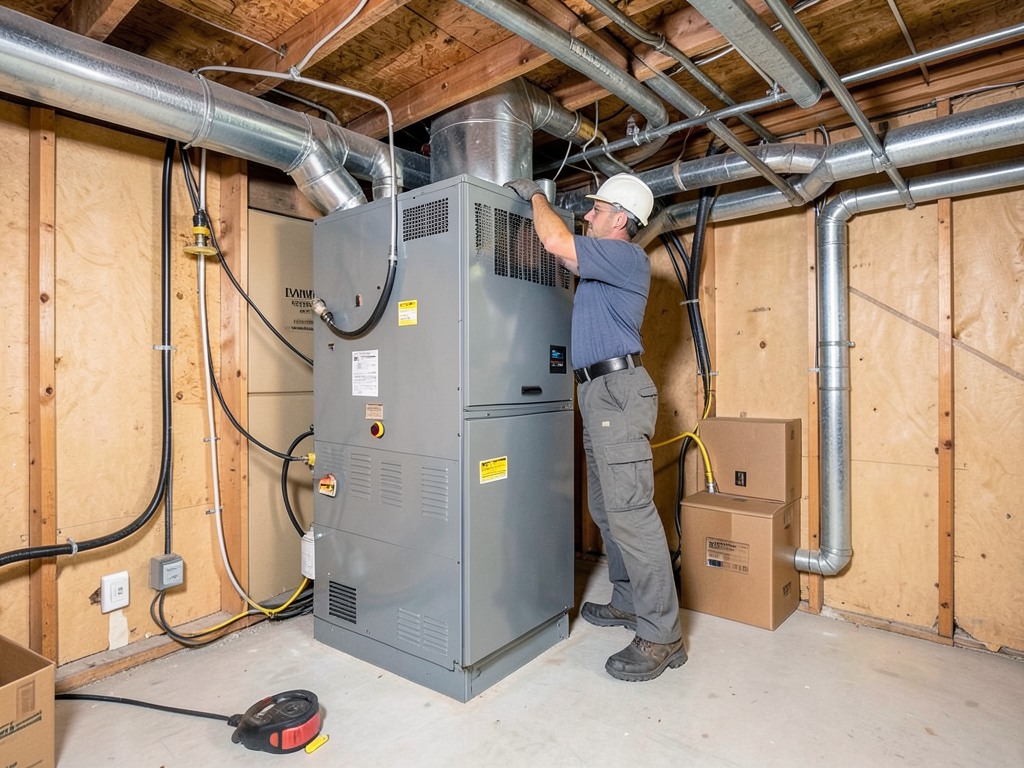
Installation considerations vary by home age. In older Barnum bungalows, installing an HRV or ERV often requires creative duct routing due to limited ceiling clearances. The equipment needs to be mounted where it can access both supply and exhaust air streams, typically requiring wall penetrations that weren’t part of the original design.
Both systems require dedicated electrical circuits and condensate drains. HRV units produce minimal condensation, while ERV units can generate several gallons per day in humid conditions. Your electrical panel may need upgrading if it’s original to your 1940s-1950s home.
Radon and Air Quality Mitigation
Radon mitigation through proper HVAC ventilation is more effective than standalone systems in many Barnum homes. When you integrate radon control with your ventilation system, you create negative pressure that continuously draws radon gas from beneath your foundation and exhausts it outside.
Denver’s average indoor radon level is 4.5 picocuries per liter, above the EPA action level of 4.0. In Barnum, certain blocks show even higher readings due to local soil composition. A properly designed ventilation system can reduce radon levels by 90% or more.
The diagnostic process starts with radon testing. We use continuous radon monitors that track levels over 48-72 hours, providing data on how your basement’s air quality changes throughout the day. This testing reveals whether you need active depressurization systems or if enhanced ventilation alone will solve the problem.
Air quality extends beyond radon. Finished basements in Barnum often have elevated levels of volatile organic compounds from new materials, plus moisture-related issues from our climate. Proper ventilation systems include high-efficiency filters that remove particulates as small as 0.3 microns.
The integration of radon mitigation with HVAC requires careful planning. The exhaust point must be at least 10 feet from windows and 3 feet above the roof line. In Barnum’s older neighborhoods, finding suitable locations for these penetrations without damaging architectural features requires experience with local home styles.
Service Areas Near Barnum Park
Our HVAC ventilation expertise extends throughout the Barnum neighborhood and surrounding West Denver communities. We regularly service homes near Barnum North Park, along 1st Avenue, and in the Federal Boulevard corridor. The specific challenges of these areas require local knowledge of building patterns and soil conditions.
Homes near the South Platte River corridor face additional ventilation challenges due to higher groundwater tables. The moisture levels in these areas require more robust humidity control systems. We’ve developed specific ventilation strategies for properties in the 80219 and 80204 zip codes that account for these local conditions.
The Federal Boulevard commercial corridor presents unique challenges for mixed-use properties with basement apartments. These spaces require commercial-grade ventilation systems that can handle higher occupancy loads while maintaining energy efficiency. Our experience with these properties helps us design systems that meet both code requirements and practical needs. Commercial HVAC Contractors.
Properties near Valverde Park often have similar construction patterns to Barnum homes, with balloon framing and minimal insulation. Our ventilation solutions for these homes incorporate modern building science while respecting the original architecture. This approach prevents the common problem of over-ventilating older homes, which can waste energy and create comfort issues.
We also serve the Sloan’s Lake area, where many homes have been converted from single-family to multi-unit dwellings. These conversions require careful ventilation planning to ensure each unit gets adequate fresh air while maintaining system efficiency. Our experience with these complex projects translates well to Barnum basement renovations.
Cost-Benefit Analysis of Ventilation Solutions
The cost of proper basement ventilation varies significantly based on your home’s specific conditions. Basic HRV system installation starts around $2,500, while comprehensive radon mitigation with integrated ventilation can exceed $6,000. However, the cost of not addressing ventilation properly can be much higher.
Consider the financial impact of mold remediation in a finished basement. Professional mold removal typically costs $15 to $30 per square foot, meaning a 1,000-square-foot basement could require $15,000 to $30,000 in remediation if moisture problems develop. This doesn’t include the cost of replacing damaged materials or addressing the underlying ventilation issues.
Energy efficiency represents another cost factor. Homes with proper ventilation systems typically see 15-20% reductions in heating and cooling costs. In Denver’s climate, where heating accounts for 60% of annual energy use, these savings can offset the system cost within 5-7 years.
The resale value impact is significant. Finished basements with proper ventilation and radon mitigation systems typically appraise 10-15% higher than those without these features. Buyers in Denver’s market increasingly demand documentation of air quality and energy efficiency measures.
Insurance considerations also matter. Some insurance companies offer premium discounts for homes with integrated radon mitigation and ventilation systems. Others may deny claims related to mold damage if proper ventilation wasn’t installed in finished basement spaces.
Diagnostic Testing Before Renovation
Before starting your Barnum basement renovation, comprehensive diagnostic testing can prevent costly mistakes. We perform blower door tests to identify air leakage points, radon level measurements to establish baseline readings, and duct leakage assessments to determine if your existing system can handle the additional load.
The blower door test reveals how much your home leaks air compared to current energy codes. Many older Barnum homes leak 50% more air than modern standards allow. This information helps us design ventilation systems that work with your home’s natural air exchange patterns rather than fighting against them.
Thermal imaging during testing shows where heat escapes and where cold air infiltrates. In Barnum’s older homes, we often find significant heat loss through rim joists and foundation penetrations. These areas need special attention in your ventilation design to prevent condensation and energy waste.
Moisture meter readings at different depths in basement walls indicate whether vapor barriers are needed. Some Barnum homes have concrete block foundations that absorb moisture from the soil. Others have poured concrete that remains relatively dry. This distinction affects whether you need dehumidification as part of your ventilation system.
Air quality testing measures particulate levels, volatile organic compounds, and carbon dioxide concentrations. These readings establish a baseline for evaluating your ventilation system’s effectiveness after installation. They also identify whether you need additional filtration beyond standard HVAC filters.
Installation Best Practices for Barnum Homes
Installing ventilation systems in Barnum’s older homes requires specific techniques that newer construction doesn’t demand. The balloon framing common in 1940s construction means wall cavities run continuously from basement to attic. This creates pathways for air movement that must be managed carefully during ventilation installation.
We use fire-blocking techniques when installing new ventilation ducts. The original construction often lacks proper fire stops between floors. Our installation includes fire-rated sealant at all penetrations, ensuring your new system meets current safety codes while maintaining the home’s structural integrity.
Noise control is another critical consideration. Older Barnum homes have thinner walls and less sound insulation than modern construction. We use insulated duct liners and vibration isolation mounts to ensure your ventilation system operates quietly. This is especially important for basement bedrooms or home theaters.
Electrical considerations often surprise homeowners. Many Barnum basements have only one or two electrical circuits serving the entire space. Adding ventilation equipment may require electrical panel upgrades or new subpanels. We coordinate with licensed electricians to ensure all work meets current National Electrical Code requirements.
Permitting in Barnum follows Denver’s standard processes, but local inspectors know the neighborhood’s unique construction patterns. We prepare detailed drawings showing how our ventilation systems integrate with existing structures. This documentation helps inspections proceed smoothly and prevents costly rework.
Maintenance and Long-Term Performance
Proper maintenance ensures your basement ventilation system continues performing effectively for years. HRV and ERV units require filter changes every 3-6 months, depending on usage and local air quality. In Barnum, where construction dust and pollen can be significant, more frequent filter changes often improve system efficiency.
Heat exchanger cores in HRV systems should be cleaned annually. Over time, dust and debris accumulate on the plates, reducing heat transfer efficiency by up to 30%. Our maintenance service includes core cleaning, fan speed verification, and condensate drain inspection to prevent water damage.
Radon mitigation components require specific maintenance. The fan that creates negative pressure beneath your foundation typically lasts 5-10 years. We monitor fan performance during maintenance visits and replace units before they fail, ensuring continuous radon protection for your family. Repair vs. Replace AC Guide.
Seasonal adjustments optimize system performance throughout the year. During winter, we increase ventilation rates to handle higher indoor pollutant levels from heating systems. In summer, we adjust settings to manage humidity while maintaining energy efficiency. These adjustments can improve system performance by 15-20%.
Diagnostic testing during maintenance visits identifies developing problems before they cause system failure. We measure airflow rates, check for duct leakage, and verify that all components operate within design parameters. This proactive approach prevents the emergency repairs that often occur with neglected ventilation systems. Fast AC Repair Services in Aurora for When the Summer Heat Hits.
Financing Your Ventilation Project
Several financing options make proper basement ventilation more accessible for Barnum homeowners. Xcel Energy offers rebates for high-efficiency ventilation systems that meet specific performance criteria. These rebates can cover 10-20% of system costs, making the investment more manageable.
Denver’s Office of Climate Action, Sustainability & Resiliency provides financing programs for energy efficiency improvements. These programs offer low-interest loans for ventilation systems that reduce energy consumption. The application process considers your home’s energy usage patterns and potential savings.
Some homeowners use home equity lines of credit to finance ventilation improvements. The increased property value from a properly finished basement with code-compliant ventilation often justifies this approach. Banks typically offer favorable terms for improvements that enhance both comfort and energy efficiency.
Payment plans through HVAC contractors provide another option. Many companies offer 12-24 month no-interest financing for ventilation systems. These plans allow you to spread the cost while enjoying immediate benefits from improved air quality and energy efficiency.
Insurance companies sometimes offer premium discounts for homes with integrated radon mitigation and ventilation systems. While not direct financing, these discounts can offset monthly costs over time. We can provide documentation of your system’s specifications to help you qualify for these programs.
Why Professional Installation Matters
Professional installation of basement ventilation systems prevents the common problems that plague DIY or low-cost installations. Improper duct sizing leads to inadequate airflow, causing your system to run continuously without properly conditioning your basement space. This wastes energy and creates comfort issues.
Code compliance represents another critical factor. Denver inspectors regularly fail ventilation installations that don’t meet current standards. Professional installers understand the specific requirements for Barnum homes and ensure your system passes inspection the first time, preventing costly rework and project delays.
Warranty coverage often depends on professional installation. Many ventilation equipment manufacturers void warranties for systems installed by unlicensed contractors. Professional installation also includes startup testing and commissioning that ensures your system operates at peak efficiency from day one.
Integration with existing HVAC systems requires expertise that most homeowners lack. Your new ventilation system must work in harmony with your furnace, air conditioner, and existing ductwork. Poor integration can create pressure imbalances that cause backdrafting of combustion appliances or inadequate heating and cooling.
Professional installers also provide documentation of your system’s specifications and performance. This documentation proves valuable for future home sales, insurance claims, and warranty service. It also helps you understand how to operate and maintain your system effectively.
Getting Started with Your Barnum Basement Ventilation
The first step in proper basement ventilation is a comprehensive evaluation of your specific situation. We assess your home’s construction type, existing HVAC system, radon levels, and intended use of the finished space. This evaluation forms the basis for a customized ventilation solution that addresses your unique needs.
During the evaluation, we identify potential obstacles like limited ceiling clearances, existing ductwork conflicts, or structural elements that affect ventilation design. This upfront planning prevents the surprises that often derail basement renovation projects and ensures your ventilation system integrates seamlessly with your overall design.
We provide detailed proposals that outline system specifications, installation requirements, and expected performance. These proposals include cost breakdowns and financing options, allowing you to make informed decisions about your ventilation investment. We also explain how each component contributes to your system’s overall effectiveness.
Permit acquisition represents another critical service we provide. Denver’s permit process for basement ventilation can be complex, especially for older Barnum homes. We handle all permit applications, coordinate inspections, and ensure your project complies with all applicable codes and regulations.
Ready to ensure your Barnum basement renovation includes proper ventilation? Call (720) 502-9511 today to schedule your evaluation. Our team understands the unique challenges of Barnum homes and can design a ventilation system that protects your investment while providing years of reliable comfort.
Frequently Asked Questions
Do I really need special ventilation for my Barnum basement renovation?
Yes. Barnum’s older homes have specific ventilation challenges due to their construction methods and Denver’s climate. Standard HVAC systems weren’t designed for today’s finished basement requirements, and proper ventilation is essential for air quality, radon control, and code compliance.
How much does basement ventilation installation cost in Barnum?
Basic HRV systems start around $2,500, while comprehensive solutions with radon mitigation can exceed $6,000. The exact cost depends on your home’s size, existing HVAC system, and specific requirements. We provide detailed proposals after evaluating your situation.
Will my ventilation system help with Denver’s radon problem?
Yes. Properly designed ventilation systems can reduce radon levels by 90% or more. When integrated with radon mitigation, your system creates negative pressure that continuously exhausts radon gas from beneath your foundation, protecting your family from this health hazard.
How long does installation take for basement ventilation systems?
Most installations take 1-3 days, depending on system complexity and any required electrical or structural modifications. We coordinate all work to minimize disruption to your renovation schedule and ensure your project stays on track.
Can I install ventilation myself to save money?
DIY installation often leads to code violations, poor performance, and voided warranties. Professional installation ensures your system meets Denver codes, operates efficiently, and includes proper documentation for future reference or home sales.