Why Your Arvada Swamp Cooler Smells Like Fish or Mold Every Spring
That unmistakable fishy or musty odor when you first turn on your swamp cooler each spring isn’t just unpleasant—it’s your cooler telling you something’s wrong. In Arvada’s semi-arid climate these odors typically signal bacteria growth mineral buildup or even electrical issues that need immediate attention. The Best Swamp Cooler Service and Startup in Denver and Arvada.
The most common culprit is stagnant water sitting in the reservoir all winter. When you fire up the unit in May that water has become a breeding ground for bacteria and algae. But before you reach for the cleaning supplies you need to know there’s another possibility: electrical components can actually produce fishy odors when they’re overheating or melting.
Here’s what you need to check first. If the smell is accompanied by any unusual sounds smoke or visible melting shut off the power immediately. Electrical issues can cause fires and require professional inspection. If everything looks normal you’re likely dealing with biological growth that’s easily remedied with proper cleaning.
Arvada’s hard water from Denver Water’s system accelerates mineral buildup on cooling pads and in the reservoir. This creates perfect conditions for bacteria that produce trimethylamine—the compound responsible for that distinctive fishy smell. The good news is that with the right approach you can eliminate these odors and prevent them from returning. HVAC Arvada.
The 3 Main Culprits Behind Swamp Cooler Odors
Understanding what’s causing your swamp cooler to smell is the first step to fixing it. Here are the three most common sources of fishy or musty odors in Arvada homes.
Bacteria and Algae Growth thrive in the warm moist environment of your cooler’s reservoir. When water sits stagnant for months microorganisms multiply rapidly. These bacteria produce gases that smell distinctly like fish or rotten eggs. Aspen wood pads are particularly susceptible because they absorb and retain moisture creating ideal conditions for bacterial colonies.
Mineral Scale Buildup from Arvada’s hard water creates a crusty layer on pads and reservoir walls. This scale traps organic matter and provides a surface for bacteria to grow. The minerals in Denver Water—primarily calcium and magnesium—accelerate this process especially if you haven’t been using a water treatment system.
Electrical Component Failure can produce fishy odors when capacitors wiring or plastic housings overheat. This is a serious safety concern that requires immediate professional attention. If you notice the smell intensifying when the fan runs or see any discoloration on electrical components don’t attempt DIY repairs.
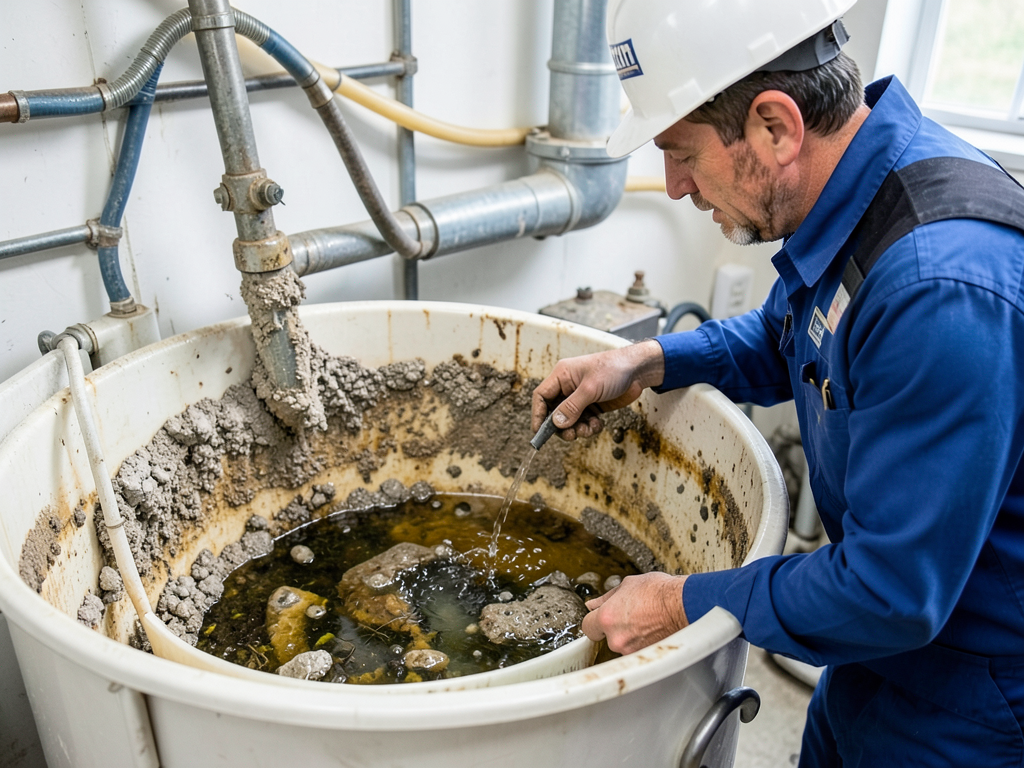
A technician examines a swamp cooler reservoir showing heavy mineral scale buildup and discolored water that indicates bacterial growth.
How to Deodorize Your Evaporative Cooler: Step-by-Step Guide
Before calling for service try this comprehensive cleaning process. You’ll need white vinegar a scrub brush clean water and about an hour of your time.
- Safety First
Turn off the power at the breaker. Never work on electrical components with the power connected. Remove the side panels to access the interior.
- Drain and Flush
Remove the drain plug and let all water drain completely. Flush the reservoir with a garden hose to remove loose debris and sediment.
- Deep Clean with Vinegar
Mix one part white vinegar with three parts water. Use this solution to scrub all surfaces—reservoir walls water distribution tubes and the bottom pan. Pay special attention to corners where bacteria hide.
- Replace Cooling Pads
Remove old pads and inspect them. If they’re discolored brittle or have visible mold replace them. Aspen pads typically last one season while rigid media can last several years with proper care. Repair vs. Replace AC Guide.
- Check and Adjust the Float Valve
Ensure the float valve maintains the correct water level—about one inch below the top of the reservoir. Improper water levels lead to overflow and stagnant areas.
- Inspect the Recirculating Pump
Check that the pump is working correctly and water is flowing evenly across the pads. Uneven distribution creates dry spots where bacteria can grow.
After cleaning run the cooler for several hours with clean water to flush out any remaining vinegar solution. If the fishy smell persists after this thorough cleaning you may have a more serious issue requiring professional diagnosis.
The Role of Denver’s Hard Water in Cooler Odors
Arvada’s water comes from Denver Water’s collection system which has some of the highest mineral content in the Front Range. The water hardness typically ranges from 120 to 180 parts per million creating perfect conditions for scale buildup in your swamp cooler.
When hard water evaporates through your cooling pads it leaves behind minerals that form a white crusty scale. This scale doesn’t just reduce cooling efficiency—it creates microscopic crevices where bacteria can establish colonies. The bacteria feed on organic matter trapped in the scale and produce gases that smell like fish or rotten eggs.
Denver Water’s alkalinity also contributes to the problem. High alkalinity means the water resists pH changes allowing bacteria to thrive even when you add cleaning agents. This is why standard bleach solutions often provide only temporary relief—the bacteria quickly adapt to the altered pH.
To combat hard water effects consider installing a zinc anode in your cooler’s reservoir. These sacrificial anodes release zinc ions that inhibit bacterial growth and help prevent scale formation. They’re inexpensive and can extend the life of your cooling pads by several months.
A comparison showing new aspen cooling pads versus heavily scaled pads with visible mineral deposits and bacterial staining.
When DIY Isn’t Enough: Identifying Mold in the Ductwork
Sometimes the fishy smell isn’t coming from the cooler itself but from mold growing in your ductwork. This is especially common in homes where the swamp cooler shares ductwork with a furnace or where flexible ducts have been installed in unconditioned spaces. Emergency Furnace Repair for Denver Residents Dealing with a Frozen House.
Check for these warning signs: the smell persists even after cleaning the cooler you notice visible mold growth around vents or family members experience increased allergy symptoms when the cooler runs. Mold in ductwork can produce mycotoxins that pose serious health risks particularly for children elderly or those with respiratory conditions.
According to the EPA’s guidelines on indoor air quality visible mold growth or persistent musty odors warrant professional inspection. Don’t attempt to clean mold from ductwork yourself—disturbing mold colonies can release spores throughout your home. EPA’s guidelines on indoor air quality.
If you suspect mold in your ducts look for these specific indicators: black or green discoloration around vents a persistent earthy smell that doesn’t go away when the cooler is off or condensation on ductwork during operation. These conditions require professional mold remediation and duct cleaning.
The cost of professional duct cleaning varies by system size but most Arvada homes can be serviced for $300-$500. This investment prevents health issues and improves your cooling system’s efficiency.
Preventative Maintenance: Using Zinc Anodes and Purge Pumps
Prevention is always better than cure when it comes to swamp cooler odors. Two simple additions to your system can dramatically reduce maintenance headaches and eliminate most odor problems.
Zinc Anodes work by releasing zinc ions into the water creating an environment where bacteria and algae cannot thrive. These anodes typically last one cooling season and cost around $15-$20. They’re particularly effective in Arvada’s hard water conditions and can extend pad life by 30-50%.
Purge Pumps automatically drain a portion of the reservoir water every few hours replacing it with fresh water. This continuous flushing prevents stagnant water from becoming a breeding ground for bacteria. Most purge systems use less than one gallon of water per hour—minimal compared to the water used for cooling.
For maximum protection combine both technologies. The zinc anode inhibits biological growth while the purge pump prevents mineral buildup. This combination can eliminate the need for monthly deep cleaning and extend your cooling season without odor issues.
Professional installation of these systems typically takes less than an hour and costs between $150-$250. Given the reduction in maintenance time and the elimination of odor problems most homeowners recoup this investment within one or two seasons.
A technician installs a zinc anode and purge pump system in a residential swamp cooler showing the components and their placement.
Seasonal Startup vs. Shutdown Maintenance for Colorado Climate
Colorado’s dramatic temperature swings create unique challenges for swamp cooler maintenance. The freeze-thaw cycles in spring and fall can cause water line damage while summer monsoon humidity affects cooling efficiency.
Spring Startup (May-June) should include a complete system inspection. Check for cracked water lines from winter freezing test the pump and fan motor and replace any damaged pads. This is when you’ll first notice odors from winter stagnation so be prepared with cleaning supplies.
Summer Maintenance (July-August) focuses on efficiency. Clean the water distribution tubes monthly to prevent clogging check pad saturation levels weekly and monitor water usage. During monsoon season you may need to adjust your cooler’s operation as humidity increases.
Fall Shutdown (September-October) is critical for preventing next year’s odor problems. Completely drain the system remove and dry all pads and leave the drain plug out during winter to prevent freeze damage. Consider adding a small amount of RV antifreeze to the pump housing to protect seals.
Following this seasonal schedule prevents the winter stagnation that causes most spring odor problems. It also extends your cooler’s lifespan and maintains optimal cooling efficiency throughout the season.
Denver Swamp Cooler Tune-Up & Professional Cleaning Services
While many odor issues can be resolved with DIY cleaning some problems require professional attention. If you’ve tried the cleaning steps above and still notice fishy or musty odors it’s time to call in the experts.
Professional swamp cooler service includes comprehensive testing of electrical components inspection of the water distribution system and evaluation of cooling pad condition. Technicians can identify issues that aren’t visible to homeowners such as failing bearings worn belts or developing electrical problems.
Call (720) 502-9511 today to schedule your inspection. Our NATE-certified technicians understand the specific challenges of Arvada’s climate and water conditions. We’ll diagnose the source of your cooler’s odor and provide solutions that eliminate the problem permanently.
Don’t wait until the smell becomes unbearable or causes health issues. Early intervention prevents more expensive repairs and ensures your cooling system operates safely and efficiently all summer long. Fast AC Repair Services in Aurora for When the Summer Heat Hits.
Frequently Asked Questions
Is that fishy smell dangerous for my family’s health?
The fishy smell itself isn’t typically dangerous but it indicates bacterial growth that can produce harmful compounds. If the odor is accompanied by visible mold persistent respiratory symptoms or comes from electrical components it requires immediate professional attention.
How often should I replace my swamp cooler pads?
Aspen pads should be replaced annually in Arvada’s climate typically in May before startup. Rigid media pads can last 3-5 years but should be inspected each spring for mineral buildup and damage. Hard water significantly reduces pad lifespan.
Can I use bleach to clean my swamp cooler?
Yes but use it carefully. Mix one cup of bleach per gallon of water and rinse thoroughly afterward. Never mix bleach with other cleaning products. For routine maintenance white vinegar is safer and equally effective at removing mineral deposits and killing bacteria.
Why does the smell only appear in spring?
Spring startup reveals odors because stagnant water has been sitting in the cooler all winter allowing bacteria and algae to multiply. The first use of the season disturbs these colonies releasing the gases that cause the fishy smell.
How much does professional swamp cooler cleaning cost?
Professional cleaning in Arvada typically costs $150-$300 depending on system size and condition. This includes complete disassembly cleaning inspection and startup testing. The investment prevents more expensive repairs and ensures safe operation.
Call (720) 502-9511 today to schedule your swamp cooler inspection before the summer heat arrives. Don’t let that fishy smell become a health hazard or system failure.
{
“@context”: “https://schema.org”,
“@type”: “BlogPosting”,
“headline”: “Why Your Arvada Swamp Cooler Smells Like Fish or Mold Every Spring”,
“description”: “That fishy swamp cooler smell in Arvada homes comes from bacteria and mineral buildup. Learn how to fix it with local water conditions and proper maintenance.”,
“wordCount”: 1985,
“datePublished”: “2026-03-30T08:31:00.000Z”,
“dateModified”: “2026-03-30T08:31:00.000Z”,
“inLanguage”: “en-US”,
“mainEntityOfPage”: {
“@type”: “WebPage”,
“@id”: “https://fortresshvacdenver.com”
},
“publisher”: {
“@type”: “LocalBusiness”,
“name”: “Fortress HVAC Denver”,
“url”: “https://fortresshvacdenver.com”
},
“author”: {
“@type”: “Organization”,
“name”: “Fortress HVAC Denver”,
“url”: “https://fortresshvacdenver.com”
},
“image”: {
“@type”: “ImageObject”,
“url”: “https://fortresshvacdenver.com/wp-content/uploads/2026/03/why-your-arvada-swamp-cooler-smells-like-fish-or-m-1.png”
}
}
{
“@context”: “https://schema.org”,
“@type”: “HVACBusiness”,
“name”: “Fortress HVAC Denver”,
“url”: “https://fortresshvacdenver.com”,
“address”: {
“@type”: “PostalAddress”,
“addressLocality”: “Denver”
},
“areaServed”: {
“@type”: “City”,
“name”: “Denver”
}
}
{
“@context”: “https://schema.org”,
“@type”: “FAQPage”,
“mainEntity”: [
{
“@type”: “Question”,
“name”: “Is that fishy smell dangerous for my family’s health?”,
“acceptedAnswer”: {
“@type”: “Answer”,
“text”: “The fishy smell itself isn’t typically dangerous but it indicates bacterial growth that can produce harmful compounds. If the odor is accompanied by visible mold persistent respiratory symptoms or comes from electrical components it requires immediate professional attention.”
}
},
{
“@type”: “Question”,
“name”: “How often should I replace my swamp cooler pads?”,
“acceptedAnswer”: {
“@type”: “Answer”,
“text”: “Aspen pads should be replaced annually in Arvada’s climate typically in May before startup. Rigid media pads can last 3-5 years but should be inspected each spring for mineral buildup and damage. Hard water significantly reduces pad lifespan.”
}
},
{
“@type”: “Question”,
“name”: “Can I use bleach to clean my swamp cooler?”,
“acceptedAnswer”: {
“@type”: “Answer”,
“text”: “Yes but use it carefully. Mix one cup of bleach per gallon of water and rinse thoroughly afterward. Never mix bleach with other cleaning products. For routine maintenance white vinegar is safer and equally effective at removing mineral deposits and killing bacteria.”
}
},
{
“@type”: “Question”,
“name”: “Why does the smell only appear in spring?”,
“acceptedAnswer”: {
“@type”: “Answer”,
“text”: “Spring startup reveals odors because stagnant water has been sitting in the cooler all winter allowing bacteria and algae to multiply. The first use of the season disturbs these colonies releasing the gases that cause the fishy smell.”
}
},
{
“@type”: “Question”,
“name”: “How much does professional swamp cooler cleaning cost?”,
“acceptedAnswer”: {
“@type”: “Answer”,
“text”: “Professional cleaning in Arvada typically costs $150-$300 depending on system size and condition. This includes complete disassembly cleaning inspection and startup testing. The investment prevents more expensive repairs and ensures safe operation.”
}
}
]
}
{
“@context”: “https://schema.org”,
“@type”: “HowTo”,
“name”: “How to Clean a Smelly Swamp Cooler”,
“step”: [
{
“@type”: “HowToStep”,
“position”: 1,
“name”: “Safety First”,
“text”: “Turn off the power at the breaker. Never work on electrical components with the power connected. Remove the side panels to access the interior.”
},
{
“@type”: “HowToStep”,
“position”: 2,
“name”: “Drain and Flush”,
“text”: “Remove the drain plug and let all water drain completely. Flush the reservoir with a garden hose to remove loose debris and sediment.”
},
{
“@type”: “HowToStep”,
“position”: 3,
“name”: “Deep Clean with Vinegar”,
“text”: “Mix one part white vinegar with three parts water. Use this solution to scrub all surfaces—reservoir walls water distribution tubes and the bottom pan. Pay special attention to corners where bacteria hide.”
},
{
“@type”: “HowToStep”,
“position”: 4,
“name”: “Replace Cooling Pads”,
“text”: “Remove old pads and inspect them. If they’re discolored brittle or have visible mold replace them. Aspen pads typically last one season while rigid media can last several years with proper care. Repair vs. Replace AC Guide.”
},
{
“@type”: “HowToStep”,
“position”: 5,
“name”: “Check and Adjust the Float Valve”,
“text”: “Ensure the float valve maintains the correct water level—about one inch below the top of the reservoir. Improper water levels lead to overflow and stagnant areas.”
},
{
“@type”: “HowToStep”,
“position”: 6,
“name”: “Inspect the Recirculating Pump”,
“text”: “Check that the pump is working correctly and water is flowing evenly across the pads. Uneven distribution creates dry spots where bacteria can grow.”
}
],
“image”: “https://fortresshvacdenver.com/wp-content/uploads/2026/03/why-your-arvada-swamp-cooler-smells-like-fish-or-m-1.png”
}
{
“@context”: “https://schema.org”,
“@type”: “BreadcrumbList”,
“itemListElement”: [
{
“@type”: “ListItem”,
“position”: 1,
“name”: “Home”,
“item”: “https://fortresshvacdenver.com”
},
{
“@type”: “ListItem”,
“position”: 2,
“name”: “Blog”,
“item”: “https://fortresshvacdenver.com/blog”
},
{
“@type”: “ListItem”,
“position”: 3,
“name”: “Why Your Arvada Swamp Cooler Smells Like Fish or Mold Every Spring”
}
]
}
{
“@context”: “https://schema.org”,
“@type”: “Service”,
“serviceType”: “HVAC”,
“provider”: {
“@type”: “LocalBusiness”,
“name”: “Fortress HVAC Denver”,
“url”: “https://fortresshvacdenver.com”
},
“areaServed”: {
“@type”: “City”,
“name”: “Denver”
},
“description”: “That fishy swamp cooler smell in Arvada homes comes from bacteria and mineral buildup. Learn how to fix it with local water conditions and proper maintenance.”
}