Signs Your Five Points Home Has a Carbon Monoxide Leak (And How to Stay Safe)
Carbon monoxide is a silent killer that can leak from your furnace without warning. In Five Points where many homes are over 50 years old the risk increases due to aging heating systems and older construction methods. This guide shows you exactly what to look for and what to do if you suspect a leak. Emergency Furnace Repair for Denver Residents Dealing with a Frozen House.
Physical Symptoms That Signal Immediate Danger
Your body reacts to carbon monoxide before your furnace shows obvious signs. The gas prevents your blood from carrying oxygen causing symptoms that mimic the flu. Watch for these warning signs in your family:. Read more about How to Tell If Your Thermostat Is Broken or Your Furnace Is Dying (Belmar Resident Guide).
- Persistent headaches especially in the morning
- Dizziness or confusion when indoors
- Nausea without other illness symptoms
- Shortness of breath during normal activities
- Blurred vision or difficulty concentrating
Pets often show symptoms first. If your dog seems lethargic or your cat vomits repeatedly while you are home check your furnace immediately.. Read more about What to Do Immediately if You Smell Gas Near Your Furnace in Your Whittier Bungalow.
Visual Signs Your Denver Furnace is Leaking Carbon Monoxide
Carbon monoxide forms when fuel burns incompletely. Your furnace gives you visual clues when this happens. Look for these warning signs around your heating unit:
- Yellow or orange flames instead of crisp blue ones
- Soot streaks around the furnace cabinet
- Excessive moisture on windows or walls near the unit
- Rust or corrosion on the heat exchanger
- Strange odors when the furnace runs
A healthy gas flame burns blue with a small yellow tip. If you see large yellow flames your furnace needs immediate service. The yellow color means incomplete combustion which produces carbon monoxide.
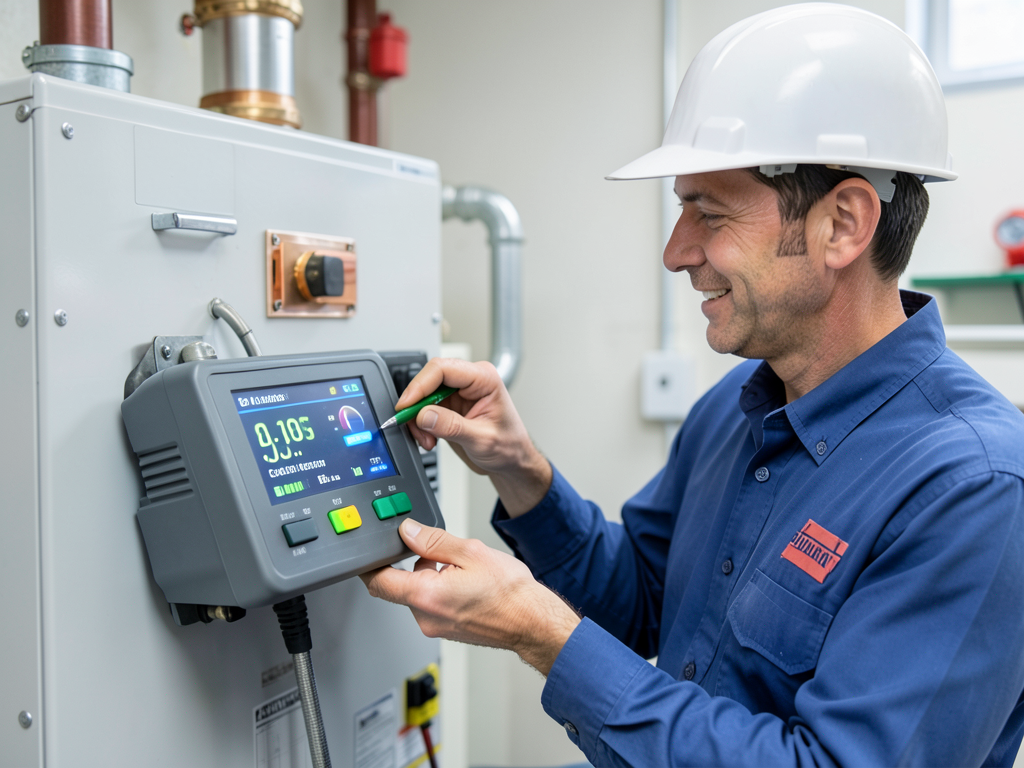
A technician examines a furnace flame showing the difference between safe blue combustion and dangerous yellow flames that indicate carbon monoxide production.
Why Denver’s Altitude Increases Carbon Monoxide Risks
Denver sits at 5 280 feet above sea level. The thinner air affects how your furnace burns fuel. At high altitude there is less oxygen available for combustion. This forces your furnace to work harder and can lead to incomplete burning of natural gas.
Older furnaces in Five Points homes were often installed before high altitude derating became standard practice. Without proper adjustments these units produce more carbon monoxide than they should. The EPA recommends altitude adjustments for all gas appliances above 2 000 feet. EPA Carbon Monoxide Safety Guide.
Denver building codes now require high altitude conversion kits for new furnace installations. If your furnace is over 15 years old it likely lacks these safety features.
What to Do If You Suspect a CO Leak (Step-by-Step)
Carbon monoxide emergencies require immediate action. Follow these steps if you notice warning signs:
- Get Fresh Air Immediately
Open windows and doors. Move everyone outside including pets.
- Call 911
Report a possible carbon monoxide emergency. Do not wait for symptoms to worsen.
- Turn Off the Furnace
Switch off the main power at the breaker if you can reach it safely.
- Call Xcel Energy
Dial 1-800-895-2999 for gas emergencies in Denver.
- Do Not Re-enter
Wait for emergency responders to declare your home safe.
Never ignore carbon monoxide alarms. If your detector sounds treat it as an emergency even if you feel fine. Carbon monoxide can cause unconsciousness without warning.

A carbon monoxide detector with a digital display showing current CO levels in parts per million provides real-time safety monitoring for Denver homes.. Read more about Remote HVAC Monitoring Tips for Short-Term Rental Owners in LoDo and Five Points.
Prevention: CO Detectors and Annual Maintenance
Prevention saves lives. Install carbon monoxide detectors on every level of your home. Place them near sleeping areas and within 10 feet of fuel-burning appliances.
Replace batteries twice yearly when you change your clocks. CO detectors expire after 5-7 years. Check the manufacturing date on the back and replace old units. Repair vs. Replace AC Guide.
Annual furnace maintenance catches problems before they become dangerous. A professional inspection includes:
- Heat exchanger crack detection using specialized cameras
- Combustion analysis to verify proper fuel burning
- Vent and flue pipe inspection for blockages
- Gas pressure and airflow measurements
- Safety control testing
Denver HVAC technicians use combustion analyzers that measure oxygen levels and carbon monoxide in exhaust gases. This test reveals problems invisible to the naked eye.
Heat Exchanger Lifespan in Colorado’s Climate
Colorado’s extreme temperature swings stress furnace components. Your heating system cycles on and off frequently during spring and fall. This constant expansion and contraction cracks heat exchangers over time.. Read more about Is Your HVAC System Helping or Hurting the Radon Levels in Your Denver Basement?.
A heat exchanger typically lasts 15-20 years in Denver. Signs of failure include:
- Cracks visible under UV light inspection
- Water pooling around the furnace base
- Unusual popping sounds during heating cycles
- Increased utility bills without usage changes
Heat exchanger replacement costs $1 500-$3 000. Many homeowners choose to replace the entire furnace especially if it is over 15 years old.
Backdrafting and Venting Obstructions
Proper venting removes combustion gases safely. Obstructions cause backdrafting where exhaust gases flow back into your home. Common venting problems in Five Points include:
- Bird nests in rooftop vents
- Deteriorated vent pipes from age
- Blocked chimneys from soot buildup
- Negative pressure from exhaust fans
Modern high-efficiency furnaces use PVC vent pipes that resist corrosion. Older metal vents rust and develop holes allowing gases to escape into walls.
Professional Testing Methods
Store-bought CO detectors warn of dangerous levels but miss early problems. Professional testing uses calibrated equipment to detect trace amounts of carbon monoxide.
Technicians perform combustion analysis by inserting a probe into the furnace exhaust. The analyzer displays oxygen carbon monoxide and stack temperature readings. Ideal readings show less than 100 parts per million of CO in the exhaust.
Infrared cameras reveal heat patterns that indicate cracks or holes in heat exchangers. These cameras see temperature differences as small as 0.1 degrees.
Denver Building Codes and Safety Standards
Denver building code requires carbon monoxide detectors in all homes with fuel-burning appliances or attached garages. The International Residential Code Section R315 mandates placement and interconnection requirements. National Association of Certified Home Inspectors CO Guide.
NATE certified technicians follow EPA guidelines for combustion appliance testing. The EPA requires testing after any furnace repair or replacement to verify safe operation. Fast AC Repair Services in Aurora for When the Summer Heat Hits.
Xcel Energy offers free safety inspections for customers concerned about gas appliances. Their technicians check for gas leaks and proper venting at no charge.
Cost Factors for CO Safety Improvements
Investing in carbon monoxide safety costs vary by home age and system condition. Basic CO detectors range from $20-$100 each. Professional installation adds $50-$100 per unit.
Annual furnace maintenance costs $100-$200. This service often includes basic CO testing and venting inspection.
Heat exchanger replacement ranges from $1 500-$3 000. Full furnace replacement for a standard efficiency unit costs $3 000-$5 000.
High-efficiency furnaces with sealed combustion cost more upfront but provide better safety and lower utility bills over time.
Five Points Specific Risk Factors
Five Points has unique risk factors due to its historic nature. Many homes were built before modern building codes existed. Common issues include:
- Shared chimneys between multiple units
- Unlined masonry chimneys that deteriorate
- Basement apartments with poor ventilation
- Converted attic spaces with inadequate venting
The neighborhood’s mix of Victorian homes and early 20th century bungalows means furnace configurations vary widely. Some homes still use gravity furnaces that require special safety considerations.
Denver Water main replacements in the area sometimes disturb old gas lines increasing leak risks temporarily. Always verify gas line integrity after nearby construction.
Emergency Contacts for Five Points Residents
Save these numbers in your phone:
- Denver Fire Department: 911
- Xcel Energy Gas Emergency: 1-800-895-2999
- Poison Control: 1-800-222-1222
- Fortress Heating & Air: (720) 502-9511
For non-emergency concerns contact the Denver Building Department at 720-865-2500. They provide information about CO detector requirements and inspection services.
Comparing CO Detector Types
| Detector Type | Cost Range | Features | Best For |
|---|---|---|---|
| Battery Powered | $20-$50 | Portable easy install | Rental properties |
| Hardwired | $40-$100 | Interconnected backup battery | New construction |
| Plug In | $30-$80 | Digital display battery backup | Finished basements |
| Smart | $100-$250 | Phone alerts self testing | Tech savvy homeowners |
Frequently Asked Questions
How often should I test my carbon monoxide detectors?
Test CO detectors monthly by pressing the test button. Replace batteries twice yearly during daylight saving time changes. Replace the entire unit every 5-7 years according to manufacturer specifications.
Can a new furnace still produce carbon monoxide?
Yes. Even new furnaces can produce CO if improperly installed or if the heat exchanger cracks. Always have a professional perform combustion analysis on any new or repaired furnace.
What does a carbon monoxide detector alarm sound like?
CO detectors emit a loud continuous beeping pattern. It sounds different from smoke alarms which typically have a temporal three pattern. Check your detector manual for the specific alarm sound.
How long does it take to get carbon monoxide poisoning?
CO poisoning can occur in minutes at high concentrations. At 1 600 ppm unconsciousness occurs within 20 minutes. At lower levels like 70 ppm symptoms may take several hours to develop.
Should I get a carbon monoxide detector if I only have electric heat?
Yes. CO can still enter your home from attached garages gas water heaters or neighboring units in multi-family buildings. All homes benefit from CO protection regardless of heating type.
Call for Professional Safety Inspection
Carbon monoxide leaks can develop any time your furnace runs. Don’t wait for symptoms to appear. Call Fortress Heating & Air today at (720) 502-9511 to schedule your comprehensive safety inspection. Our NATE certified technicians will test your system for CO production check your venting and ensure your family stays safe all winter long.
Pick up the phone and call (720) 502-9511 before the next cold snap hits. A quick inspection now prevents emergency repairs later and most importantly protects your loved ones from invisible danger.
Remember that carbon monoxide has no smell no color and no taste. The only way to know if your home is safe is through professional testing. Don’t take chances with your family’s safety.
You may also find this helpful. Will Denver’s New Electrification Rules Force You to Replace Your Gas Furnace?.
{
“@context”: “https://schema.org”,
“@type”: “BlogPosting”,
“headline”: “Signs Your Five Points Home Has a Carbon Monoxide Leak (And How to Stay Safe)”,
“description”: “Learn the critical signs of carbon monoxide leaks in Five Points homes. Protect your family with Denver-specific safety tips and immediate emergency steps.”,
“wordCount”: 1650,
“datePublished”: “2026-03-24T15:59:00.000Z”,
“dateModified”: “2026-03-24T15:59:00.000Z”,
“inLanguage”: “en-US”,
“mainEntityOfPage”: {
“@type”: “WebPage”,
“@id”: “https://fortresshvacdenver.com”
},
“publisher”: {
“@type”: “LocalBusiness”,
“name”: “Fortress HVAC Denver”,
“url”: “https://fortresshvacdenver.com”
},
“author”: {
“@type”: “Organization”,
“name”: “Fortress HVAC Denver”,
“url”: “https://fortresshvacdenver.com”
},
“image”: {
“@type”: “ImageObject”,
“url”: “https://fortresshvacdenver.com/wp-content/uploads/2026/03/signs-your-five-points-home-has-a-carbon-monoxide-1.png”
}
}
{
“@context”: “https://schema.org”,
“@type”: “HVACBusiness”,
“name”: “Fortress HVAC Denver”,
“url”: “https://fortresshvacdenver.com”,
“address”: {
“@type”: “PostalAddress”,
“addressLocality”: “Denver”
},
“areaServed”: {
“@type”: “City”,
“name”: “Denver”
}
}
{
“@context”: “https://schema.org”,
“@type”: “FAQPage”,
“mainEntity”: [
{
“@type”: “Question”,
“name”: “How often should I test my carbon monoxide detectors?”,
“acceptedAnswer”: {
“@type”: “Answer”,
“text”: “Test CO detectors monthly by pressing the test button. Replace batteries twice yearly during daylight saving time changes. Replace the entire unit every 5-7 years according to manufacturer specifications.”
}
},
{
“@type”: “Question”,
“name”: “Can a new furnace still produce carbon monoxide?”,
“acceptedAnswer”: {
“@type”: “Answer”,
“text”: “Yes. Even new furnaces can produce CO if improperly installed or if the heat exchanger cracks. Always have a professional perform combustion analysis on any new or repaired furnace.”
}
},
{
“@type”: “Question”,
“name”: “What does a carbon monoxide detector alarm sound like?”,
“acceptedAnswer”: {
“@type”: “Answer”,
“text”: “CO detectors emit a loud continuous beeping pattern. It sounds different from smoke alarms which typically have a temporal three pattern. Check your detector manual for the specific alarm sound.”
}
},
{
“@type”: “Question”,
“name”: “How long does it take to get carbon monoxide poisoning?”,
“acceptedAnswer”: {
“@type”: “Answer”,
“text”: “CO poisoning can occur in minutes at high concentrations. At 1 600 ppm unconsciousness occurs within 20 minutes. At lower levels like 70 ppm symptoms may take several hours to develop.”
}
}
]
}
{
“@context”: “https://schema.org”,
“@type”: “HowTo”,
“name”: “Carbon Monoxide Emergency Response”,
“step”: [
{
“@type”: “HowToStep”,
“position”: 1,
“name”: “Get Fresh Air Immediately”,
“text”: “Open windows and doors. Move everyone outside including pets.”
},
{
“@type”: “HowToStep”,
“position”: 2,
“name”: “Call 911”,
“text”: “Report a possible carbon monoxide emergency. Do not wait for symptoms to worsen.”
},
{
“@type”: “HowToStep”,
“position”: 3,
“name”: “Turn Off the Furnace”,
“text”: “Switch off the main power at the breaker if you can reach it safely.”
},
{
“@type”: “HowToStep”,
“position”: 4,
“name”: “Call Xcel Energy”,
“text”: “Dial 1-800-895-2999 for gas emergencies in Denver.”
},
{
“@type”: “HowToStep”,
“position”: 5,
“name”: “Do Not Re-enter”,
“text”: “Wait for emergency responders to declare your home safe.”
}
],
“image”: “https://fortresshvacdenver.com/wp-content/uploads/2026/03/signs-your-five-points-home-has-a-carbon-monoxide-1.png”
}
{
“@context”: “https://schema.org”,
“@type”: “BreadcrumbList”,
“itemListElement”: [
{
“@type”: “ListItem”,
“position”: 1,
“name”: “Home”,
“item”: “https://fortresshvacdenver.com”
},
{
“@type”: “ListItem”,
“position”: 2,
“name”: “Blog”,
“item”: “https://fortresshvacdenver.com/blog”
},
{
“@type”: “ListItem”,
“position”: 3,
“name”: “Signs Your Five Points Home Has a Carbon Monoxide Leak (And How to Stay Safe)”
}
]
}
{
“@context”: “https://schema.org”,
“@type”: “Service”,
“serviceType”: “HVAC”,
“provider”: {
“@type”: “LocalBusiness”,
“name”: “Fortress HVAC Denver”,
“url”: “https://fortresshvacdenver.com”
},
“areaServed”: {
“@type”: “City”,
“name”: “Denver”
},
“description”: “Learn the critical signs of carbon monoxide leaks in Five Points homes. Protect your family with Denver-specific safety tips and immediate emergency steps.”
}