
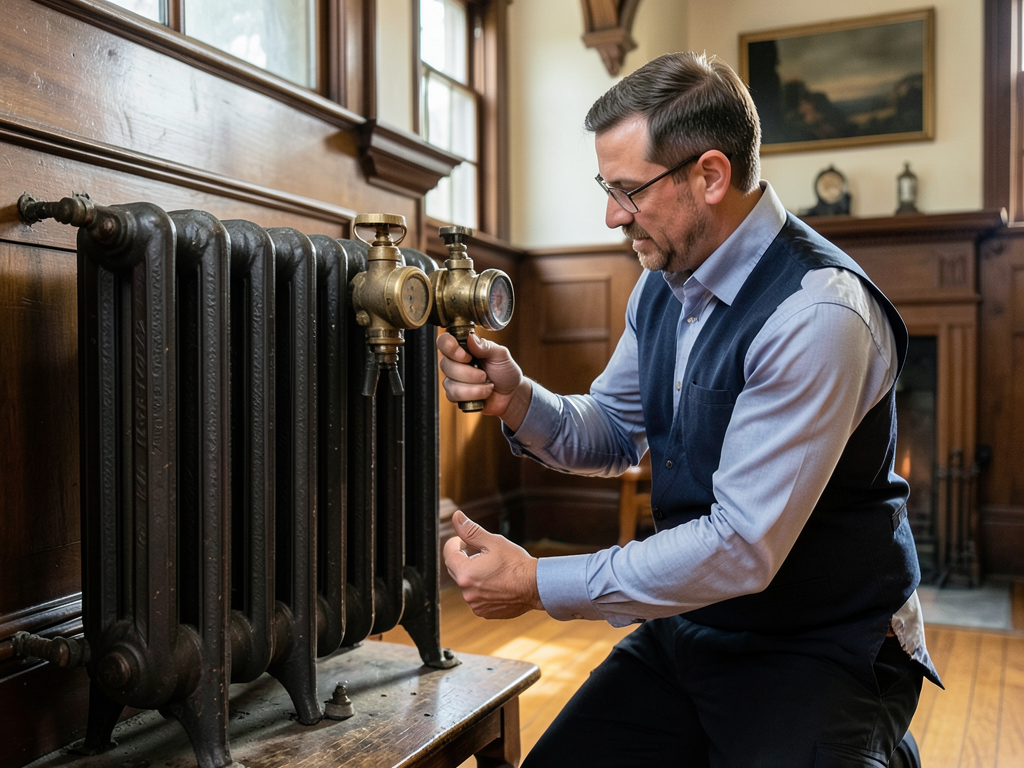
Restoring and Maintaining Original Cast Iron Radiators in Historic Curtis Park Homes
Curtis Park’s historic Victorian and Craftsman homes feature cast iron radiators that have provided reliable heat for over a century. These radiators connect directly to Denver’s high-altitude climate and the neighborhood’s architectural heritage. Understanding how to maintain these systems properly ensures your home stays warm while preserving its historic character. Denver Landmark Preservation Commission.
Understanding Denver’s Historic Heating Systems: Steam vs. Hot Water
Most Curtis Park homes built before 1920 use steam heating systems, while those constructed between 1920 and 1940 typically feature hot water systems. Steam systems operate at lower pressure but require precise balancing across multiple floors. Hot water systems run at higher pressure but distribute heat more evenly throughout the home.. Read more about Understanding How Hard Denver Water Affects Your Boiler and Radiators in Mayfair.
Denver’s altitude affects system performance significantly. Water boils at approximately 202°F at 5,280 feet compared to 212°F at sea level. This means steam systems need careful pressure monitoring to maintain efficiency. The Denver Building Code requires all historic heating systems to meet current safety standards while preserving original components when possible.. Read more about Steam Boiler Repair and Radiator Maintenance for Historic Mansions in Country Club.
Steam radiators produce characteristic knocking sounds when air vents malfunction. Hot water radiators typically remain silent unless sediment buildup causes gurgling. Understanding these differences helps diagnose problems quickly.
Seasonal Maintenance Checklist for Cast Iron Radiators
Regular maintenance prevents costly repairs and extends radiator life. Perform these tasks before each heating season begins. EPA recommendations for lead content in brass components.
- Visual Inspection
Check for rust, leaks, or damage on radiator surfaces. Look for white mineral deposits around valves indicating water quality issues.
- Valve Testing
Turn radiator valves fully open and closed to ensure smooth operation. Stiff valves may need lubrication or replacement. Repair vs. Replace AC Guide.
- Vent Inspection
Steam systems require functional air vents. Test by feeling for heat at vent locations after system startup.
- Pressure Check
Verify boiler pressure matches manufacturer specifications. Steam systems typically run at 1-2 PSI, while hot water systems operate at 12-15 PSI.
Bleeding the System: Why and How
Air trapped in radiators prevents proper heat distribution. Bleeding removes this air and restores full heating capacity. Steam systems self-bleed through air vents, but hot water systems require manual bleeding.
Turn off the boiler and let the system cool completely. Place a small container under the bleed valve to catch water. Open the valve slowly until water flows steadily, then close it tightly. Repeat for each radiator, starting with those farthest from the boiler.
Denver’s hard water creates mineral buildup that can clog bleed valves. If water flows slowly or contains sediment, professional cleaning may be necessary.. Read more about What Every Denver Home Buyer Should Look for during an HVAC Inspection.
Inspecting Radiator Valves and Vents
Thermostatic radiator valves allow room-by-room temperature control. These valves contain wax elements that expand and contract with temperature changes. Test operation by feeling the valve body after system warmup. A properly functioning valve will be warm near the radiator and cool near the pipe.
Steam air vents should hiss softly during operation and remain quiet when fully heated. Replace vents that whistle continuously or fail to close completely. Hot water systems use manual valves that should turn smoothly without sticking.
The EPA recommends replacing valves manufactured before 1986 due to potential lead content in older brass components.
Common Issues in Denver’s Historic Homes (and How to Fix Them)
Curtis Park’s soil composition creates unique challenges for historic heating systems. The area’s clay-rich soil expands and contracts with moisture changes, potentially shifting pipes and causing leaks. Foundation movement can misalign radiators, creating cold spots.
Denver’s low humidity accelerates cast iron corrosion. White mineral deposits on radiator surfaces indicate hard water problems. Installing a whole-house water softener reduces mineral buildup and extends system life.
Temperature fluctuations common to Denver’s climate cause metal expansion and contraction. This creates stress points where pipes connect to radiators. Check these connections annually for signs of wear.
Steam systems in older homes often suffer from water hammer. This occurs when condensate fails to drain properly, creating violent pipe movement. Installing proper pitch on steam pipes and ensuring adequate condensate return lines resolves most water hammer issues.
The Importance of Boiler Water Chemistry
Denver’s water contains high levels of calcium and magnesium. These minerals form scale inside boilers and radiators, reducing heat transfer efficiency by up to 30%. Regular water testing identifies chemistry problems before they cause damage.
Ideal boiler water pH ranges from 7.0 to 8.5. Acidic water corrodes metal components, while alkaline water creates scale. Test pH annually using test strips or digital meters.
Water hardness above 10 grains per gallon requires treatment. Install a water softener or use chemical treatments specifically designed for steam and hot water systems. The International Association of Plumbing and Mechanical Officials recommends annual water quality testing for all hydronic heating systems.
Denver Water’s average hardness is 80-100 parts per million. This level can reduce radiator efficiency by 15% over five years without treatment.
Preservation vs. Replacement: Maintaining the Integrity of Your Home
Historic preservation guidelines from the Denver Landmark Preservation Commission encourage maintaining original heating systems when possible. Cast iron radiators add character and value to historic homes. Modern replacements often lack the craftsmanship and durability of original units.
Refurbishing existing radiators costs 60-70% less than replacement while preserving architectural authenticity. Professional sandblasting removes old paint and corrosion. Powder coating provides durable, heat-resistant finish in any color.
Valve replacement improves efficiency without altering radiator appearance. Modern thermostatic valves fit existing connections and provide better temperature control than original manual valves.
Consider replacement only when radiators are severely damaged or when adding central air conditioning requires significant system modifications. Even then, refurbished radiators can often be integrated into new systems. Getting a New Central Air System Installed in Your Lakewood Home.
Call (720) 502-9511 today to schedule your inspection. Our technicians understand the unique requirements of Curtis Park’s historic heating systems and can help you maintain your home’s original character while ensuring reliable winter comfort.
Frequently Asked Questions
Should I paint my cast iron radiators?
Painting radiators improves appearance but reduces heat output by 10-20%. Use high-heat spray paint designed for radiators. Light colors reflect more heat than dark colors. Avoid thick paint buildup that can insulate radiators.
How often should I bleed my radiators?
Hot water radiators need bleeding once yearly, typically in early fall. Steam systems self-bleed through air vents and rarely require manual bleeding. If steam radiators feel cold at the top, replace the air vent rather than bleeding.
Can I add central air conditioning to a home with cast iron radiators?
Yes. Options include high-velocity mini-duct systems that require minimal wall modification or ductless mini-split systems that mount directly on walls. Both preserve radiator systems while adding cooling capability. Ductless Mini Split Installation for Older Homes in The Highlands.
What causes banging noises in steam radiators?
Banging indicates water hammer, usually caused by improper pipe pitch or inadequate condensate return. Steam pipes must slope slightly toward the boiler. Correcting pitch or installing additional condensate return lines eliminates most banging.
How long do cast iron radiators typically last?
With proper maintenance, cast iron radiators can last 100+ years. Many Curtis Park radiators are original to 1900s construction. The key factors are water quality, system pressure, and regular maintenance.
Call (720) 502-9511 before the next storm hits. Don’t risk frozen pipes or system failure during Denver’s coldest months. Our historic system specialists can evaluate your radiators and recommend the best maintenance plan for your Curtis Park home.
You may also find this helpful. Creative Ways to Hide Outdoor Mini-Split Units in Tight Washington Park Lots.
{
“@context”: “https://schema.org”,
“@type”: “BlogPosting”,
“headline”: “Restoring and Maintaining Original Cast Iron Radiators in Historic Curtis Park Homes”,
“description”: “Expert guide to preserving Curtis Park’s historic cast iron radiators. Learn Denver-specific maintenance, troubleshooting, and restoration for Victorian and Craftsman homes.”,
“wordCount”: 1237,
“datePublished”: “2026-04-06T12:16:00.000Z”,
“dateModified”: “2026-04-06T12:16:00.000Z”,
“inLanguage”: “en-US”,
“mainEntityOfPage”: {
“@type”: “WebPage”,
“@id”: “https://fortresshvacdenver.com”
},
“publisher”: {
“@type”: “LocalBusiness”,
“name”: “Fortress HVAC Denver”,
“url”: “https://fortresshvacdenver.com”
},
“author”: {
“@type”: “Organization”,
“name”: “Fortress HVAC Denver”,
“url”: “https://fortresshvacdenver.com”
},
“image”: {
“@type”: “ImageObject”,
“url”: “https://fortresshvacdenver.com/wp-content/uploads/2026/03/restoring-and-maintaining-original-cast-iron-radia-1.png”
}
}
{
“@context”: “https://schema.org”,
“@type”: “HVACBusiness”,
“name”: “Fortress HVAC Denver”,
“url”: “https://fortresshvacdenver.com”,
“address”: {
“@type”: “PostalAddress”,
“addressLocality”: “Denver”
},
“areaServed”: {
“@type”: “City”,
“name”: “Denver”
}
}
{
“@context”: “https://schema.org”,
“@type”: “FAQPage”,
“mainEntity”: [
{
“@type”: “Question”,
“name”: “Should I paint my cast iron radiators?”,
“acceptedAnswer”: {
“@type”: “Answer”,
“text”: “Painting radiators improves appearance but reduces heat output by 10-20%. Use high-heat spray paint designed for radiators. Light colors reflect more heat than dark colors. Avoid thick paint buildup that can insulate radiators.”
}
},
{
“@type”: “Question”,
“name”: “How often should I bleed my radiators?”,
“acceptedAnswer”: {
“@type”: “Answer”,
“text”: “Hot water radiators need bleeding once yearly, typically in early fall. Steam systems self-bleed through air vents and rarely require manual bleeding. If steam radiators feel cold at the top, replace the air vent rather than bleeding.”
}
},
{
“@type”: “Question”,
“name”: “Can I add central air conditioning to a home with cast iron radiators?”,
“acceptedAnswer”: {
“@type”: “Answer”,
“text”: “Yes. Options include high-velocity mini-duct systems that require minimal wall modification or ductless mini-split systems that mount directly on walls. Both preserve radiator systems while adding cooling capability. Ductless Mini Split Installation for Older Homes in The Highlands.”
}
},
{
“@type”: “Question”,
“name”: “What causes banging noises in steam radiators?”,
“acceptedAnswer”: {
“@type”: “Answer”,
“text”: “Banging indicates water hammer, usually caused by improper pipe pitch or inadequate condensate return. Steam pipes must slope slightly toward the boiler. Correcting pitch or installing additional condensate return lines eliminates most banging.”
}
},
{
“@type”: “Question”,
“name”: “How long do cast iron radiators typically last?”,
“acceptedAnswer”: {
“@type”: “Answer”,
“text”: “With proper maintenance, cast iron radiators can last 100+ years. Many Curtis Park radiators are original to 1900s construction. The key factors are water quality, system pressure, and regular maintenance.”
}
}
]
}
{
“@context”: “https://schema.org”,
“@type”: “HowTo”,
“name”: “Seasonal Radiator Maintenance”,
“step”: [
{
“@type”: “HowToStep”,
“position”: 1,
“name”: “Visual Inspection”,
“text”: “Check for rust, leaks, or damage on radiator surfaces. Look for white mineral deposits around valves indicating water quality issues.”
},
{
“@type”: “HowToStep”,
“position”: 2,
“name”: “Valve Testing”,
“text”: “Turn radiator valves fully open and closed to ensure smooth operation. Stiff valves may need lubrication or replacement. Repair vs. Replace AC Guide.”
},
{
“@type”: “HowToStep”,
“position”: 3,
“name”: “Vent Inspection”,
“text”: “Steam systems require functional air vents. Test by feeling for heat at vent locations after system startup.”
},
{
“@type”: “HowToStep”,
“position”: 4,
“name”: “Pressure Check”,
“text”: “Verify boiler pressure matches manufacturer specifications. Steam systems typically run at 1-2 PSI, while hot water systems operate at 12-15 PSI.”
}
],
“image”: “https://fortresshvacdenver.com/wp-content/uploads/2026/03/restoring-and-maintaining-original-cast-iron-radia-1.png”
}
{
“@context”: “https://schema.org”,
“@type”: “BreadcrumbList”,
“itemListElement”: [
{
“@type”: “ListItem”,
“position”: 1,
“name”: “Home”,
“item”: “https://fortresshvacdenver.com”
},
{
“@type”: “ListItem”,
“position”: 2,
“name”: “Blog”,
“item”: “https://fortresshvacdenver.com/blog”
},
{
“@type”: “ListItem”,
“position”: 3,
“name”: “Restoring and Maintaining Original Cast Iron Radiators in Historic Curtis Park Homes”
}
]
}
{
“@context”: “https://schema.org”,
“@type”: “Service”,
“serviceType”: “HVAC”,
“provider”: {
“@type”: “LocalBusiness”,
“name”: “Fortress HVAC Denver”,
“url”: “https://fortresshvacdenver.com”
},
“areaServed”: {
“@type”: “City”,
“name”: “Denver”
},
“description”: “Expert guide to preserving Curtis Park’s historic cast iron radiators. Learn Denver-specific maintenance, troubleshooting, and restoration for Victorian and Craftsman homes.”
}