
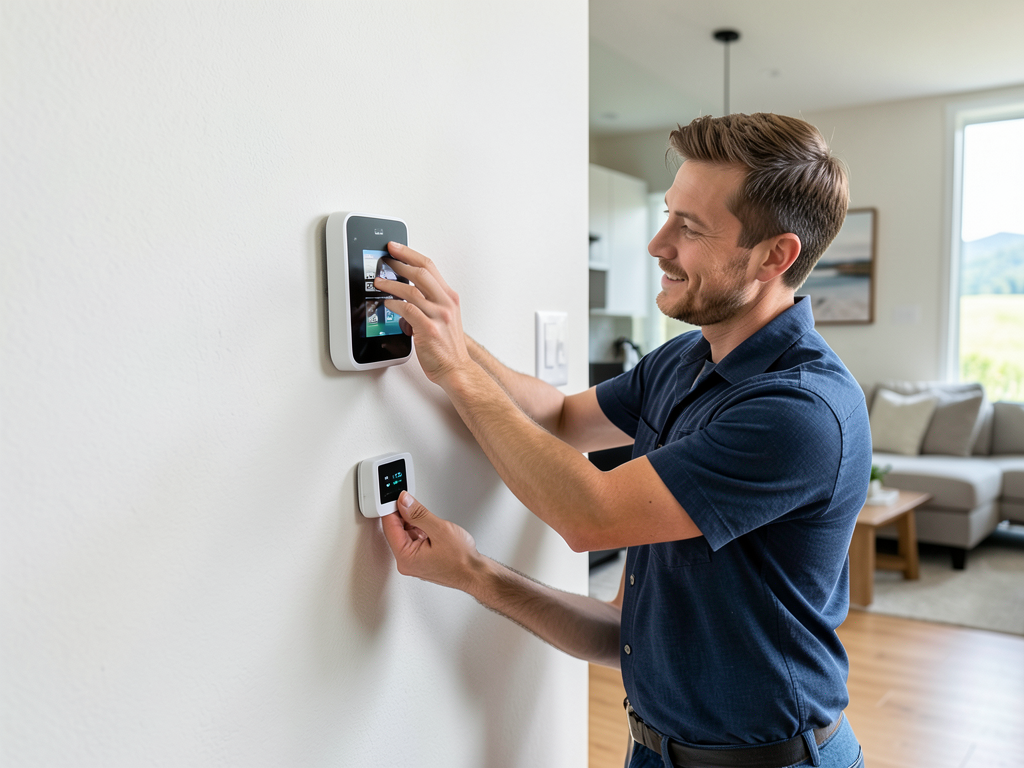
Moving Your Thermostat to the Perfect Spot in Your Open Floor Plan Highlands Home
Living in a Highlands open floor plan means enjoying spacious, airy living areas but often battling uneven temperatures. Your thermostat placement could be the hidden culprit behind those frustrating hot and cold spots. In Denver’s high-altitude climate, where rapid temperature swings are common, proper thermostat location becomes even more critical for maintaining consistent comfort throughout your home.. Read more about Retrofitting Central Air into a West Highland Home Without Ruining the Architecture.
The challenge with open floor plans is that air moves differently than in traditional segmented homes. Heat rises toward vaulted ceilings, and air currents can create pockets of varying temperatures that confuse a poorly placed thermostat. This leads to short cycling where your HVAC system turns on and off too frequently, wasting energy and never quite achieving the comfort you want.
Why Open Floor Plans Cause HVAC ‘Short Cycling’
Open floor plans create unique airflow patterns that traditional homes don’t experience. In a standard room with walls, air tends to stay contained and reach equilibrium. But in an open concept, warm air from your kitchen naturally rises and spreads toward cooler areas, creating convection currents that your thermostat might misread. The Best Swamp Cooler Service and Startup in Denver and Arvada.
Denver’s Front Range climate amplifies this issue. Our high altitude means thinner air that doesn’t hold heat as effectively, and our intense mountain sun creates rapid temperature changes throughout the day. A thermostat placed near a south-facing window might read 75 degrees when the rest of your living area is actually 68 degrees.
The physics of thermal stratification plays a major role here. Heat naturally rises, so in rooms with high ceilings common in modern Highlands homes, the air temperature near the ceiling can be 5-8 degrees warmer than at floor level. If your thermostat is mounted too high, it’s reading air that doesn’t represent the comfort level where you actually live and breathe.
The 5 ‘Do Not’ Zones for Placement
Understanding where not to place your thermostat is just as important as finding the perfect spot. These five zones consistently cause problems in Highlands homes:
- Near kitchens – Oven heat, stove burners, and refrigerator exhaust create localized temperature spikes that make your HVAC run when it shouldn’t
- Near windows – Denver’s intense sun through large windows can heat a small area dramatically, especially problematic with our high-altitude UV exposure
- Drafty entryways – Cold air rushing in when doors open creates false readings and unnecessary heating cycles
- Direct sunlight – Even in winter, solar gain through south-facing windows can trick your thermostat into thinking your home is warmer than it actually is
- Interior corners with dead air – These areas often have poor air circulation and don’t represent the true average temperature of your space
Many Highlands homes feature large picture windows with stunning mountain views, but these same windows can wreak havoc on thermostat accuracy. The solution isn’t to block your views, but to understand how to work around these challenges.
Recommended Placement: The ‘Interior Wall’ Strategy
The ideal thermostat location follows the ‘interior wall’ strategy. This means mounting your thermostat on an interior wall, away from exterior influences, at a height that represents the average breathing zone of your living space.
According to NATE certification standards, the optimal mounting height is 60 inches from the floor. This height provides the best balance between avoiding floor-level drafts and ceiling-level heat stratification. In homes with 9-12 foot ceilings common in Highlands, this represents about the midpoint of your living space.
The wall should be interior, meaning it doesn’t share a surface with the outside environment. This protects your thermostat from Denver’s notorious temperature swings – we can see 40-degree changes in a single day. An interior location also shields it from the radiant heat of summer sun on exterior walls.. Read more about Why Your Gas Fireplace Should Not Be Your Only Heat Source in Golden.
Placement should be central to the area you want to control. In an open floor plan, this often means positioning it where air from the kitchen, living room, and dining areas naturally mix. The goal is for your thermostat to read the average temperature of your living space, not a localized hot or cold spot. Getting a New Central Air System Installed in Your Lakewood Home.
Solving the Denver Sun Problem: Smart Sensors vs. Single Placement
Denver’s high-altitude sun creates unique challenges for thermostat placement. Our mile-high location means approximately 25% more UV exposure than sea level, and our clear mountain air allows solar radiation to penetrate more deeply into homes.
For homes with large south-facing windows – very common in modern Highlands architecture – a single thermostat placement might never solve the problem completely. This is where smart sensor technology becomes invaluable.
Smart thermostats like the Ecobee or Nest Learning Thermostat offer remote sensor options. These small wireless devices can be placed in different areas of your home, providing multiple temperature readings to your system. For a typical open floor plan, placing sensors in the kitchen and living area allows your system to average readings rather than relying on a single location.
The technology works by taking temperature readings from multiple points and using algorithms to determine the most efficient way to heat or cool your space. If the kitchen sensor reads 72 degrees but the living area sensor reads 68 degrees, the system can make intelligent decisions about where to direct airflow.
Smart sensors also offer occupancy detection, which is particularly useful in open floor plans where people might be spread throughout a large space rather than concentrated in one room. This prevents heating or cooling empty areas unnecessarily.
Multi-Zone Systems: The Ultimate Open Concept Solution
For truly optimal comfort in large open floor plans, especially those common in Highlands’ modern homes, a multi-zone HVAC system might be the answer. This approach divides your home into separate temperature zones, each controlled independently.
Multi-zone systems use dampers in your ductwork to direct airflow where it’s needed most. A zone controller manages these dampers based on readings from multiple thermostats or sensors throughout your home. This means your kitchen can be kept cooler while your living room stays warmer, all from the same HVAC system.
The energy efficiency benefits are significant. Rather than heating or cooling your entire home to one temperature, you only condition the spaces that need it. In a typical Highlands open floor plan, this can reduce energy consumption by 15-20% while improving comfort.
Installation involves adding zone control panels, motorized dampers, and additional thermostats or sensors. The initial investment is higher than a single thermostat setup, but the improved comfort and energy savings often pay for themselves within 3-5 years, especially in Denver’s climate where heating and cooling needs vary dramatically throughout the year.
Modern zone control systems integrate seamlessly with smart home technology. You can control zones through smartphone apps, set different temperatures for different times of day, and even tie zoning into occupancy sensors for automatic adjustments when rooms are empty.. Read more about How to Integrate Your HVAC with Matter and Apple Home in Central Park.
Denver Building Codes and HVAC Standards
Denver’s Green Building Ordinance requires new construction and major renovations to meet specific energy efficiency standards. For HVAC systems, this includes proper thermostat placement as part of overall system design to ensure optimal performance and energy efficiency.
According to the International Energy Conservation Code (IECC) adopted by Denver, thermostats must be installed in locations that provide accurate temperature readings representative of the intended control area. This means avoiding locations near heat sources, in direct sunlight, or where air circulation is restricted.
NATE certification standards, which all Fortress technicians maintain, require understanding of psychrometric principles – the study of air properties and how they affect comfort. This includes knowledge of how Denver’s high altitude (approximately 5,280 feet) affects air density and HVAC system performance. At this elevation, air is about 20% less dense than at sea level, which impacts blower speed calculations and heat transfer rates.
Local mechanical permits are required for thermostat relocation or HVAC system modifications in Denver. These permits ensure work is performed to code and that all safety standards are met. The City of Denver’s Department of Transportation and Infrastructure oversees these permits, and inspections verify proper installation.
Common Thermostat Placement Mistakes in Highlands Homes
Through years of service calls in the Highlands area, we’ve identified several recurring thermostat placement issues that plague open floor plans. Understanding these common mistakes can help you diagnose problems in your own home.
One frequent issue involves thermostat placement near return air grilles. While it might seem logical to place the thermostat near where air returns to the system, this actually creates problems. The cold air coming from the return can make your thermostat think your home is cooler than it actually is, causing unnecessary heating cycles.
Another common mistake is mounting thermostats on exterior walls that receive direct afternoon sun. In Denver’s climate, a west-facing wall can be 20-30 degrees warmer than the interior air temperature during summer afternoons. This leads to your AC running longer than necessary, even when the rest of your home is already cool.
Highlands homes often feature architectural elements like exposed brick or stone accent walls. While beautiful, these thermal mass elements can affect local air temperatures. A thermostat mounted on a brick wall might read differently than one on drywall, especially as the brick absorbs and releases heat throughout the day.
Many homes built during the recent Highlands boom were flipped quickly, and thermostat placement was often an afterthought. We frequently find thermostats mounted in the most convenient location for wiring rather than the most effective location for temperature control.
DIY Thermostat Placement: What You Can and Cannot Do
While some thermostat adjustments are simple DIY projects, others require professional expertise. Understanding the difference can save you time, frustration, and potentially expensive mistakes.
Safe DIY tasks include adjusting the thermostat’s mounting bracket if it’s slightly off-level, cleaning the thermostat’s interior if it’s dirty, and replacing batteries in battery-powered models. These tasks won’t affect your system’s performance but can improve accuracy.
However, moving a thermostat to a new location requires electrical work, wall repair, and potentially new wiring runs. This work should be performed by a licensed HVAC technician or electrician. Improper wiring can damage your HVAC system, create fire hazards, or void manufacturer warranties. Fast AC Repair Services in Aurora for When the Summer Heat Hits.
The cost of professional thermostat relocation typically ranges from $200-500 in the Denver area, depending on the complexity of the move. This includes proper mounting, wiring, calibration, and testing to ensure your system works correctly with the new placement.
Professional installation also ensures your thermostat is properly calibrated for Denver’s altitude. At 5,280 feet, the boiling point of water is lower, and air pressure is different than at sea level. These factors affect how your HVAC system operates and how your thermostat should be programmed.
Smart Thermostat Features That Help Open Floor Plans
Modern smart thermostats offer features specifically designed to address the challenges of open floor plans and large living spaces. Understanding these capabilities can help you choose the right system for your Highlands home.
Learning algorithms are particularly useful in open floor plans. These systems study your habits over several weeks, learning when you’re home, when you leave, and how quickly your home heats and cools. This allows for more precise temperature control that adapts to your actual usage patterns rather than rigid schedules.
Geofencing technology uses your smartphone’s location to automatically adjust temperatures when you leave or return home. For open floor plans where people might be scattered throughout a large space, this ensures your entire home is comfortable when you arrive without wasting energy when you’re away.
Weather intelligence features monitor local forecasts and adjust your HVAC operation accordingly. In Denver’s unpredictable climate, this can mean pre-cooling your home before a hot afternoon or maintaining a slightly higher temperature when a cold front is approaching.
Voice control integration allows you to make adjustments without walking across your open floor plan to reach a wall-mounted thermostat. This is particularly convenient in large spaces where the thermostat might be 20-30 feet from your primary living area.
The Cost-Benefit Analysis of Thermostat Relocation
Many homeowners hesitate to invest in thermostat relocation or system upgrades due to upfront costs. However, the long-term benefits often justify the investment, especially in Denver’s climate where HVAC systems run frequently year-round.
Energy savings represent the most immediate benefit. A properly placed thermostat can reduce HVAC runtime by 10-15%, which translates to $150-300 annually for the average Highlands home. Over a 10-year period, this equals $1,500-3,000 in energy savings, often exceeding the cost of professional relocation.
Improved comfort is harder to quantify but equally important. Eliminating hot and cold spots means you can maintain a consistent temperature throughout your home without constantly adjusting the thermostat. This leads to better sleep, more comfortable living spaces, and reduced stress about indoor temperatures.
System longevity improves when your HVAC doesn’t experience short cycling. Frequent on-off cycles cause more wear on compressors, motors, and other components. A properly placed thermostat that allows for longer, more efficient cycles can extend your system’s life by 2-3 years.
Property value can also increase. Energy-efficient homes with modern HVAC controls are increasingly attractive to buyers in the Denver market. A well-designed system with proper thermostat placement is a selling point that sets your home apart from others.
Maintenance Tips for Optimal Thermostat Performance
Once you’ve achieved the perfect thermostat placement, maintaining its performance ensures continued comfort and efficiency. These simple maintenance steps can prevent common issues that affect thermostat accuracy.
Dust accumulation inside your thermostat can affect its temperature sensors. Every six months, gently remove the cover and use compressed air to clean the interior components. This prevents dust from insulating the temperature sensor or interfering with electrical connections.
Check the thermostat’s level annually. Even slight tilting can affect the internal mercury switch in older models or the calibration in digital units. A properly level thermostat ensures accurate temperature readings and proper system cycling.
Test your thermostat’s calibration seasonally. Place a reliable thermometer next to your thermostat and compare readings. If there’s more than a 2-degree difference, your thermostat may need recalibration or replacement. This is particularly important in Denver where extreme temperature swings can affect sensor accuracy. Repair vs. Replace AC Guide.
Replace batteries annually in battery-powered thermostats, even if they haven’t died yet. Weak batteries can cause erratic behavior, including incorrect temperature readings or failure to communicate with your HVAC system.
Keep the area around your thermostat clear of heat-generating devices. Even small electronics like routers or chargers can affect local temperature readings. Maintain at least 12 inches of clearance around your thermostat for proper air circulation.
Frequently Asked Questions
Can I move my thermostat myself to a better location?
Simple adjustments like cleaning or leveling are safe DIY tasks. However, moving a thermostat to a new location requires electrical work and proper wiring. Professional installation ensures your system works correctly and maintains warranty coverage.
How much does professional thermostat relocation cost in Denver?
Professional thermostat relocation typically costs $200-500 in the Denver area. This includes proper mounting, wiring, calibration, and testing. The investment often pays for itself through improved energy efficiency and comfort.
Will a smart thermostat solve my open floor plan temperature problems?
Smart thermostats with remote sensors can significantly improve comfort in open floor plans by providing multiple temperature readings. However, severe temperature imbalances might still require zoning systems or other HVAC modifications for optimal results.
How high should I mount my thermostat in a room with high ceilings?
According to NATE standards, mount your thermostat at 60 inches from the floor. This height provides the best balance between avoiding floor-level drafts and ceiling-level heat stratification in rooms with standard 8-12 foot ceilings.
Does Denver’s altitude affect thermostat placement and performance?
Yes. Denver’s high altitude affects air density and HVAC system performance. At 5,280 feet, air is about 20% less dense than at sea level, which impacts how your system heats and cools. Professional installation accounts for these altitude-related factors.
[IMAGE_PLACEHOVER_1]

Struggling with uneven temperatures in your Highlands open floor plan? Don’t let poor thermostat placement waste your energy dollars and compromise your comfort. Call (720) 502-9511 today to schedule your inspection. Our NATE-certified technicians understand Denver’s unique climate challenges and can recommend the perfect solution for your home.
Pick up the phone and call (720) 502-9511 before the next cold front hits. Whether you need simple thermostat relocation, smart sensor installation, or a complete zoning system, we’ll help you achieve the consistent comfort you deserve in your beautiful Highlands home. For more information, visit U.S. Department of Energy thermostat guide. For more information, visit North American Technician Excellence (NATE).
{
“@context”: “https://schema.org”,
“@type”: “BlogPosting”,
“headline”: “Moving Your Thermostat to the Perfect Spot in Your Open Floor Plan Highlands Home”,
“description”: “Struggling with uneven temperatures in your Highlands open floor plan? Learn expert thermostat placement strategies to fix hot and cold spots in Denver’s unique climate.”,
“wordCount”: 2775,
“datePublished”: “2026-05-29T09:59:00.000Z”,
“dateModified”: “2026-05-29T09:59:00.000Z”,
“inLanguage”: “en-US”,
“mainEntityOfPage”: {
“@type”: “WebPage”,
“@id”: “https://fortresshvacdenver.com”
},
“publisher”: {
“@type”: “LocalBusiness”,
“name”: “Fortress HVAC Denver”,
“url”: “https://fortresshvacdenver.com”
},
“author”: {
“@type”: “Organization”,
“name”: “Fortress HVAC Denver”,
“url”: “https://fortresshvacdenver.com”
},
“image”: {
“@type”: “ImageObject”,
“url”: “https://fortresshvacdenver.com/wp-content/uploads/2026/03/moving-your-thermostat-to-the-perfect-spot-in-your-1.png”
}
}
{
“@context”: “https://schema.org”,
“@type”: “HVACBusiness”,
“name”: “Fortress HVAC Denver”,
“url”: “https://fortresshvacdenver.com”,
“address”: {
“@type”: “PostalAddress”,
“addressLocality”: “Denver”
},
“areaServed”: {
“@type”: “City”,
“name”: “Denver”
}
}
{
“@context”: “https://schema.org”,
“@type”: “FAQPage”,
“mainEntity”: [
{
“@type”: “Question”,
“name”: “Can I move my thermostat myself to a better location?”,
“acceptedAnswer”: {
“@type”: “Answer”,
“text”: “Simple adjustments like cleaning or leveling are safe DIY tasks. However, moving a thermostat to a new location requires electrical work and proper wiring. Professional installation ensures your system works correctly and maintains warranty coverage.”
}
},
{
“@type”: “Question”,
“name”: “How much does professional thermostat relocation cost in Denver?”,
“acceptedAnswer”: {
“@type”: “Answer”,
“text”: “Professional thermostat relocation typically costs $200-500 in the Denver area. This includes proper mounting, wiring, calibration, and testing. The investment often pays for itself through improved energy efficiency and comfort.”
}
},
{
“@type”: “Question”,
“name”: “Will a smart thermostat solve my open floor plan temperature problems?”,
“acceptedAnswer”: {
“@type”: “Answer”,
“text”: “Smart thermostats with remote sensors can significantly improve comfort in open floor plans by providing multiple temperature readings. However, severe temperature imbalances might still require zoning systems or other HVAC modifications for optimal results.”
}
},
{
“@type”: “Question”,
“name”: “How high should I mount my thermostat in a room with high ceilings?”,
“acceptedAnswer”: {
“@type”: “Answer”,
“text”: “According to NATE standards, mount your thermostat at 60 inches from the floor. This height provides the best balance between avoiding floor-level drafts and ceiling-level heat stratification in rooms with standard 8-12 foot ceilings.”
}
},
{
“@type”: “Question”,
“name”: “Does Denver’s altitude affect thermostat placement and performance?”,
“acceptedAnswer”: {
“@type”: “Answer”,
“text”: “Yes. Denver’s high altitude affects air density and HVAC system performance. At 5,280 feet, air is about 20% less dense than at sea level, which impacts how your system heats and cools. Professional installation accounts for these altitude-related factors.”
}
}
]
}
{
“@context”: “https://schema.org”,
“@type”: “BreadcrumbList”,
“itemListElement”: [
{
“@type”: “ListItem”,
“position”: 1,
“name”: “Home”,
“item”: “https://fortresshvacdenver.com”
},
{
“@type”: “ListItem”,
“position”: 2,
“name”: “Blog”,
“item”: “https://fortresshvacdenver.com/blog”
},
{
“@type”: “ListItem”,
“position”: 3,
“name”: “Moving Your Thermostat to the Perfect Spot in Your Open Floor Plan Highlands Home”
}
]
}
{
“@context”: “https://schema.org”,
“@type”: “Service”,
“serviceType”: “HVAC”,
“provider”: {
“@type”: “LocalBusiness”,
“name”: “Fortress HVAC Denver”,
“url”: “https://fortresshvacdenver.com”
},
“areaServed”: {
“@type”: “City”,
“name”: “Denver”
},
“description”: “Struggling with uneven temperatures in your Highlands open floor plan? Learn expert thermostat placement strategies to fix hot and cold spots in Denver’s unique climate.”
}