
How to Choose the Right Size Air Conditioner for Your Commerce City Home
Choosing the right air conditioner size for your Commerce City home requires understanding Colorado’s high-altitude climate and your home’s specific cooling needs. A properly sized AC unit prevents energy waste, maintains consistent comfort, and avoids the short-cycling that damages equipment. This guide walks you through Manual J load calculations, SEER2 efficiency standards, and local permit requirements to help you make an informed decision.
Understanding AC Sizing Fundamentals
Air conditioner size is measured in BTUs (British Thermal Units) or tons, where one ton equals 12,000 BTUs. An undersized unit runs constantly without reaching desired temperatures, while an oversized unit cools too quickly, leaving humidity levels high and creating uncomfortable indoor conditions.
Commerce City’s semi-arid climate with summer temperatures regularly exceeding 90°F means your AC must handle both heat removal and humidity control. The high altitude affects air density, requiring slightly different calculations than sea-level installations.
Manual J Load Calculation: The Only Accurate Method
A Manual J load calculation considers your home’s square footage, insulation levels, window orientation, ceiling heights, and local climate data. This industry-standard calculation, required by most building codes including the International Energy Conservation Code (IECC), determines the exact BTU capacity needed.
For Commerce City homes, typical calculations range from 18-30 BTUs per square foot, depending on construction quality and sun exposure. A 2,000-square-foot home might need 36,000-60,000 BTUs, but factors like large south-facing windows or vaulted ceilings can increase that requirement significantly.

Diagram showing Manual J calculation factors including insulation R-values, window U-factors, and infiltration rates for Commerce City’s climate zone.
SEER2 Efficiency Standards and What They Mean
Starting in 2023, all new air conditioners must meet SEER2 standards, which provide more accurate efficiency measurements than the previous SEER ratings. SEER2 accounts for real-world conditions including higher external static pressure and varying airflow rates.
Commerce City homeowners should consider units with SEER2 ratings of 16 or higher for optimal efficiency. Higher ratings mean lower energy bills but come with increased upfront costs. The break-even point typically occurs within 5-7 years of operation, depending on usage patterns.
Local Building Codes and Permit Requirements
Adams County requires mechanical permits for all AC installations, including replacements. The permit process ensures your installation meets current safety standards and energy efficiency requirements outlined in the 2021 International Mechanical Code. Repair vs. Replace AC Guide.
Commerce City’s building department also enforces specific requirements for condensate drainage, electrical disconnects, and refrigerant line protection. These codes prevent water damage and ensure safe operation in our climate’s temperature extremes. EPA Section 608 Certification.
Climate Considerations for Commerce City
Commerce City experiences significant temperature swings, with summer highs reaching 95°F and winter lows dropping below zero. This wide range affects AC sizing because the unit must handle both the heat load and the humidity control needed for Colorado’s dry air.
The area’s high altitude means air contains less oxygen, affecting combustion calculations for homes with gas furnaces. This factor also influences AC efficiency, as units must work slightly harder to move the same amount of heat compared to sea-level installations. Emergency Furnace Repair for Denver Residents Dealing with a Frozen House.
Common Sizing Mistakes to Avoid
Many homeowners make the mistake of choosing AC size based solely on square footage or replacing their old unit with one of similar capacity without proper calculations. This approach often results in units that are either too large or too small for current conditions.
Another common error involves ignoring ductwork sizing. Even a perfectly sized AC unit performs poorly if connected to undersized or leaky ducts. Commerce City’s older homes often have duct systems that need evaluation before new AC installation.
Heat Pump vs. Traditional AC: Which is Right for Commerce City?
Heat pumps provide both heating and cooling, making them increasingly popular in Commerce City due to Xcel Energy’s high-efficiency rebates. Modern cold-climate heat pumps operate effectively down to -10°F, covering most of our winter heating needs.
However, traditional AC units paired with high-efficiency furnaces remain the better choice for homes with existing gas infrastructure or those needing maximum cooling capacity during extreme summer heat waves.
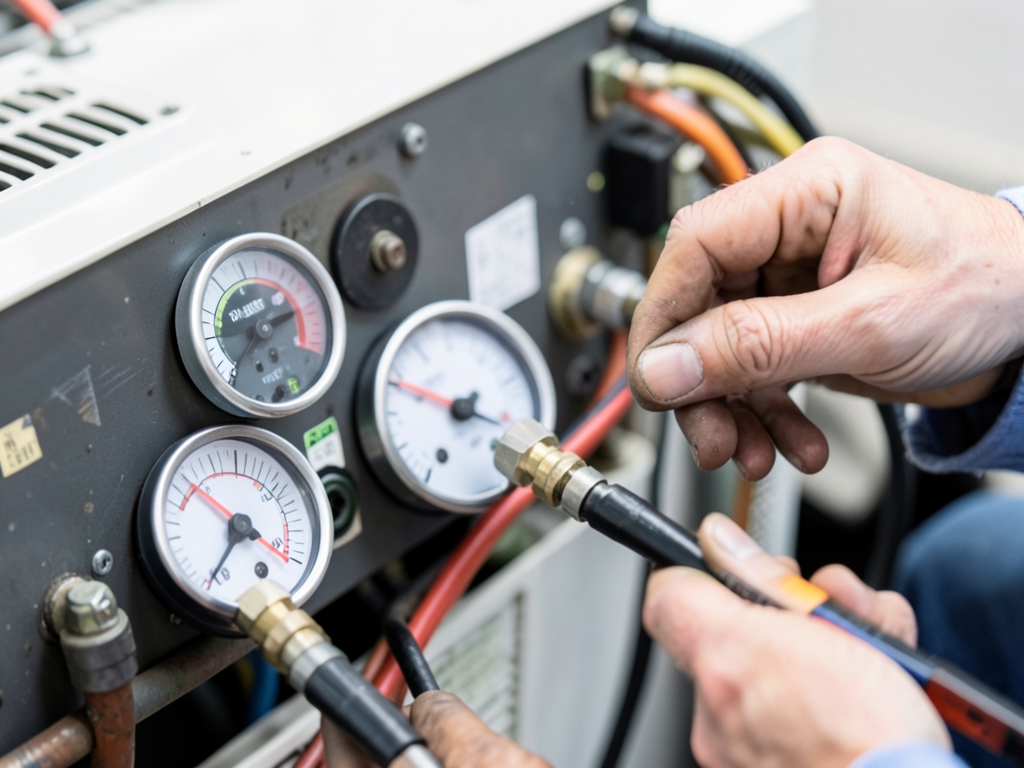
Technician using a digital manifold gauge to verify refrigerant charge on a 4-ton AC unit during installation in a Commerce City ranch home.
Cost Factors and Long-Term Value
AC installation costs in Commerce City typically range from $4,500 to $12,000, depending on unit size, efficiency rating, and installation complexity. Higher SEER2 ratings increase upfront costs but provide significant energy savings over the system’s 15-20 year lifespan.
Factor in potential Xcel Energy rebates of up to $1,000 for qualifying high-efficiency units. These rebates, combined with reduced energy bills, can offset much of the premium cost for higher-efficiency models.
Professional Installation: Why It Matters
Proper installation affects AC performance more than the unit’s specifications. NATE-certified technicians ensure correct refrigerant charge, proper airflow, and optimal system charging. These factors directly impact efficiency, comfort, and equipment longevity.
Commerce City’s temperature extremes mean installation timing matters. Spring and fall installations avoid the rush during peak cooling and heating seasons, potentially reducing costs and ensuring more careful attention to detail.
Maintenance Requirements for Optimal Performance
Regular maintenance extends AC life and maintains efficiency. Commerce City’s dust and pollen levels mean filters need replacement every 30-60 days during peak season. Annual professional tune-ups should include coil cleaning, refrigerant level checks, and electrical connection inspections.
High-altitude installations may require slightly different maintenance schedules than sea-level units. The reduced air density affects heat exchange rates, making coil cleanliness even more critical for maintaining efficiency.
Energy Efficiency Tips for Commerce City Homes
Beyond proper AC sizing, several strategies improve cooling efficiency. Ceiling fans create air movement that makes rooms feel 4-6 degrees cooler, allowing higher thermostat settings. Proper attic insulation prevents heat gain through the roof. The Best Swamp Cooler Service and Startup in Denver and Arvada.
Window treatments significantly impact cooling loads. Commerce City’s intense summer sun can increase room temperatures by 10-15 degrees through unshaded windows. Energy-efficient windows or exterior shading can reduce AC sizing requirements by 10-15%.
Before and after comparison showing proper AC unit sizing impact on energy bills for a 2,500-square-foot Commerce City home with vaulted ceilings.
Frequently Asked Questions
How do I know if my current AC is the right size?
Common signs of improper sizing include short cycling (unit turns on and off frequently), inability to maintain set temperature on hot days, and high humidity levels indoors. A professional load calculation provides definitive answers.
What’s the difference between a ton and BTUs?
One ton equals 12,000 BTUs per hour of cooling capacity. AC units are sized in half-ton increments, from 1.5 tons (18,000 BTU) up to 5 tons (60,000 BTU) for residential applications.
Can I install a larger AC unit myself to save money?
DIY AC installation is illegal in Colorado without proper EPA Section 608 certification. Improper installation voids warranties, creates safety hazards, and often results in higher energy costs due to inefficiency.
How long does AC installation take in Commerce City?
Most residential installations take 4-8 hours for replacement and 1-2 days for new construction. Permit acquisition adds 1-3 business days to the timeline.
Making Your Final Decision
The right AC size balances upfront costs with long-term efficiency and comfort. Start with a professional Manual J calculation, then consider your budget, energy efficiency goals, and the specific challenges of Commerce City’s climate.
Remember that proper sizing isn’t just about square footage. Your home’s construction quality, window orientation, and local climate all play crucial roles in determining the optimal AC capacity.
Call (720) 502-9511 today to schedule your professional AC sizing consultation. Our NATE-certified technicians will perform a complete load calculation and help you choose the perfect system for your Commerce City home.
Don’t wait until summer heat waves hit. Contact us now to ensure your home stays comfortable all season long with the right-sized air conditioning system. For more information, visit U.S. Department of Energy AC Guide.
You may also find this helpful. Is an Attic Fan the Secret to a Cooler House in Sunnyside?.
{
“@context”: “https://schema.org”,
“@type”: “BlogPosting”,
“headline”: “How to Choose the Right Size Air Conditioner for Your Commerce City Home”,
“description”: “Learn how to properly size your AC unit for Commerce City’s climate. Discover Manual J calculations, SEER2 ratings, and local permit requirements for optimal cooling efficiency.”,
“wordCount”: 1329,
“datePublished”: “2026-02-26T11:39:00.000Z”,
“dateModified”: “2026-02-26T11:39:00.000Z”,
“inLanguage”: “en-US”,
“mainEntityOfPage”: {
“@type”: “WebPage”,
“@id”: “https://fortresshvacdenver.com”
},
“publisher”: {
“@type”: “LocalBusiness”,
“name”: “Fortress HVAC Denver”,
“url”: “https://fortresshvacdenver.com”
},
“author”: {
“@type”: “Organization”,
“name”: “Fortress HVAC Denver”,
“url”: “https://fortresshvacdenver.com”
},
“image”: {
“@type”: “ImageObject”,
“url”: “https://fortresshvacdenver.com/wp-content/uploads/2026/03/how-to-choose-the-right-size-air-conditioner-for-y-1.png”
}
}
{
“@context”: “https://schema.org”,
“@type”: “HVACBusiness”,
“name”: “Fortress HVAC Denver”,
“url”: “https://fortresshvacdenver.com”,
“address”: {
“@type”: “PostalAddress”,
“addressLocality”: “Denver”
},
“areaServed”: {
“@type”: “City”,
“name”: “Denver”
}
}
{
“@context”: “https://schema.org”,
“@type”: “FAQPage”,
“mainEntity”: [
{
“@type”: “Question”,
“name”: “Heat Pump vs. Traditional AC: Which is Right for Commerce City?”,
“acceptedAnswer”: {
“@type”: “Answer”,
“text”: “Heat pumps provide both heating and cooling, making them increasingly popular in Commerce City due to Xcel Energy’s high-efficiency rebates. Modern cold-climate heat pumps operate effectively down to -10°F, covering most of our winter heating needs.”
}
},
{
“@type”: “Question”,
“name”: “How do I know if my current AC is the right size?”,
“acceptedAnswer”: {
“@type”: “Answer”,
“text”: “Common signs of improper sizing include short cycling (unit turns on and off frequently), inability to maintain set temperature on hot days, and high humidity levels indoors. A professional load calculation provides definitive answers.”
}
},
{
“@type”: “Question”,
“name”: “What’s the difference between a ton and BTUs?”,
“acceptedAnswer”: {
“@type”: “Answer”,
“text”: “One ton equals 12,000 BTUs per hour of cooling capacity. AC units are sized in half-ton increments, from 1.5 tons (18,000 BTU) up to 5 tons (60,000 BTU) for residential applications.”
}
},
{
“@type”: “Question”,
“name”: “Can I install a larger AC unit myself to save money?”,
“acceptedAnswer”: {
“@type”: “Answer”,
“text”: “DIY AC installation is illegal in Colorado without proper EPA Section 608 certification. Improper installation voids warranties, creates safety hazards, and often results in higher energy costs due to inefficiency.”
}
},
{
“@type”: “Question”,
“name”: “How long does AC installation take in Commerce City?”,
“acceptedAnswer”: {
“@type”: “Answer”,
“text”: “Most residential installations take 4-8 hours for replacement and 1-2 days for new construction. Permit acquisition adds 1-3 business days to the timeline.”
}
}
]
}
{
“@context”: “https://schema.org”,
“@type”: “BreadcrumbList”,
“itemListElement”: [
{
“@type”: “ListItem”,
“position”: 1,
“name”: “Home”,
“item”: “https://fortresshvacdenver.com”
},
{
“@type”: “ListItem”,
“position”: 2,
“name”: “Blog”,
“item”: “https://fortresshvacdenver.com/blog”
},
{
“@type”: “ListItem”,
“position”: 3,
“name”: “How to Choose the Right Size Air Conditioner for Your Commerce City Home”
}
]
}
{
“@context”: “https://schema.org”,
“@type”: “Service”,
“serviceType”: “HVAC”,
“provider”: {
“@type”: “LocalBusiness”,
“name”: “Fortress HVAC Denver”,
“url”: “https://fortresshvacdenver.com”
},
“areaServed”: {
“@type”: “City”,
“name”: “Denver”
},
“description”: “Learn how to properly size your AC unit for Commerce City’s climate. Discover Manual J calculations, SEER2 ratings, and local permit requirements for optimal cooling efficiency.”
}