
Creative Ways to Hide Outdoor Mini-Split Units in Tight Washington Park Lots
Washington Park homeowners need smart solutions for outdoor mini-split units that fit on small lots while meeting Denver’s strict building codes. These systems require proper airflow clearance and service access to maintain efficiency and warranty coverage. Ductless Mini Split Installation for Older Homes in The Highlands.
Denver’s high-altitude climate creates unique challenges for mini-split concealment. The thin air at 5,280 feet means your system needs maximum efficiency to heat and cool your home effectively. Poor airflow can reduce SEER ratings below the minimum required by Denver’s building codes.. Read more about Certified Mitsubishi Mini Split Installation and Support for Homeowners in University Park.
Before choosing a hiding method understand this: blocking airflow can reduce your unit’s efficiency by up to 30% and void manufacturer warranties. Most require at least 12 inches of clearance on all sides and 60 inches above the unit.. Read more about Choosing Between an Electric Wall Heater and a Mini Split for Your Sunnyside Sunroom.
Why Airflow is Non-Negotiable When Concealing Your Condenser
Airflow keeps your mini-split working properly. When you block the condenser’s intake or exhaust you create a heat trap that forces the compressor to work harder. This extra strain can reduce the unit’s lifespan by years and cause premature failure.
Denver’s high-altitude climate makes proper airflow even more critical. The thin air means your system needs maximum efficiency to cool or heat your home effectively. Blocking airflow can reduce SEER ratings below the minimum required by Denver’s building codes.. Read more about Creating a Perfect Climate for Your Home Gym or Yoga Studio in Stapleton.
Think of your condenser like a car radiator. If you cover it with a solid box the engine overheats. The same principle applies to your mini-split. Heat pumps need to reject heat in summer and absorb it in winter. Poor airflow creates a thermal blanket that suffocates the system.
Manufacturer warranties specifically exclude damage caused by inadequate clearance or airflow obstruction. Most require at least 12 inches of clearance on all sides and 60 inches above the unit. Any creative hiding solution must respect these requirements.
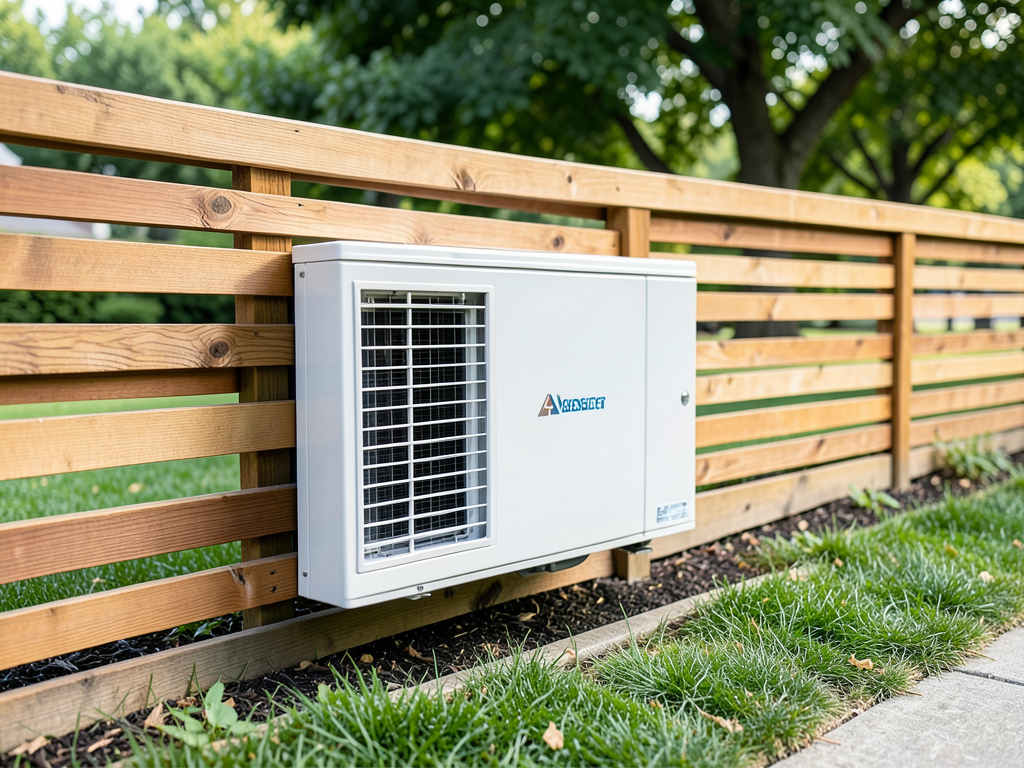
Diagram showing proper airflow clearance around a mini-split condenser with measurement overlays.
Top 5 Ways to Hide Mini Split Units in Denver Homes
Denver homeowners have several creative options for hiding outdoor units. Each method has different costs maintenance requirements and visual impacts. Here are the most popular solutions that work well in Washington Park’s tight lots.
1. Decorative Slatted Fencing
Slatted or louvered fencing creates a modern screen that hides the unit while allowing air to flow through. The key is using horizontal or vertical slats spaced 1-2 inches apart. This spacing provides 70-80% visual blockage while maintaining 100% airflow.
Pressure-treated cedar or composite materials work best in Denver’s climate. Cedar naturally resists UV damage and insects while composite materials withstand freeze-thaw cycles without warping. Paint or stain the fence to match your home’s exterior for a cohesive look.
Build the fence as a three-sided enclosure with the open side facing away from your main viewing areas. Keep the front panel removable for service access. Many Denver homeowners use this method because it’s relatively inexpensive and doesn’t require HOA approval if it’s under 6 feet tall.
2. Strategic Xeriscaping
Xeriscaping uses drought-resistant plants to create a living screen around your condenser. This approach works especially well in Washington Park where water conservation is important. The key is selecting plants that provide visual screening without blocking airflow.
Ornamental grasses like blue fescue or feather reed grass grow 2-3 feet tall and create a soft natural screen. Russian sage and lavender provide purple blooms and silvery foliage that complements Denver’s high-desert aesthetic. These plants are hardy to Zone 5 and require minimal water once established.
Plant in a horseshoe pattern around the unit leaving the front open. Space plants 18-24 inches from the condenser to maintain clearance. Use gravel mulch instead of wood chips which can blow into the unit and clog the coils.
3. Custom-Built Enclosures
Custom enclosures offer the most design flexibility but require careful planning. A well-designed enclosure can match your home’s architecture while providing proper airflow. Use materials that complement your home’s exterior such as stucco brick or stone veneer.
Build the enclosure with louvered panels or decorative cutouts that allow air to pass through. Include a hinged front panel for service access. Many Washington Park homes use this method because it can be designed to match the historic architecture of the neighborhood.
4. Decorative Rock Gardens
Rock gardens provide a low-maintenance solution that works well in Denver’s dry climate. Use a combination of large boulders and smaller decorative rocks to create visual interest while hiding the unit. Choose rocks native to Colorado such as river rock or sandstone.
Arrange the rocks in a way that creates visual screening from the most visible angles. Leave enough space between rocks for air to circulate. Add drought-tolerant plants like sedum or ice plant for color and texture. This method works well in Washington Park’s clay soil which drains poorly when covered with organic mulch.
5. Living Walls
Living walls use vertical gardening techniques to create a green screen around your condenser. This method provides excellent visual screening while allowing air to flow through the open spaces between plants. Use a modular living wall system that can be mounted on a frame around the unit.
Choose plants that thrive in Denver’s climate and don’t require frequent watering. Succulents like hens-and-chicks or sedum work well because they’re drought-tolerant and don’t grow too large. Add some native Colorado plants like penstemon or columbine for seasonal color.
Living walls require more maintenance than other methods but provide the most dramatic visual impact. They’re especially popular in Washington Park where homeowners want to maximize their outdoor living space.
Denver Building Codes and Warranty Requirements
Denver’s building code requires all HVAC equipment to maintain proper clearances for safety and efficiency. According to Denver Building Code Section 1305.1 all outdoor condensing units must maintain minimum clearances from property lines structures and other equipment.
The International Mechanical Code adopted by Denver requires 12 inches of clearance on all sides and 60 inches above any condensing unit. These clearances ensure proper airflow and allow for maintenance access. Failing to maintain these clearances can result in code violations and failed inspections.
Manufacturer warranties typically require similar clearances. Most major brands require 12-24 inches of clearance on all sides and 60-72 inches above the unit. Some warranties specifically exclude coverage for units installed in enclosed spaces without proper ventilation.
Washington Park’s historic district has additional requirements. Any exterior modifications visible from the street must be approved by the Denver Landmark Preservation Commission. This includes enclosures or screens around HVAC equipment.
Common Mistakes to Avoid
Many homeowners make mistakes when trying to hide their mini-split units. These errors can reduce efficiency void warranties and even create safety hazards. Here are the most common mistakes to avoid.
Wrapping the unit in solid materials like plywood or vinyl siding is a common mistake. This completely blocks airflow and can cause the compressor to overheat. The unit may work for a short time but will likely fail within months.
Planting shrubs or trees too close to the unit is another frequent error. Many homeowners plant bushes that grow larger than expected and gradually block airflow over time. Always check the mature size of plants before installing them near your condenser.
Building a solid box around the unit without proper ventilation is also problematic. Even if the box has a removable front panel the solid sides prevent proper airflow. Use louvered panels or decorative cutouts instead of solid materials.
Ignoring service access requirements is a critical mistake. Technicians need to access all sides of the unit for maintenance and repairs. Any enclosure must have a removable panel or door that provides full access to the unit. Fast AC Repair Services in Aurora for When the Summer Heat Hits.
Using materials that don’t withstand Denver’s climate can lead to premature failure. Wood can warp and rot in our freeze-thaw cycles while some plastics become brittle in extreme cold. Choose materials specifically rated for outdoor use in Colorado’s climate.
Cost Comparison of Hiding Methods
Different hiding methods have varying costs and maintenance requirements. Here’s a comparison of the most popular options for Washington Park homes.
| Method | Initial Cost | Annual Maintenance | Lifespan | Best For |
|---|---|---|---|---|
| Slatted Fencing | $300-600 | $50-100 | 10-15 years | Budget-conscious homeowners |
| Xeriscaping | $200-400 | $25-50 | 5-10 years (plants) | Water-conscious homeowners |
| Custom Enclosure | $800-2,000 | $75-150 | 15-20 years | Homes with specific architectural styles |
| Rock Garden | $250-500 | $20-40 | 20+ years | Low-maintenance preference |
| Living Wall | $600-1,500 | $100-200 | 5-7 years (system) | Eco-conscious homeowners |
Golden Nuggets for Washington Park Homeowners
Washington Park’s clay soil creates unique challenges for mini-split concealment. The heavy clay retains moisture which can cause wood enclosures to rot faster than in other Denver neighborhoods. Use pressure-treated lumber or composite materials rated for wet conditions.
The neighborhood’s mature trees create shade patterns that affect plant growth around condensers. South-facing units get more sun exposure which means plants need to be drought-tolerant. North-facing units may struggle with moss growth on enclosures due to reduced sunlight.
Washington Park’s historic district has specific guidelines for exterior modifications. Any enclosure visible from the street must maintain the architectural character of the neighborhood. This often means using materials and colors that match existing home features.
The area’s high water table can affect underground electrical connections to condensers. Ensure all wiring is properly buried and protected from moisture. Consider using conduit rated for underground use in wet conditions.
Denver’s Building Code Section 1305.1 specifically addresses clearances for HVAC equipment. The code requires 12 inches of clearance on all sides and 60 inches above any condensing unit. These requirements are strictly enforced in Washington Park due to the neighborhood’s density.
Diagnostic Signs Your Hiding Method Isn’t Working
Listen for unusual sounds from your mini-split. A struggling compressor often makes a loud humming or buzzing noise. This can indicate restricted airflow caused by poor concealment choices.
Check your energy bills for unexpected increases. If your hiding method is reducing efficiency you may see higher electricity costs especially during peak cooling or heating months.
Feel the air temperature around your condenser during operation. If the area feels unusually hot it may indicate poor heat rejection due to blocked airflow. The air should feel warm but not excessively hot.
Watch for ice buildup on the coils during winter operation. This can indicate the system is working harder than necessary due to restricted airflow. Ice should melt within a few hours of operation in normal conditions.
Notice any error codes on your thermostat or mini-split display. Many modern systems have diagnostic features that detect airflow problems and display error messages when efficiency drops below certain thresholds.
Maintenance Requirements for Hidden Units
Hidden units require regular maintenance to ensure they continue operating efficiently. The concealment method you choose will affect the type and frequency of maintenance needed.
Check the clearance around your unit monthly during the cooling season. Plants grow quickly in summer and can gradually block airflow. Trim any vegetation that gets within 12 inches of the unit.
Clean the louvers or vents on any enclosure quarterly. Dust and debris can accumulate in the openings reducing airflow over time. Use a soft brush or vacuum attachment to remove buildup.
Inspect wooden enclosures annually for signs of rot or insect damage. Washington Park’s clay soil retains moisture which can accelerate wood decay. Replace any damaged boards promptly to maintain structural integrity. Repair vs. Replace AC Guide.
Test the removable panels or doors on your enclosure twice yearly. Hinges can rust and latches can stick especially after winter. Ensure all access points open smoothly for service calls.
Check for animal nesting around the unit seasonally. Small animals often seek shelter near warm equipment. Remove any nests and seal entry points to prevent damage to wiring or components.
Professional Installation Considerations
Professional installation ensures your hiding method meets all code requirements and maintains warranty coverage. A qualified HVAC contractor understands the specific needs of Denver’s climate and Washington Park’s regulations.
Choose a contractor familiar with local building codes. They should know Denver’s requirements for HVAC equipment clearances and Washington Park’s historic district guidelines. Ask for references from other local homeowners.
Verify the contractor carries proper licensing and insurance. In Colorado HVAC contractors must be licensed by the state. Ask to see their license number and proof of liability insurance before work begins. Commercial HVAC Contractors.
Discuss the warranty implications of your chosen hiding method. A good contractor will explain how different concealment options affect your manufacturer warranty and suggest alternatives that maintain coverage.
Request a detailed proposal that includes all materials measurements and specifications. This ensures the final installation meets your expectations and complies with all requirements. Get everything in writing before work begins.
Ask about service access requirements. The contractor should explain how their design allows for complete access to all sides of the unit for maintenance and repairs. This is critical for long-term performance.
Emergency Service Access
Emergency service access is crucial when hiding your mini-split unit. During extreme weather your system may need immediate repairs. Any concealment method must allow technicians to access the unit quickly and completely. Emergency Furnace Repair for Denver Residents Dealing with a Frozen House.
Design removable panels that can be taken off without tools. In an emergency waiting for a screwdriver can mean hours of uncomfortable temperatures. Use latches or quick-release mechanisms instead of screws.
Label all access points clearly. Emergency technicians may not be familiar with your specific design. Use signs or markings to indicate which panels are removable and how to access the unit.
Keep the area around your unit clear of obstacles. Even if you have a hidden unit you should be able to reach it quickly. Don’t store items or plant dense vegetation that would block emergency access.
Consider installing a key lockbox near the unit if it’s in a fenced area. This allows emergency technicians to access the equipment even if you’re not home. Give the access code only to trusted service providers.
Document your concealment system with photos and diagrams. Keep this information with your HVAC manuals so any technician can quickly understand how to access your unit. This saves time during emergency service calls.
Seasonal Considerations for Washington Park
Washington Park’s four distinct seasons require different approaches to mini-split concealment throughout the year. What works in summer may need adjustment for winter conditions.
Summer brings intense sun exposure that can fade materials and stress plants. Choose UV-resistant materials for any enclosure and select plants that can handle full sun exposure. Consider adding shade cloth during the hottest months.
Fall requires preparation for winter conditions. Clean all debris from around the unit before the first snow. Remove any fallen leaves that could trap moisture against the equipment. Check that all drainage paths remain clear.
Winter in Washington Park means heavy snow loads and freezing temperatures. Ensure your concealment method can withstand snow accumulation without collapsing. Use materials rated for freeze-thaw cycles and provide proper drainage to prevent ice buildup.
Spring brings rapid plant growth and potential flooding from melting snow. Trim back any vegetation that grew over winter. Check that all drainage systems are working properly to handle spring rains and runoff.
Washington Park’s proximity to Washington Park Lake affects local humidity levels. Higher humidity can promote mold growth on organic materials. Choose mold-resistant materials and ensure proper airflow to prevent moisture buildup.
Energy Efficiency Impact
Your choice of concealment method directly impacts your mini-split’s energy efficiency. Poor design can increase energy consumption by 20-30% while good design has minimal impact.
Airflow restriction is the primary efficiency killer. Any material that blocks even partially can force the compressor to work harder. Use open designs with at least 70% open area for optimal efficiency.
Heat absorption by enclosure materials affects efficiency. Dark colors absorb more heat which can increase the temperature around the unit. Use light-colored materials or add reflective coatings to minimize heat gain.
Wind protection can actually improve efficiency in some cases. A well-designed enclosure can shield the unit from strong winds that disrupt airflow. However too much wind protection can create dead air zones that trap heat.
Proximity to heat sources reduces efficiency. Don’t place enclosures near dryer vents outdoor kitchens or other heat-producing equipment. The additional heat load forces the system to work harder.
Proper sizing of the concealment area matters. The space around your unit should be at least 50% larger than the unit itself. This provides adequate room for airflow and prevents heat buildup in confined spaces.
DIY vs Professional Installation
Deciding between DIY and professional installation depends on your skills local regulations and warranty requirements. Each approach has advantages and limitations.
DIY installation can save money on labor costs. If you have basic carpentry skills and understand HVAC requirements you might handle simple concealment projects. However DIY work often voids manufacturer warranties.
Professional installation ensures code compliance and warranty protection. HVAC contractors understand local building codes and manufacturer requirements. They can also provide design options that optimize both aesthetics and performance.
DIY projects work best for simple solutions like basic fencing or plant arrangements. These methods have fewer code requirements and lower risk of affecting system performance. Always maintain required clearances regardless of who installs the concealment.
Professional installation is recommended for custom enclosures or complex designs. These projects often require structural engineering permits and must meet specific code requirements. The cost of professional installation is often offset by warranty protection and code compliance.
Consider your long-term plans when choosing between DIY and professional installation. If you plan to stay in your home long-term professional installation may provide better value through improved efficiency and warranty protection.
Future-Proofing Your Concealment Design
Technology and regulations change over time. Design your concealment system to accommodate future upgrades and changing requirements.
Plan for potential unit upgrades. Mini-split technology improves every few years and you may want to upgrade to a larger or more efficient unit. Design your enclosure to accommodate a slightly larger unit than you currently have.
Consider smart home integration. Many homeowners now use smart thermostats and monitoring systems with their mini-splits. Ensure your concealment design allows for wiring and sensor placement for future smart home upgrades.
Prepare for stricter energy codes. Building codes continue to evolve toward greater energy efficiency. Design your system to exceed current requirements so it remains compliant as codes become more stringent.
Account for climate change impacts. Denver’s climate is gradually changing with more extreme temperature swings. Choose materials and plants that can handle wider temperature variations than we currently experience.
Document your system thoroughly. Keep records of all measurements clearances and materials used. This documentation helps future homeowners understand your system and ensures proper maintenance by any service provider.
Call for Professional Assessment
Every Washington Park home has unique challenges for mini-split concealment. The specific layout of your lot sun exposure and architectural style all affect the best hiding solution for your situation.
A professional assessment can identify the optimal concealment method for your specific needs. Our technicians understand Denver’s building codes Washington Park’s historic district requirements and mini-split efficiency needs.
We offer free consultations to evaluate your current setup and recommend the best concealment options. Our designs maintain proper airflow protect your warranty and enhance your home’s appearance.
Don’t risk voiding your warranty or reducing your system’s efficiency with improper concealment. Call (720) 502-9511 today for a professional assessment of your mini-split hiding options.
Our team serves all of Washington Park and surrounding Denver neighborhoods. We understand the unique challenges of Colorado’s climate and can recommend solutions that work year-round.
Schedule your consultation now and take the first step toward a more attractive and efficient outdoor mini-split installation. Your home deserves both comfort and curb appeal.
{
“@context”: “https://schema.org”,
“@type”: “BlogPosting”,
“headline”: “Creative Ways to Hide Outdoor Mini-Split Units in Tight Washington Park Lots”,
“description”: “Discover expert ways to conceal mini-split units in Washington Park’s tight lots while maintaining airflow and warranty protection. Call (720) 502-9511.”,
“wordCount”: 3273,
“datePublished”: “2026-04-10T09:19:00.000Z”,
“dateModified”: “2026-04-10T09:19:00.000Z”,
“inLanguage”: “en-US”,
“mainEntityOfPage”: {
“@type”: “WebPage”,
“@id”: “https://fortresshvacdenver.com”
},
“publisher”: {
“@type”: “LocalBusiness”,
“name”: “Fortress HVAC Denver”,
“url”: “https://fortresshvacdenver.com”
},
“author”: {
“@type”: “Organization”,
“name”: “Fortress HVAC Denver”,
“url”: “https://fortresshvacdenver.com”
},
“image”: {
“@type”: “ImageObject”,
“url”: “https://fortresshvacdenver.com/wp-content/uploads/2026/03/creative-ways-to-hide-outdoor-mini-split-units-in-1.png”
}
}
{
“@context”: “https://schema.org”,
“@type”: “HVACBusiness”,
“name”: “Fortress HVAC Denver”,
“url”: “https://fortresshvacdenver.com”,
“address”: {
“@type”: “PostalAddress”,
“addressLocality”: “Denver”
},
“areaServed”: {
“@type”: “City”,
“name”: “Denver”
}
}
{
“@context”: “https://schema.org”,
“@type”: “BreadcrumbList”,
“itemListElement”: [
{
“@type”: “ListItem”,
“position”: 1,
“name”: “Home”,
“item”: “https://fortresshvacdenver.com”
},
{
“@type”: “ListItem”,
“position”: 2,
“name”: “Blog”,
“item”: “https://fortresshvacdenver.com/blog”
},
{
“@type”: “ListItem”,
“position”: 3,
“name”: “Creative Ways to Hide Outdoor Mini-Split Units in Tight Washington Park Lots”
}
]
}
{
“@context”: “https://schema.org”,
“@type”: “Service”,
“serviceType”: “HVAC”,
“provider”: {
“@type”: “LocalBusiness”,
“name”: “Fortress HVAC Denver”,
“url”: “https://fortresshvacdenver.com”
},
“areaServed”: {
“@type”: “City”,
“name”: “Denver”
},
“description”: “Discover expert ways to conceal mini-split units in Washington Park’s tight lots while maintaining airflow and warranty protection. Call (720) 502-9511.”
}