Comparing the Best Air Filter MERV Ratings for Colorado Wildfire Season
Colorado’s wildfire season brings dangerous smoke and particulate matter into Denver homes. Standard furnace filters simply cannot capture the fine particles that make wildfire smoke so hazardous to your health. The right MERV-rated filter can be the difference between breathing clean air and suffering from smoke-related respiratory issues. Emergency Furnace Repair for Denver Residents Dealing with a Frozen House.
During Colorado’s wildfire season, PM2.5 particles from smoke can infiltrate your home and cause serious health problems. These microscopic particles measure 0.1 to 2.5 microns and can penetrate deep into your lungs. Most standard MERV 1-8 filters only capture particles larger than 10 microns, allowing dangerous smoke particles to circulate freely through your HVAC system.. Read more about Managing Pet Hair and Dander in Your HVAC System if You Live in Dog-Friendly Denver.
The Science of Smoke: Why Standard Filters Fail
Wildfire smoke contains a complex mixture of gases and fine particulate matter. The most dangerous components are PM2.5 particles, which are small enough to bypass most standard furnace filters. These particles can cause inflammation, aggravate asthma, and even lead to cardiovascular problems when inhaled over extended periods.
Standard fiberglass filters with MERV ratings between 1 and 4 are designed primarily to protect your HVAC equipment, not your lungs. They capture only about 20% of particles in the 3 to 10-micron range. Even MERV 8 filters, which are common in many Denver homes, only capture about 90% of particles in the 3 to 10-micron range but miss the critical PM2.5 particles that make up most wildfire smoke.
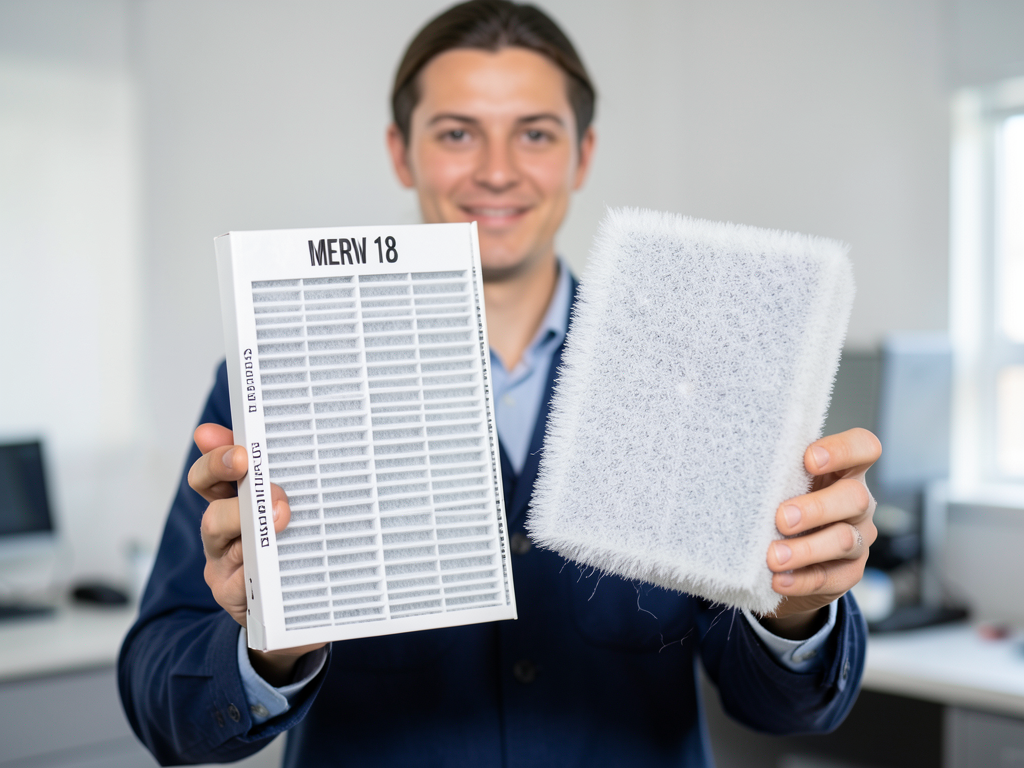
Diagram showing particle size comparison between PM2.5 smoke particles and common allergens, illustrating why standard filters fail during wildfire season.
The MERV Sweet Spot: Why MERV 13 is the Standard
MERV 13 filters strike the perfect balance between filtration efficiency and HVAC system compatibility. These filters capture 90% of particles in the 1-3 micron range and 50-75% of particles in the 0.3-1 micron range, making them highly effective against wildfire smoke.
The American Society of Heating, Refrigerating and Air-Conditioning Engineers (ASHRAE) recommends MERV 13 filters for residential applications where smoke filtration is a priority. This recommendation is based on extensive testing that shows MERV 13 filters provide optimal protection without significantly restricting airflow in typical residential HVAC systems. ASHRAE MERV 13 filter recommendations.
However, Denver’s high altitude creates unique challenges. The thin mountain air means your furnace must work harder to move the same volume of air. A MERV 13 filter’s denser media creates more resistance than standard filters, which can strain older blower motors. Our technicians use static pressure measurements to ensure your system can handle the increased resistance without premature motor failure.
Top 3 Recommended Filter Types for Denver Wildfires
Not all MERV 13 filters are created equal. The material, construction, and additional features significantly impact performance during smoke events. Here are the three best options for Denver homes:
| Filter Type | Best For | Lifespan During Smoke | Price Range |
|---|---|---|---|
| Pleated Synthetic | General smoke filtration | 30-45 days | $15-25 |
| Electrostatic | High dust areas | 30 days | $20-35 |
| Carbon-infused | Odor removal | 30 days | $25-40 |
Pleated synthetic filters offer the best value for most Denver homes. Their accordion-fold design provides maximum surface area for particle capture while maintaining reasonable airflow. The synthetic fibers are electrostatically charged, helping them attract and hold fine particles.
Electrostatic filters use self-charging fibers that maintain their effectiveness longer than standard pleated filters. They’re particularly good for homes in areas like Lakewood and Arvada where construction dust and pollen can combine with wildfire smoke to create a particularly challenging air quality situation. HVAC Arvada.
Carbon-infused filters add an activated charcoal layer that absorbs volatile organic compounds (VOCs) and smoke odors. During Colorado’s wildfire season, these filters can significantly reduce the lingering campfire smell that permeates homes during active fire events.
The Denver Factor: Altitude and Airflow Pressure
Denver’s mile-high elevation affects more than just your ability to breathe. The lower air density means your furnace must move more air volume to achieve the same heating or cooling effect as at sea level. This creates a critical consideration when selecting high-MERV filters.
Static pressure, measured in inches of water column (WC), indicates the resistance your HVAC system faces when pushing air through the filter. Standard filters typically create 0.1 to 0.2 WC of pressure drop. A MERV 13 filter can increase this to 0.25 to 0.35 WC, and during heavy smoke events, the pressure can climb even higher as particles accumulate on the filter media.. Read more about Why Your Air Conditioner Is Leaking Water and How to Stop It (Castle Rock Homeowner Guide).
Older furnaces, particularly those installed before 2010 in neighborhoods like Washington Park and Hilltop, often have PSC (permanent split capacitor) blower motors that struggle with increased static pressure. These motors can overheat and fail prematurely when forced to work against high-resistance filters for extended periods. Ductless Mini Split Installation for Older Homes in The Highlands.
Our technicians use a manometer to measure static pressure across your filter during installation. This diagnostic test ensures your system can handle the increased resistance without compromising performance or longevity. The EPA’s Energy Star program recommends maintaining static pressure below 0.5 WC for optimal system efficiency. EPA information on PM2.5 particles.
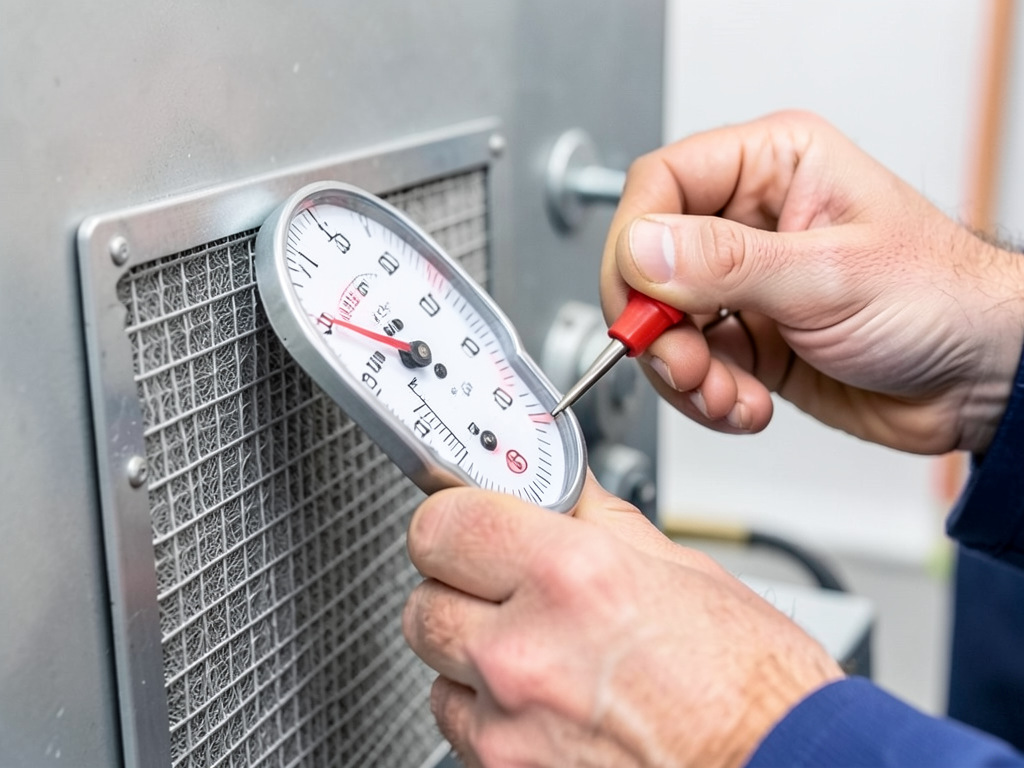
Technician using a manometer to measure static pressure across a MERV 13 filter during installation, demonstrating the diagnostic test for system compatibility.
Maintenance Schedule During Smoke Events
Standard filter replacement schedules don’t apply during Colorado’s wildfire season. The intense particulate load from wildfire smoke can overwhelm even high-quality filters in a matter of weeks rather than months. Repair vs. Replace AC Guide.
During active smoke events, you should check your filter every two weeks. Hold it up to a bright light source. If you can’t see light clearly through the filter, it’s time for replacement. This simple test can prevent your HVAC system from working harder than necessary and potentially failing during critical times.
Based on data from Colorado’s 2020 and 2021 wildfire seasons, homes in the Front Range experienced filter loading rates 3-4 times higher than normal during peak smoke events. A filter that typically lasts 90 days might need replacement every 20-30 days during heavy smoke conditions.
Set calendar reminders for the first of each month during fire season. Keep spare filters on hand, particularly if you live in areas like Highlands Ranch or Castle Rock that are closer to the mountains and often experience smoke from Front Range fires.
When to Move Beyond Filters: Air Purifiers and Scrubbers
Sometimes, even the best furnace filters aren’t enough. During severe smoke events, whole-home air purification systems can provide additional protection. These systems typically use HEPA (High-Efficiency Particulate Air) filtration, which captures 99.97% of particles 0.3 microns and larger.
However, standard residential furnaces cannot accommodate true HEPA filters due to their extreme airflow restriction. HEPA filters create 5-10 times more resistance than MERV 13 filters, which would cause most residential blowers to overheat and fail. Instead, whole-home air purifiers use bypass technology or are installed as separate systems.
Portable HEPA air purifiers can be effective for bedrooms and living areas, but they have limitations. A typical portable unit can only effectively clean the air in a single room, and they require frequent filter changes during smoke events. For comprehensive protection, consider a whole-home HEPA system installed by certified HVAC professionals.
Activated carbon scrubbers go beyond particle filtration to remove VOCs and odors. These systems are particularly valuable in Denver where wildfire smoke often carries the smell of burning vegetation and structures for miles. The carbon media absorbs these gaseous pollutants that particle filters cannot capture.
Whole-home HEPA air purification system installation showing bypass configuration that allows high-efficiency filtration without restricting furnace airflow.
Practical Tips for Denver Homeowners
Beyond selecting the right filter, several strategies can improve your indoor air quality during wildfire season. First, set your thermostat to “Fan On” rather than “Auto” during active smoke events. This keeps air circulating through your filter continuously rather than only when heating or cooling is needed.
Seal any gaps around your furnace filter access panel. Even small leaks can allow unfiltered air to bypass your expensive MERV 13 filter entirely. Use weatherstripping or high-temperature silicone caulk to create an airtight seal.
Consider installing a filter cabinet if you’re using 1-inch filters. These cabinets accommodate 4-inch pleated filters that provide more surface area and last longer during smoke events. The initial investment pays for itself through fewer replacements and better protection.
Monitor local air quality using resources like the Colorado Department of Public Health and Environment’s air quality monitoring network. When the Air Quality Index (AQI) exceeds 100, increase your filter checking frequency and consider supplemental air purification.
Don’t forget about your return air vents. Keep them clean and unobstructed to maintain proper airflow. Vacuum them monthly during fire season to prevent dust buildup that can combine with smoke particles to create an even greater filtration challenge.
Frequently Asked Questions
Can I just use a HEPA filter in my furnace?
No, standard residential furnaces cannot accommodate true HEPA filters. The extreme airflow restriction would cause your blower motor to overheat and potentially fail. HEPA systems require specialized installation with bypass technology or separate air handling units.
How much do MERV 13 filters cost compared to standard filters?
MERV 13 filters typically cost $15-40 depending on size and features, compared to $5-15 for standard MERV 8 filters. During wildfire season, the additional cost is justified by the health protection and reduced HVAC strain from less frequent cycling.
Will a MERV 13 filter increase my energy bills?
A MERV 13 filter may increase energy consumption by 5-15% due to the increased resistance, but this is offset by improved system efficiency when your air is cleaner. During smoke events, the difference is minimal compared to the health benefits.
How do I know if my furnace can handle a MERV 13 filter?
Have a certified HVAC technician measure your system’s static pressure with a manometer. Systems installed after 2015 typically handle MERV 13 filters well, while older systems may need evaluation. The pressure should remain below 0.5 WC for optimal performance.
Call (720) 502-9511 today to schedule your inspection and ensure your home is protected during Colorado’s wildfire season. Our certified technicians can evaluate your system and recommend the perfect filtration solution for your specific needs.
Pick up the phone and call (720) 502-9511 before the next smoke event hits. Don’t wait until you’re breathing dangerous air to protect your family. We’ll ensure your HVAC system is ready to handle whatever Colorado’s wildfire season brings.
You may also find this helpful. Why Modern Sloan’s Lake Townhomes Need an HRV or ERV for Fresh Air.
You may also find this helpful. What to Do When Your Air Conditioner Freezes into a Block of Ice (Glendale Homeowner Guide).
{
“@context”: “https://schema.org”,
“@type”: “BlogPosting”,
“headline”: “Comparing the Best Air Filter MERV Ratings for Colorado Wildfire Season”,
“description”: “Discover the best MERV-rated furnace filters for Denver wildfire smoke. Learn how MERV 13 filters protect your home and HVAC system during Colorado’s fire season.”,
“wordCount”: 1733,
“datePublished”: “2026-03-09T13:22:00.000Z”,
“dateModified”: “2026-03-09T13:22:00.000Z”,
“inLanguage”: “en-US”,
“mainEntityOfPage”: {
“@type”: “WebPage”,
“@id”: “https://fortresshvacdenver.com”
},
“publisher”: {
“@type”: “LocalBusiness”,
“name”: “Fortress HVAC Denver”,
“url”: “https://fortresshvacdenver.com”
},
“author”: {
“@type”: “Organization”,
“name”: “Fortress HVAC Denver”,
“url”: “https://fortresshvacdenver.com”
},
“image”: {
“@type”: “ImageObject”,
“url”: “https://fortresshvacdenver.com/wp-content/uploads/2026/03/comparing-the-best-air-filter-merv-ratings-for-col-1.png”
}
}
{
“@context”: “https://schema.org”,
“@type”: “HVACBusiness”,
“name”: “Fortress HVAC Denver”,
“url”: “https://fortresshvacdenver.com”,
“address”: {
“@type”: “PostalAddress”,
“addressLocality”: “Denver”
},
“areaServed”: {
“@type”: “City”,
“name”: “Denver”
}
}
{
“@context”: “https://schema.org”,
“@type”: “FAQPage”,
“mainEntity”: [
{
“@type”: “Question”,
“name”: “Can I just use a HEPA filter in my furnace?”,
“acceptedAnswer”: {
“@type”: “Answer”,
“text”: “No, standard residential furnaces cannot accommodate true HEPA filters. The extreme airflow restriction would cause your blower motor to overheat and potentially fail. HEPA systems require specialized installation with bypass technology or separate air handling units.”
}
},
{
“@type”: “Question”,
“name”: “How much do MERV 13 filters cost compared to standard filters?”,
“acceptedAnswer”: {
“@type”: “Answer”,
“text”: “MERV 13 filters typically cost $15-40 depending on size and features, compared to $5-15 for standard MERV 8 filters. During wildfire season, the additional cost is justified by the health protection and reduced HVAC strain from less frequent cycling.”
}
},
{
“@type”: “Question”,
“name”: “Will a MERV 13 filter increase my energy bills?”,
“acceptedAnswer”: {
“@type”: “Answer”,
“text”: “A MERV 13 filter may increase energy consumption by 5-15% due to the increased resistance, but this is offset by improved system efficiency when your air is cleaner. During smoke events, the difference is minimal compared to the health benefits.”
}
},
{
“@type”: “Question”,
“name”: “How do I know if my furnace can handle a MERV 13 filter?”,
“acceptedAnswer”: {
“@type”: “Answer”,
“text”: “Have a certified HVAC technician measure your system’s static pressure with a manometer. Systems installed after 2015 typically handle MERV 13 filters well, while older systems may need evaluation. The pressure should remain below 0.5 WC for optimal performance.”
}
}
]
}
{
“@context”: “https://schema.org”,
“@type”: “BreadcrumbList”,
“itemListElement”: [
{
“@type”: “ListItem”,
“position”: 1,
“name”: “Home”,
“item”: “https://fortresshvacdenver.com”
},
{
“@type”: “ListItem”,
“position”: 2,
“name”: “Blog”,
“item”: “https://fortresshvacdenver.com/blog”
},
{
“@type”: “ListItem”,
“position”: 3,
“name”: “Comparing the Best Air Filter MERV Ratings for Colorado Wildfire Season”
}
]
}
{
“@context”: “https://schema.org”,
“@type”: “Service”,
“serviceType”: “HVAC”,
“provider”: {
“@type”: “LocalBusiness”,
“name”: “Fortress HVAC Denver”,
“url”: “https://fortresshvacdenver.com”
},
“areaServed”: {
“@type”: “City”,
“name”: “Denver”
},
“description”: “Discover the best MERV-rated furnace filters for Denver wildfire smoke. Learn how MERV 13 filters protect your home and HVAC system during Colorado’s fire season.”
}