
Why You Should Consider a Garage Heater for Your Workshop in Lone Tree
Colorado winters in Lone Tree can drop to single digits, turning your garage into an unusable icebox. A garage heater transforms that cold space into a year-round workshop where you can work on cars, build furniture, or pursue hobbies without freezing. The right heater keeps your tools from rusting, protects your vehicle battery from cold drain, and makes your garage a comfortable extension of your home.
Installing a garage heater in Lone Tree means more than just warmth. It means reclaiming productive hours during those long winter months when outdoor work stops. Whether you’re a weekend mechanic or a full-time craftsman, a properly sized and installed heater changes how you use your property.
Types of Garage Heaters Available in Lone Tree
Choosing the right heater depends on your garage size, fuel availability, and how you use the space. Each type has different installation requirements and operating costs that matter in Colorado’s climate.
Natural Gas Unit Heaters
Natural gas unit heaters mount on the ceiling and blow warm air throughout the space. These work well for larger garages where you need consistent heat across the entire area. In Lone Tree, where natural gas lines are common in newer developments, these heaters provide the most cost-effective heating over time.
Installation requires extending a gas line and creating proper venting through the roof or wall. The upfront cost includes the unit, gas line extension, and professional installation, but monthly operating costs stay low compared to electric options.
Infrared Radiant Heaters
Infrared heaters warm objects and people directly rather than heating the air. These mount overhead and create warm zones where you work most often. They’re ideal for Lone Tree workshops where you might only need heat in specific areas rather than the entire garage.
These heaters work instantly, warming you within minutes rather than waiting for the space to heat up. They’re also quieter since they don’t have blowers, making them perfect for detailed work where noise matters.
Electric Garage Heaters
Electric heaters offer the simplest installation since they only need a 240V circuit. No gas lines or venting required. For smaller Lone Tree garages or occasional use, electric units make sense despite higher operating costs.
These work well in detached garages where running a gas line would be expensive or impossible. The trade-off is higher monthly utility bills, especially during Lone Tree’s coldest months when electric resistance heating becomes expensive.
Ductless Mini-Split Heat Pumps
Mini-split systems provide both heating and cooling, making them versatile for year-round use. Modern heat pumps work efficiently even when Lone Tree temperatures drop below freezing, though performance decreases as it gets colder. Ductless Mini Split Installation for Older Homes in The Highlands.
These systems require mounting an outdoor condenser and indoor air handler, with refrigerant lines running between them. While more expensive upfront, they offer the lowest operating costs and the added benefit of summer cooling.
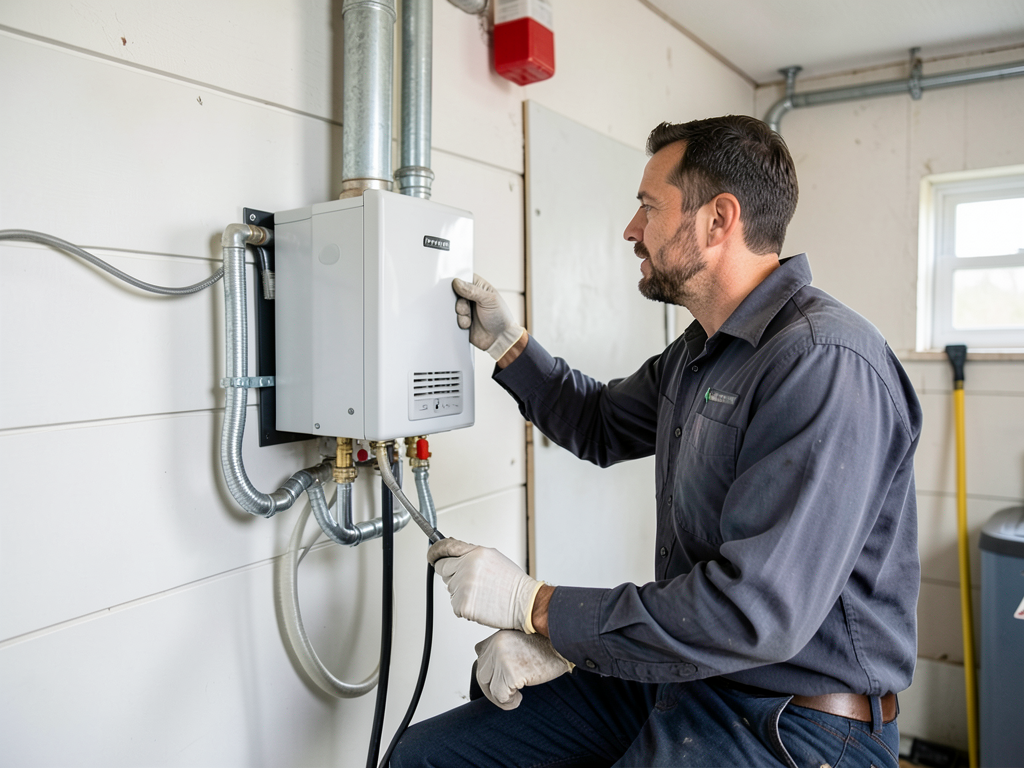
Diagram showing BTU sizing requirements for different garage sizes and insulation levels in Colorado’s climate zone.
Calculating the Right BTU Size for Your Lone Tree Garage
Proper sizing prevents wasted energy and ensures your space stays comfortable. In Lone Tree’s climate, you need to account for both the extreme cold and the altitude factor that affects heater performance.
A basic rule of thumb: multiply your garage square footage by 25 to 35 BTUs for adequate heating. But Lone Tree’s 5,000+ foot elevation means gas heaters need about 10% more capacity than standard calculations suggest.
For a typical 2-car garage (400-500 sq ft) in Lone Tree, you’ll need 12,000 to 15,000 BTUs minimum. A 3-car garage (600-800 sq ft) requires 18,000 to 25,000 BTUs. These numbers assume average insulation. Poor insulation can double your heating needs.
Consider your garage construction. Attached garages share a wall with your home, reducing heat loss. Detached garages lose more heat and need more powerful heaters. Metal garages conduct cold rapidly and may need infrared spot heating rather than trying to heat the entire volume.
Installation Process and Local Requirements in Lone Tree
Professional installation ensures safety and code compliance. In Lone Tree, garage heater installation must follow Arapahoe County mechanical codes and may require permits depending on the scope of work.
The process starts with a site assessment. A technician evaluates your garage size, insulation, existing electrical or gas infrastructure, and ventilation options. They’ll measure ceiling height since heat rises and affects sizing calculations.
Gas line installation requires trenching from your home’s gas meter to the garage. This often means cutting concrete or digging through frozen ground in winter. Venting must extend above the roof line to prevent carbon monoxide accumulation near ground level.
Electrical installations need dedicated 240V circuits with proper breaker sizing. Most garage heaters require 20 to 50 amp circuits depending on the unit size. The electrical panel must have available capacity for the new load.
Building codes in Lone Tree require carbon monoxide detectors in attached garages when installing fuel-burning heaters. Detached garages need proper venting termination clearances from windows, doors, and property lines.
Altitude Effects on Garage Heater Performance
Lone Tree sits at approximately 5,600 feet above sea level. This altitude affects how gas heaters burn fuel and how efficiently they produce heat. At higher elevations, the air contains less oxygen, which reduces combustion efficiency.
Gas unit heaters need derating for altitude. A 100,000 BTU heater at sea level might only produce 85,000 to 90,000 BTUs at Lone Tree’s elevation. Manufacturers provide derating charts, but many contractors overlook this critical adjustment. Commercial HVAC Contractors.
Electric heaters aren’t affected by altitude, making them more consistent performers in high-elevation areas. However, they cost more to operate, which matters during Lone Tree’s long heating season.
Infrared heaters also maintain their rated output at altitude since they don’t rely on combustion. They provide immediate warmth regardless of elevation, though they still need proper clearances and mounting heights.
Cost Factors for Garage Heater Installation in Lone Tree
Several factors affect your total installation cost. Understanding these helps you budget accurately and avoid surprises during the installation process.
Unit cost varies by type and size. Basic electric heaters start around $300 to $600, while high-efficiency gas units range from $800 to $2,500. Premium infrared or mini-split systems can exceed $3,000 for the equipment alone.
Installation complexity drives labor costs. Simple electric heater installation might take 2 to 4 hours. Gas line extension and venting can require 1 to 2 days of work, especially if concrete cutting or roof penetration is needed.
Gas line length significantly impacts cost. A 20-foot extension from your home’s gas meter costs far less than a 100-foot run to a detached garage. Rocky or frozen soil in Lone Tree can increase trenching costs.
Electrical upgrades add expense if your panel lacks capacity. A new 50-amp circuit with heavy-gauge wiring and proper breaker installation adds $300 to $800 to the project.
Permit fees in Lone Tree typically range from $75 to $200 for mechanical work. Your contractor should handle permit acquisition and inspections as part of the installation process.
Energy Efficiency and Operating Costs
Operating costs vary dramatically by heater type and fuel source. In Lone Tree’s climate, understanding these differences helps you make the right long-term choice.
Natural gas remains the most economical option for continuous heating. At current Xcel Energy rates, heating a typical 2-car garage costs $30 to $50 per month during the coldest months. Gas heaters achieve 80% to 95% efficiency depending on the model. Xcel Energy.
Electric resistance heating costs $80 to $150 monthly for the same space. While 100% efficient at converting electricity to heat, high electricity rates in Colorado make this the most expensive option for extended use.
Mini-split heat pumps offer the best efficiency, using 50% to 70% less electricity than resistance heaters. In mild weather, they can heat your garage for $20 to $40 monthly. However, efficiency drops as temperatures approach zero degrees.
Infrared heaters provide targeted efficiency. Rather than heating unused space, they warm only where you work. This can reduce energy use by 30% to 50% compared to heating the entire garage volume.
Safety Considerations for Garage Heating
Garage heating involves specific safety concerns that differ from home heating. Proper installation and maintenance prevent dangerous situations.
Carbon monoxide poisoning represents the primary risk with fuel-burning heaters. Gas unit heaters must vent properly to the outside. Blocked vents or improper installation can cause deadly CO buildup in minutes.
Flammable vapors accumulate in garages from gasoline, paint, and solvents. Gas heaters with open flames or hot surfaces can ignite these vapors. Infrared and sealed combustion unit heaters reduce this risk compared to older-style heaters.
Electrical safety matters for all heater types. Overloaded circuits cause fires. Extension cords used with electric heaters create shock and fire hazards. Dedicated circuits with proper grounding prevent these dangers.
Clearance requirements protect against fire. Heaters need specific distances from walls, ceilings, and stored items. Gas heaters require more clearance than electric units due to higher operating temperatures.
Regular maintenance ensures continued safe operation. Annual inspections check for gas leaks, electrical issues, and proper venting. Dirty filters reduce efficiency and can cause overheating.
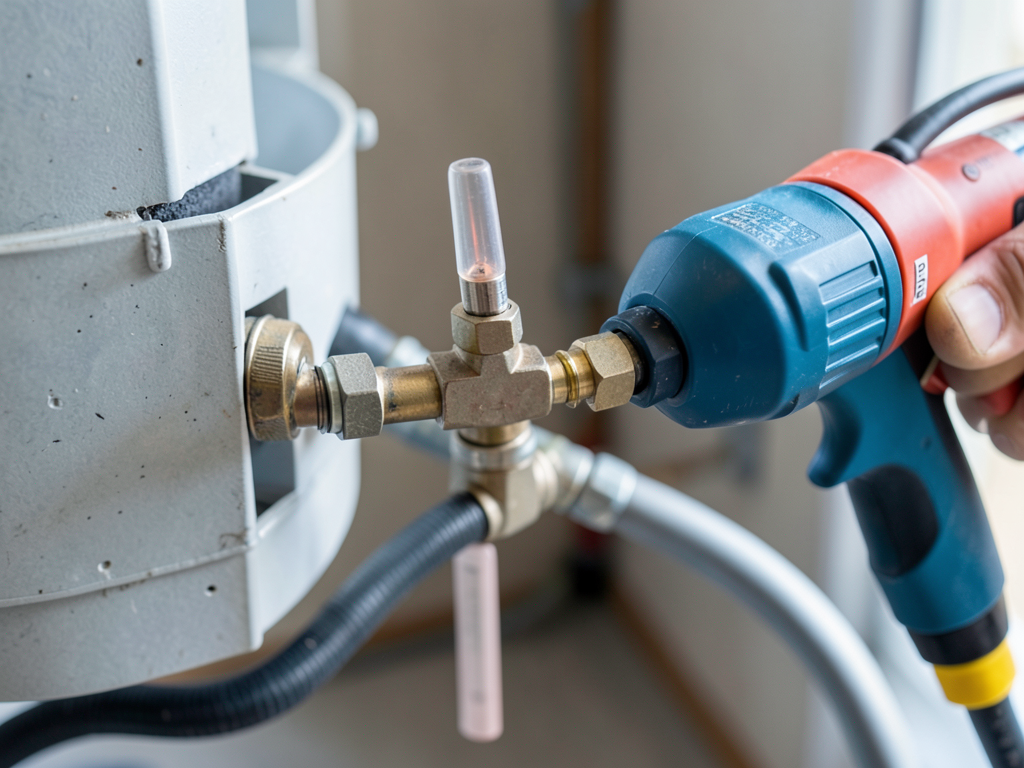
Technician performing safety inspection on a natural gas garage heater, checking venting and gas connections for leaks.
Maintenance Requirements for Different Heater Types
Each heater type needs specific maintenance to operate safely and efficiently. Understanding these requirements helps you plan for ongoing costs.
Gas unit heaters need annual professional servicing. Technicians check the heat exchanger for cracks, test gas pressure, clean burners, and verify venting operation. These inspections prevent carbon monoxide leaks and ensure efficient combustion.
Electric heaters require minimal maintenance. Occasional cleaning of dust from elements and checking electrical connections suffices. However, they still need professional inspection if performance drops or unusual noises occur.
Infrared heaters need periodic cleaning of reflectors and elements. Dust accumulation reduces heating efficiency by 10% to 20%. The sealed nature of these units means fewer mechanical issues but still requires visual inspections.
Mini-split systems need twice-yearly maintenance. Filters require cleaning every 1 to 3 months depending on dust levels. Condenser coils need annual cleaning, and refrigerant levels should be checked to ensure optimal performance.
All heater types benefit from seasonal startups before heavy use begins. Testing operation in fall prevents mid-winter failures when you need heat most.
Choosing the Right Heater for Your Workshop Needs
Your specific workshop activities should drive your heater selection. Different tasks have different heating requirements and sensitivities to temperature fluctuations.
Woodworking shops benefit from consistent air temperatures to prevent wood movement and joint failure. Gas unit heaters or mini-splits provide the stable environment needed for fine woodworking and finishing work.
Auto repair shops need immediate heat where you’re working. Infrared spot heaters warm tools and work surfaces quickly without waiting for the entire space to heat. They also reduce dust circulation that can settle on wet paint or finishes. Fast AC Repair Services in Aurora for When the Summer Heat Hits.
Craft and hobby spaces often only need heating during active use. Electric heaters offer quick warmup for intermittent use without the cost of continuous operation. Their simplicity also means fewer mechanical failures during infrequent use.
Fitness or yoga spaces need even, draft-free heating. Mini-splits provide the most comfortable environment with humidity control that prevents that cold, damp feeling common in uninsulated garages.
Consider your garage’s insulation level. Poor insulation makes all heating options less efficient. Adding insulation before installing a heater often provides better returns than upgrading to a more powerful unit.
Local Building Codes and Permit Requirements
Arapahoe County and Lone Tree have specific requirements for garage heating installations. Understanding these prevents code violations and ensures safe operation.
Mechanical permits are required for all fuel-burning installations in Lone Tree. Electric heater installations may need electrical permits depending on the circuit complexity and whether new wiring is required.
Venting requirements specify termination heights and distances from openings. Gas water heaters and unit heaters must terminate at least 3 feet above any forced air inlet and 4 feet below, horizontally or vertically from, or 1 foot from, any door, window, or gravity air inlet.
Clearance to combustibles follows National Fire Protection Association standards. Most gas heaters need 3 to 8 feet of clearance from walls and ceilings, depending on the model and mounting orientation. National Fire Protection Association.
Attached garages with fuel-burning appliances require carbon monoxide detectors. These must be installed according to manufacturer specifications, typically within 10 feet of sleeping areas and on every level of the home.
Electrical installations must comply with National Electrical Code Article 424 for fixed electric space heating equipment. This includes proper circuit sizing, grounding, and overcurrent protection.
Local inspectors may require proof of NATE certification for the installing technician on gas equipment. This ensures the installer understands proper combustion and venting principles.
Energy Rebates and Incentives in Colorado
Utility companies and government programs offer rebates that can offset installation costs. Xcel Energy provides incentives for high-efficiency heating equipment in Colorado.
High-efficiency natural gas unit heaters with 90% or greater efficiency may qualify for rebates of $100 to $300. These units cost more upfront but provide energy savings that pay back the difference over time.
Energy Star certified mini-split heat pumps can receive rebates of $100 to $500 depending on the system’s heating seasonal performance factor (HSPF). Higher HSPF ratings qualify for larger rebates.
Local utility rebates change annually, so check current offerings before purchasing. Some rebates require specific efficiency ratings or installation by participating contractors.
Federal tax credits may be available for certain high-efficiency heating equipment. These credits can provide 10% to 30% of the equipment cost, up to specified maximums, when installed in existing homes.
Local governments occasionally offer energy efficiency grants for home improvements that reduce energy consumption. These programs typically have limited funding and specific eligibility requirements.
Common Installation Mistakes to Avoid
Professional installation prevents many common problems, but understanding these mistakes helps you ask the right questions.
Undersized units can’t maintain temperature on the coldest days. A heater sized for 50-degree days fails when temperatures drop to zero. Always calculate for the design temperature, not average conditions.
Poor venting causes carbon monoxide backup into living spaces. Vent pipes must maintain proper slope, use correct fittings, and terminate at the right height. DIY venting often violates these critical requirements.
Incorrect gas line sizing reduces heater output. A gas line too small for the BTU rating starves the burner of fuel, causing poor performance and potential safety issues. Professional calculations ensure proper line sizing.
Insufficient electrical capacity trips breakers or creates fire hazards. Adding a 50-amp heater circuit to an overloaded panel causes problems. Electrical upgrades should be part of the installation plan when needed.
Ignoring altitude derating reduces gas heater output by 10% to 20%. At Lone Tree’s elevation, a standard 75,000 BTU heater might only produce 60,000 to 65,000 BTUs without proper derating.
Improper mounting creates safety hazards and reduces efficiency. Heaters mounted too close to stored items or in traffic patterns create burn risks. Correct mounting height ensures proper heat distribution.
Seasonal Considerations for Lone Tree Garages
Lone Tree’s climate creates specific challenges for garage heating. Understanding these seasonal factors helps you choose and operate your heater effectively.
Winter temperatures regularly drop below zero. Your heater must handle these extreme lows, not just average winter conditions. A unit sized for 20-degree days struggles when temperatures hit -10.
Spring and fall temperature swings can be wider than winter cold. A 70-degree day can follow a 20-degree night, requiring heaters that can quickly respond to changing conditions.
Summer cooling might be as important as winter heating for some workshop uses. Mini-splits provide this dual capability, while other heater types leave you sweltering in July.
Drafty garage doors and windows create heat loss that affects all heater types. Weatherstripping and insulation improvements often provide better returns than upgrading heater capacity.
Humidity control prevents condensation on tools and work surfaces. Gas heaters produce water vapor as a byproduct, which can increase humidity. Electric and infrared heaters don’t add moisture to the air.
Wind affects venting performance. Strong winds can backdraft gas heaters, causing dangerous carbon monoxide buildup. Proper vent termination height and caps prevent these issues.
DIY vs Professional Installation: What You Need to Know
Garage heater installation involves electrical, gas, and mechanical systems that require professional expertise. Understanding the risks helps you make the right choice.
Electrical work beyond simple plug-in units requires permits and must meet code requirements. DIY electrical work can void insurance coverage and create fire hazards. Professional electricians ensure safe, code-compliant installations.
Gas line installation involves trenching, pipe threading, and pressure testing. Gas leaks can cause explosions or carbon monoxide poisoning. Licensed plumbers have the training and equipment to install gas lines safely.
Venting requires understanding of combustion principles and local code requirements. Improper venting causes carbon monoxide poisoning, the leading cause of accidental poisoning deaths in the US.
Manufacturer warranties often require professional installation to remain valid. DIY installation can void warranties, leaving you responsible for repair costs. Repair vs. Replace AC Guide.
Insurance companies may deny claims for damage caused by DIY installations that violate building codes. Professional installation provides documentation that protects your coverage.
Time and tools factor into DIY decisions. Professional installation typically takes 1 to 2 days. DIY projects often take longer, especially when unexpected issues arise like rock during trenching or difficult roof penetrations.
Making the Right Choice for Your Lone Tree Workshop
Selecting the right garage heater involves balancing upfront costs, operating expenses, installation complexity, and your specific workshop needs. The right choice transforms your garage from seasonal storage to year-round productive space.
Consider your budget for both installation and monthly operating costs. Gas heaters cost more to install but less to operate. Electric heaters install cheaper but cost more monthly.
Evaluate your garage’s characteristics. Attached garages share heat with your home. Detached garages need more heating power. Poor insulation requires more capacity regardless of heater type.
Think about your workshop activities. Woodworking needs stable temperatures. Auto repair benefits from spot heating. Crafts might only need intermittent use heating.
Factor in Lone Tree’s altitude and climate. Gas heaters need derating. Extreme cold requires adequate sizing. Spring and fall temperature swings affect heater selection.
Professional installation ensures safety, code compliance, and optimal performance. The cost of professional installation often pays for itself through efficiency, safety, and warranty protection.
A properly sized and installed garage heater makes your Lone Tree workshop usable year-round. It protects your tools, extends your productive hours, and adds value to your property. The investment transforms how you use your garage space.
Before and after comparison showing a cold, unused garage transformed into a warm, functional workshop with proper heating installation.
Frequently Asked Questions
How much does it cost to install a garage heater in Lone Tree?
Installation costs range from $800 to $4,000 depending on heater type, garage size, and installation complexity. Electric heaters cost less to install but more to operate. Gas heaters have higher upfront costs but lower monthly expenses.
What size heater do I need for my garage?
A 2-car garage typically needs 12,000 to 15,000 BTUs, while a 3-car garage requires 18,000 to 25,000 BTUs. Lone Tree’s altitude requires adding 10% to standard calculations for gas heaters.
Can I install a garage heater myself?
DIY installation is not recommended for gas or hardwired electric heaters. These involve electrical work, gas lines, and venting that require professional licensing and knowledge of local codes for safe operation.
How long does installation take?
Simple electric heater installation takes 2 to 4 hours. Gas heater installation with venting and gas line extension typically requires 1 to 2 days for complete professional installation.
Do I need a permit for garage heater installation?
Yes, mechanical permits are required for fuel-burning heaters in Lone Tree. Electrical permits may be needed for hardwired electric units. Your contractor should handle permit acquisition and inspections.
What’s the most energy-efficient option?
Mini-split heat pumps offer the best efficiency, using 50% to 70% less electricity than resistance heaters. Natural gas heaters provide the lowest operating costs for continuous heating in cold climates.
How do I maintain my garage heater?
Gas heaters need annual professional servicing. Electric heaters require minimal maintenance beyond occasional cleaning. All types benefit from seasonal startups before heavy use begins.
Will a garage heater work in extreme cold?
Modern heaters are designed for cold climates, but proper sizing is critical. Units must be sized for design temperatures, not averages. Some mini-splits may need supplemental heat below -10 degrees.
Can I heat only part of my garage?
Yes, infrared heaters provide spot heating for specific work areas. This approach uses less energy than heating the entire space and provides immediate warmth where you need it.
What safety features should I look for?
Look for automatic shutoff, tip-over protection, and oxygen depletion sensors on gas heaters. All fuel-burning heaters should have proper venting and require carbon monoxide detectors in attached garages.
How long do garage heaters last?
Quality garage heaters typically last 15 to 20 years with proper maintenance. Gas unit heaters often last longer than electric resistance heaters due to fewer moving parts.
Can I use a portable heater instead?
Portable heaters work for occasional use but cost more to operate long-term. They also pose trip hazards and may not provide adequate heating for larger spaces or extreme cold.
What about humidity control?
Gas heaters add moisture to the air as a combustion byproduct. Electric and infrared heaters don’t affect humidity levels. Mini-splits provide dehumidification in summer months.
Are there rebates available?
Xcel Energy offers rebates for high-efficiency heating equipment. Check current programs before purchasing, as incentives change annually and may significantly reduce your net cost.
How do I choose between gas and electric?
Choose gas for lower operating costs and continuous use. Choose electric for simpler installation, occasional use, or where gas lines aren’t available. Consider your specific usage patterns and budget.
- Assess Your Space
Measure your garage size, check insulation levels, and note whether it’s attached or detached. These factors determine heating requirements.
- Determine Your Needs
Consider how you’ll use the space, how often you need heat, and whether you want cooling capability for summer use.
- Calculate BTU Requirements
Use square footage and local climate data to determine minimum heating capacity. Add 10% for Lone Tree’s altitude if using gas.
- Choose Fuel Type
Compare installation costs, operating expenses, and fuel availability. Gas offers lower operating costs, electric offers simpler installation.
- Select Specific Model
Choose a heater with appropriate safety features, efficiency ratings, and warranty coverage for your needs.
- Plan Professional Installation
Obtain necessary permits, schedule professional installation, and plan for any required electrical or gas line upgrades.
Ready to make your Lone Tree workshop usable year-round? Call Fortress Heating & Air at (720) 502-9511 today to schedule your free consultation and get expert advice on the perfect garage heating solution for your space.
Don’t wait until the next cold snap leaves you shivering in your workshop. Pick up the phone and call (720) 502-9511 before the next storm hits. Our experienced technicians will assess your garage, recommend the right heater, and handle all aspects of professional installation.
Fortress Heating & Air serves Lone Tree and the entire Denver metro area with reliable, code-compliant garage heating solutions. We stand behind our work with quality installation and ongoing support to keep your workshop warm and productive all winter long.. Read more about The Best HVAC Solutions for Keeping a Home Office Comfortable in Ken Caryl.
Call (720) 502-9511 now to get started on your garage heating project. Your year-round workshop awaits.
{
“@context”: “https://schema.org”,
“@type”: “BlogPosting”,
“headline”: “Why You Should Consider a Garage Heater for Your Workshop in Lone Tree”,
“description”: “Keep your Lone Tree workshop warm and productive all winter. Learn about garage heater options, sizing, and local installation from Fortress Heating & Air.”,
“wordCount”: 3924,
“datePublished”: “2026-03-20T07:34:00.000Z”,
“dateModified”: “2026-03-20T07:34:00.000Z”,
“inLanguage”: “en-US”,
“mainEntityOfPage”: {
“@type”: “WebPage”,
“@id”: “https://fortresshvacdenver.com”
},
“publisher”: {
“@type”: “LocalBusiness”,
“name”: “Fortress HVAC Denver”,
“url”: “https://fortresshvacdenver.com”
},
“author”: {
“@type”: “Organization”,
“name”: “Fortress HVAC Denver”,
“url”: “https://fortresshvacdenver.com”
},
“image”: {
“@type”: “ImageObject”,
“url”: “https://fortresshvacdenver.com/wp-content/uploads/2026/03/why-you-should-consider-a-garage-heater-for-your-w-1.png”
}
}
{
“@context”: “https://schema.org”,
“@type”: “HVACBusiness”,
“name”: “Fortress HVAC Denver”,
“url”: “https://fortresshvacdenver.com”,
“address”: {
“@type”: “PostalAddress”,
“addressLocality”: “Denver”
},
“areaServed”: {
“@type”: “City”,
“name”: “Denver”
}
}
{
“@context”: “https://schema.org”,
“@type”: “FAQPage”,
“mainEntity”: [
{
“@type”: “Question”,
“name”: “How much does it cost to install a garage heater in Lone Tree?”,
“acceptedAnswer”: {
“@type”: “Answer”,
“text”: “Installation costs range from $800 to $4,000 depending on heater type, garage size, and installation complexity. Electric heaters cost less to install but more to operate. Gas heaters have higher upfront costs but lower monthly expenses.”
}
},
{
“@type”: “Question”,
“name”: “What size heater do I need for my garage?”,
“acceptedAnswer”: {
“@type”: “Answer”,
“text”: “A 2-car garage typically needs 12,000 to 15,000 BTUs, while a 3-car garage requires 18,000 to 25,000 BTUs. Lone Tree’s altitude requires adding 10% to standard calculations for gas heaters.”
}
},
{
“@type”: “Question”,
“name”: “Can I install a garage heater myself?”,
“acceptedAnswer”: {
“@type”: “Answer”,
“text”: “DIY installation is not recommended for gas or hardwired electric heaters. These involve electrical work, gas lines, and venting that require professional licensing and knowledge of local codes for safe operation.”
}
},
{
“@type”: “Question”,
“name”: “How long does installation take?”,
“acceptedAnswer”: {
“@type”: “Answer”,
“text”: “Simple electric heater installation takes 2 to 4 hours. Gas heater installation with venting and gas line extension typically requires 1 to 2 days for complete professional installation.”
}
},
{
“@type”: “Question”,
“name”: “Do I need a permit for garage heater installation?”,
“acceptedAnswer”: {
“@type”: “Answer”,
“text”: “Yes, mechanical permits are required for fuel-burning heaters in Lone Tree. Electrical permits may be needed for hardwired electric units. Your contractor should handle permit acquisition and inspections.”
}
},
{
“@type”: “Question”,
“name”: “What’s the most energy-efficient option?”,
“acceptedAnswer”: {
“@type”: “Answer”,
“text”: “Mini-split heat pumps offer the best efficiency, using 50% to 70% less electricity than resistance heaters. Natural gas heaters provide the lowest operating costs for continuous heating in cold climates.”
}
},
{
“@type”: “Question”,
“name”: “How do I maintain my garage heater?”,
“acceptedAnswer”: {
“@type”: “Answer”,
“text”: “Gas heaters need annual professional servicing. Electric heaters require minimal maintenance beyond occasional cleaning. All types benefit from seasonal startups before heavy use begins.”
}
},
{
“@type”: “Question”,
“name”: “Will a garage heater work in extreme cold?”,
“acceptedAnswer”: {
“@type”: “Answer”,
“text”: “Modern heaters are designed for cold climates, but proper sizing is critical. Units must be sized for design temperatures, not averages. Some mini-splits may need supplemental heat below -10 degrees.”
}
},
{
“@type”: “Question”,
“name”: “Can I heat only part of my garage?”,
“acceptedAnswer”: {
“@type”: “Answer”,
“text”: “Yes, infrared heaters provide spot heating for specific work areas. This approach uses less energy than heating the entire space and provides immediate warmth where you need it.”
}
},
{
“@type”: “Question”,
“name”: “What safety features should I look for?”,
“acceptedAnswer”: {
“@type”: “Answer”,
“text”: “Look for automatic shutoff, tip-over protection, and oxygen depletion sensors on gas heaters. All fuel-burning heaters should have proper venting and require carbon monoxide detectors in attached garages.”
}
},
{
“@type”: “Question”,
“name”: “How long do garage heaters last?”,
“acceptedAnswer”: {
“@type”: “Answer”,
“text”: “Quality garage heaters typically last 15 to 20 years with proper maintenance. Gas unit heaters often last longer than electric resistance heaters due to fewer moving parts.”
}
},
{
“@type”: “Question”,
“name”: “Can I use a portable heater instead?”,
“acceptedAnswer”: {
“@type”: “Answer”,
“text”: “Portable heaters work for occasional use but cost more to operate long-term. They also pose trip hazards and may not provide adequate heating for larger spaces or extreme cold.”
}
},
{
“@type”: “Question”,
“name”: “What about humidity control?”,
“acceptedAnswer”: {
“@type”: “Answer”,
“text”: “Gas heaters add moisture to the air as a combustion byproduct. Electric and infrared heaters don’t affect humidity levels. Mini-splits provide dehumidification in summer months.”
}
},
{
“@type”: “Question”,
“name”: “Are there rebates available?”,
“acceptedAnswer”: {
“@type”: “Answer”,
“text”: “Xcel Energy offers rebates for high-efficiency heating equipment. Check current programs before purchasing, as incentives change annually and may significantly reduce your net cost.”
}
},
{
“@type”: “Question”,
“name”: “How do I choose between gas and electric?”,
“acceptedAnswer”: {
“@type”: “Answer”,
“text”: “Choose gas for lower operating costs and continuous use. Choose electric for simpler installation, occasional use, or where gas lines aren’t available. Consider your specific usage patterns and budget.”
}
}
]
}
{
“@context”: “https://schema.org”,
“@type”: “HowTo”,
“name”: “How to Choose Your Garage Heater”,
“step”: [
{
“@type”: “HowToStep”,
“position”: 1,
“name”: “Assess Your Space”,
“text”: “Measure your garage size, check insulation levels, and note whether it’s attached or detached. These factors determine heating requirements.”
},
{
“@type”: “HowToStep”,
“position”: 2,
“name”: “Determine Your Needs”,
“text”: “Consider how you’ll use the space, how often you need heat, and whether you want cooling capability for summer use.”
},
{
“@type”: “HowToStep”,
“position”: 3,
“name”: “Calculate BTU Requirements”,
“text”: “Use square footage and local climate data to determine minimum heating capacity. Add 10% for Lone Tree’s altitude if using gas.”
},
{
“@type”: “HowToStep”,
“position”: 4,
“name”: “Choose Fuel Type”,
“text”: “Compare installation costs, operating expenses, and fuel availability. Gas offers lower operating costs, electric offers simpler installation.”
},
{
“@type”: “HowToStep”,
“position”: 5,
“name”: “Select Specific Model”,
“text”: “Choose a heater with appropriate safety features, efficiency ratings, and warranty coverage for your needs.”
},
{
“@type”: “HowToStep”,
“position”: 6,
“name”: “Plan Professional Installation”,
“text”: “Obtain necessary permits, schedule professional installation, and plan for any required electrical or gas line upgrades.”
}
],
“image”: “https://fortresshvacdenver.com/wp-content/uploads/2026/03/why-you-should-consider-a-garage-heater-for-your-w-1.png”
}
{
“@context”: “https://schema.org”,
“@type”: “BreadcrumbList”,
“itemListElement”: [
{
“@type”: “ListItem”,
“position”: 1,
“name”: “Home”,
“item”: “https://fortresshvacdenver.com”
},
{
“@type”: “ListItem”,
“position”: 2,
“name”: “Blog”,
“item”: “https://fortresshvacdenver.com/blog”
},
{
“@type”: “ListItem”,
“position”: 3,
“name”: “Why You Should Consider a Garage Heater for Your Workshop in Lone Tree”
}
]
}
{
“@context”: “https://schema.org”,
“@type”: “Service”,
“serviceType”: “HVAC”,
“provider”: {
“@type”: “LocalBusiness”,
“name”: “Fortress HVAC Denver”,
“url”: “https://fortresshvacdenver.com”
},
“areaServed”: {
“@type”: “City”,
“name”: “Denver”
},
“description”: “Keep your Lone Tree workshop warm and productive all winter. Learn about garage heater options, sizing, and local installation from Fortress Heating & Air.”
}